
The essentials · Part 3 of 10
How Vipassana survived
From oral recitation to the Pali Canon, Buddhaghosa and colonial Burma, then to India in 1969 and the West: how the practice was kept, lost and revived.
· 8 min read
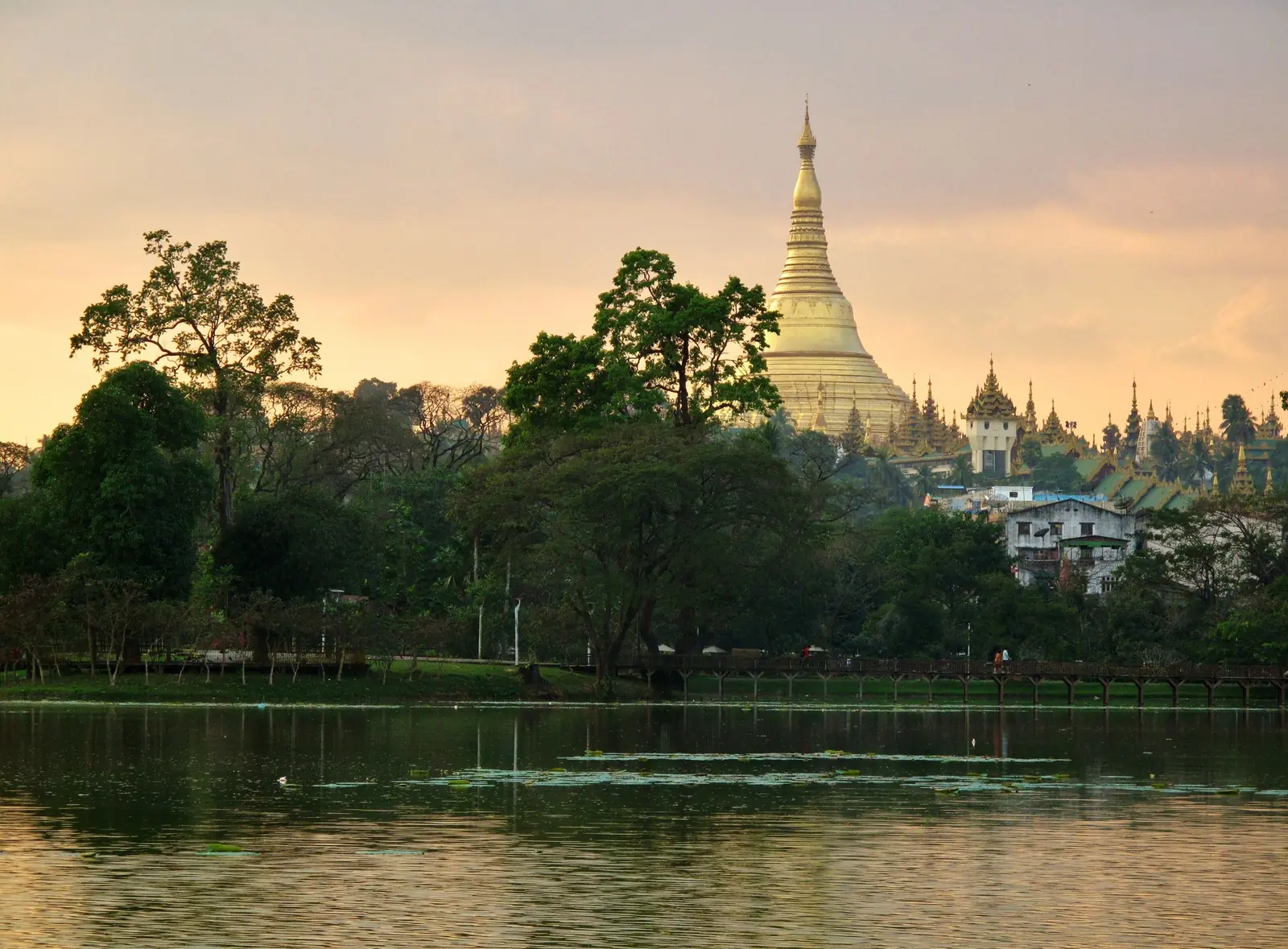
For centuries the Buddha's teaching was passed on only by memory. It was then written down, explained in commentaries and carried from country to country. This guide follows that story, and where a tradition's own account and the historians' differ, it gives both.
Memorised and recited: the councils
According to the Theravāda tradition, as the Vipassana Research Institute (VRI) presents it, the Buddha's monks learned his words by heart, and a series of councils checked the collection by reciting it together; a recitation counted as authentic only if the whole assembly approved it. The first three, in the tradition's account:
| Council | When and where | Purpose |
|---|---|---|
| First | Three months after the Buddha's death, in the Sattapaṇṇi Cave outside Rājagaha, under King Ajātasattu, with the elder Mahākassapa presiding | To recite and fix the monastic rules and the teaching, so that neither would be corrupted |
| Second | One hundred years later | To settle a dispute over ten minor points of monastic discipline |
| Third | Pāṭaliputta, under the emperor Ashoka, presided over by the elder Moggaliputta Tissa | To purify the monastic order; afterwards missions were sent to other lands |
VRI dates the First Council to 544 BCE and the Third to 326 BCE. These dates follow the Sri Lankan chronicles, whose lists of kings, counted backwards, put the Buddha's death in 543 BCE, as the translator Bhikkhu Ñāṇamoli explains; other calculations move it later. Historians place Ashoka in the 3rd century BCE. The previous guide covers the debate over the Buddha's dates.
Written down in Sri Lanka
Among the missions, the tradition says, Ashoka's son Mahinda took the teaching to Sri Lanka. There it was kept in the Pali language by the Great Monastery (Mahāvihāra) at Anurādhapura.
In the 1st century BCE, in the reign of King Vaṭṭagāmaṇi Abhaya, a rival monastery split away. Ñāṇamoli writes that the Great Monastery, "sensing insecurity", took the precaution of committing the Tipiṭaka to writing for the first time. The Tipiṭaka, or "three baskets", holds the monastic rules, the discourses (suttas) and the systematic analysis called Abhidhamma: the collection known today as the Pali Canon. VRI counts this writing down as the Fourth Council, dated 29 BCE, and says most monks could no longer hold the whole Tipiṭaka in memory.
Buddhaghosa and the Path of Purification
In the first quarter of the 5th century CE a monk named Buddhaghosa came to Sri Lanka from India, in the reign of King Mahānāma, who is known to have been reigning in 428. At the Great Monastery he studied the old commentaries, kept in Sinhalese, and rendered their tradition into Pali.
His handbook, the Visuddhimagga or Path of Purification, sets out the whole path in three parts: virtue (sīla), concentration (samādhi) and understanding (paññā). Its closing chapters describe, stage by stage, how insight develops.
Burma: the tradition's account and the historians' view
S. N. Goenka's tradition tells it this way. VRI writes that Vipassana spread from India to Myanmar, Sri Lanka, Thailand and other countries; about five centuries after the Buddha it had disappeared from India and its purity was lost elsewhere, but in Myanmar a chain of devoted teachers preserved it "in its pristine purity" for more than two thousand years. VRI links this to the Third Council's missions, saying the elders Soṇa and Uttara were sent to Suvaṇṇabhūmi, the "Golden Land", which it identifies as Myanmar.
Historians see this differently.
- The Golden Land. Nicolas Revire, in a 2018 study, notes that most scholars think "Golden Land" was a vague name used by Indian traders for a large region beyond the subcontinent, probably in South-East Asia. The story of Soṇa and Uttara comes from the Sri Lankan chronicle Mahāvaṃsa, of the 5th century CE, and no South-East Asian text or inscription mentions the legend, or the Pali name, before the second millennium CE. He also examines how the name has been claimed in both Thailand and Burma for political and nationalist purposes.
- A modern prominence. The historian Erik Braun calls the dominant role of insight meditation in Buddhism "relatively recent". His book on Ledi Sayadaw argues that Burmese Buddhists in the colonial period were pioneers in making it indispensable to modern Buddhism, and traces the development of mass meditation.
Spirit Rock, a Western centre in the same lineages, gives a similar picture: when Ledi Sayadaw began his work, it says, meditation was not commonly practised in Burma, and modern Vipassana goes back to reform-minded monks in Burma and Thailand who created new forms of practice. VRI's biography of Ledi says he practised in the traditional Burmese way, with the breath and bodily sensation. All these accounts agree on what came next: from the late 19th century, Burmese teachers brought meditation to lay people on a new scale.
Ledi Sayadaw and the lay meditation movement
Ledi Sayadaw (Sayadaw, "respected teacher", is a Burmese title for a senior monk) was born in 1846 in the Shwebo district of northern Burma and ordained in 1866. As a young monk he helped edit the Abhidhamma texts at the Fifth Council, held at Mandalay in 1871 under King Mindon, where the whole Tipiṭaka was carved on 729 marble slabs that still stand around the Kuthodaw Pagoda.
The British conquered Upper Burma in 1885 and exiled the last king. The next year the monk retreated to the Ledi forest near Monywa, where a monastery grew up around him and gave him his name. He wrote many books in Burmese, wanting even a simple farmer to understand them. Braun argues that by spreading the study of Abhidhamma texts, Ledi standardised and simplified meditation methods and made them widely accessible, in part to protect Buddhism in Burma after the British takeover. Ledi died in 1923.
One of his students, the farmer U Po Thet, known as Saya Thetgyi, became one of Burma's best-known lay meditation teachers. Spirit Rock names a second founder of the movement, the monk Mingun Sayadaw (1868–1955), who worked out a style of practice from the Satipaṭṭhāna Sutta.
Two Burmese methods: U Ba Khin and Mahasi
Sayagyi U Ba Khin, born in Rangoon in 1899, was a government accountant who began meditating in 1937 and learned from Saya Thetgyi. He became Accountant General on 4 January 1948, the day Burma became independent, and in 1952 opened the International Meditation Centre in Rangoon, two miles north of the Shwedagon Pagoda, where he taught until his death in 1971. Spirit Rock credits him with formalising the technique of sweeping attention through the body. Besides S. N. Goenka's organisation, the International Meditation Centres also teach in his name (see IMC and Mother Sayamagyi).
Mahasi Sayadaw (1904–1982), a student of Mingun Sayadaw, developed a method of continuous mental noting that aims at insight without first attaining deep absorption (see Mahasi noting).
Both men took part in the Sixth Council, held at Kaba Aye in Yangon from May 1954 to May 1956, which VRI says 2,500 Theravāda monks attended, from Myanmar, Cambodia, India, Laos, Nepal, Sri Lanka, Thailand and Vietnam. Mahasi Sayadaw put the questions on the teaching; U Ba Khin helped plan the council. The two methods are compared in Goenka and Mahasi: two Burmese methods.
Back to India in 1969
S. N. Goenka was born in 1924 in Mandalay, into a family of Indian descent, and took his first course with U Ba Khin in 1955. In 1969 he was given a passport valid for India, and U Ba Khin appointed him a teacher before he left. His first 10-day course ran in Mumbai from 3 to 13 July 1969, for his parents and a handful of others; VRI presents this as the practice returning to the land of its origin.
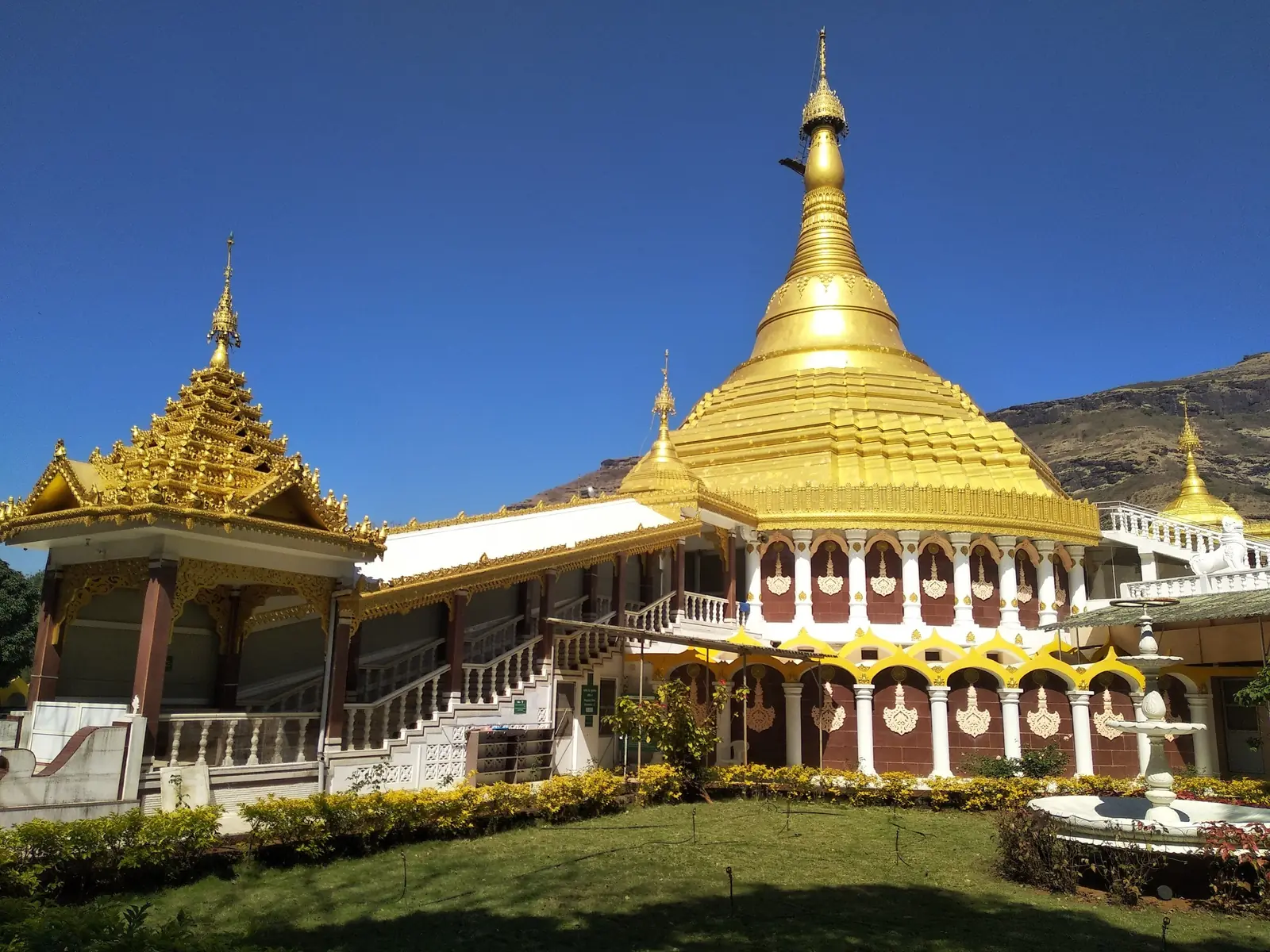
Dhamma Giri, near Igatpuri, opened in October 1976 and its pagoda in early 1979. That year, with an Indian passport, he taught his first courses abroad, in France, Canada and the United Kingdom. From late 1981 he appointed assistant teachers to lead courses using recordings of his instructions. He died in 2013. How the practice reached Nepal is told in Vipassana in Nepal: a short history.
The Thai forest revival
A parallel revival took place in Thailand, where, Spirit Rock writes, 19th-century Buddhism centred on study, ritual and merit-making, with few monks meditating. Ajahn Mun (1870–1949), after studying with Ajahn Sao, wandered alone in the forests of north-eastern Thailand and Laos and developed what came to be known as the forest tradition, or kammaṭṭhāna ("place of practice") tradition, working calm and insight together. Ajahn is Thai for "teacher".
Ajahn Chah (1918–1992) studied briefly with Ajahn Mun and in 1954 settled in a forest near his home village in Ubon province, where the monastery of Wat Pah Pong grew up. In 1967 an American monk, Ajahn Sumedho, began training with him; a branch for English-speaking monks, Wat Pah Nanachat, followed, and in 1979 Sumedho became abbot of the line's first monastery outside Thailand, at Chithurst in England. Buddhadāsa Bhikkhu of Suan Mokkh taught along different lines in the same period. See Thai forest.
To the West in the 1970s
Young Americans who had studied in Asia founded the Insight Meditation Society (IMS) at Barre, Massachusetts, in 1976: Jack Kornfield, Sharon Salzberg, Joseph Goldstein and Jacqueline Schwartz. They mixed lineages on purpose. Goenka had been an important teacher for Goldstein and Salzberg, but their main technique was Mahasi's, and in 1979, at IMS, Mahasi Sayadaw authorised four Americans to teach. Sayadaw U Pandita, Anagarika Munindra and Dipa Ma all taught at IMS, and Ruth Denison, whom Spirit Rock calls U Ba Khin's most prominent Western student, taught there too. See insight meditation in the West.
How far the practice reaches today
As of 24 September 2026, dhamma.org's directory listed 272 centres and 135 non-centre locations in S. N. Goenka's tradition, in over 100 countries and territories; 20 of the centres were in Nepal. The centres directory lists places to learn, country by country.
Guide 4, the three trainings, turns from history to the shape of the path these teachers taught.
Sources
- The Chaṭṭha Saṅgāyana and the earlier councils, Vipassana Research Institute (tipitaka.org)
- The Path of Purification (Visuddhimagga), trans. Bhikkhu Ñāṇamoli: introduction, Buddhist Publication Society, via Access to Insight
- What is Vipassana, Vipassana Research Institute
- Facts and Fiction: The Myth of Suvaṇṇabhūmi Through the Thai and Burmese Looking Glass (Nicolas Revire, TRaNS 6(2), 2018), Cambridge University Press
- The Birth of Insight: Meditation, Modern Buddhism, and the Burmese Monk Ledi Sayadaw (Erik Braun, 2013), University of Chicago Press
- Ven. Ledi Sayadaw, Vipassana Research Institute
- Sayagyi U Ba Khin, Vipassana Research Institute
- S. N. Goenka, Vipassana Research Institute
- Our Buddhist Lineage, Spirit Rock Meditation Center
- Worldwide Directory of Vipassana centres and non-centre locations, dhamma.org