
The essentials · Part 6 of 10
Impermanence, suffering and non-self
Anicca, dukkha and anattā as the early texts present them, why seeing them is the aim of vipassanā, the stages of insight, and common misreadings.
· 7 min read
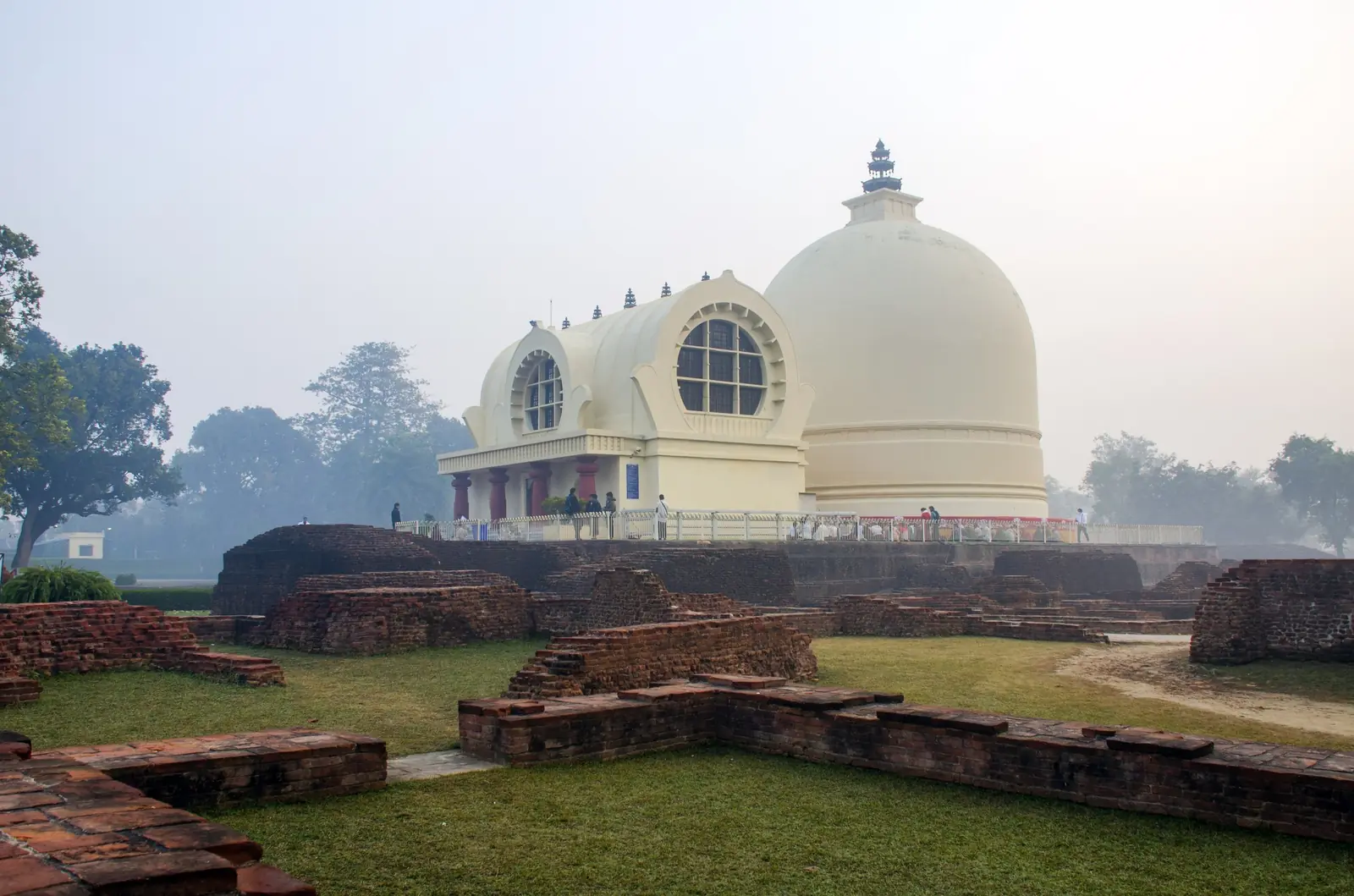
The Mahāparinibbāna Sutta records the Buddha's last words at Kusinārā, where he died: vayadhammā saṅkhārā, appamādena sampādetha, which Bhikkhu Sujato translates as "Conditions fall apart. Persist with diligence." The first half of that sentence names the first of three characteristics that the Pali texts describe: impermanence, suffering and non-self. This page sets out how the texts present them, why seeing them is the aim of vipassanā, how later texts map the stages of insight, and a few common misreadings.
Three characteristics in the Pali texts
The three are known together as the ti-lakkhaṇa, the three characteristics. Three verses of the Dhammapada (277 to 279) state them one by one:
- all conditions are impermanent (sabbe saṅkhārā aniccā);
- all conditions are suffering (sabbe saṅkhārā dukkhā);
- all things are not-self (sabbe dhammā anattā).
Each verse ends the same way: when this is seen with wisdom, one grows disillusioned with suffering, and "this is the path to purity". The first two verses speak of saṅkhārā, conditioned things. The third uses a wider word, dhammā, all things.
Anicca: impermanence
Anicca means impermanent. The Access to Insight glossary gives "inconstant; unsteady; impermanent". In the Anattalakkhaṇa Sutta (SN 22.59), the Buddha applies it to each of the five aggregates (khandha): form, feeling, perception, choices and consciousness. Of each one he asks the monks whether it is permanent or impermanent, and each time they answer that it is impermanent.
The Satipaṭṭhāna Sutta, described in the previous guide, puts the same idea into practice: after every exercise, the meditator observes the object arising and vanishing.
Dukkha: suffering and unsatisfactoriness
Dukkha is the first of the four noble truths. The first discourse (SN 56.11) lists what it covers: birth, old age, illness and death; being with what you dislike; being apart from what you like; not getting what you want. It then sums up: "In brief, the five grasping aggregates are suffering."
The same discourse names the origin of suffering as craving (taṇhā): for sensual pleasures, for continued existence and for non-existence. English has no single word for dukkha. Access to Insight lists "stress; suffering; pain; distress; discontent", and the glossary of Goenka's discourses gives suffering and unsatisfactoriness.
Anattā: not-self
Anattā means not-self; Access to Insight glosses it as "not-self; ownerless". The discourse named after it is the Anattalakkhaṇa Sutta, "The Characteristic of Not-Self". It is set in the deer park at Isipatana near Varanasi and addressed to the same group of five monks who heard the first discourse. The argument has three steps.
First, the Buddha takes each aggregate in turn. If form were self, he says, it would not lead to affliction, and one could command it to be one way and not another. Because form does lead to affliction and cannot be commanded, it is not-self. The same is said of feeling, perception, choices and consciousness.
Second, he asks the monks whether each aggregate is permanent or impermanent ("Impermanent"), and whether what is impermanent is suffering or happiness ("Suffering"). He then asks whether such a thing is fit to be regarded as "This is mine, I am this, this is my self". "No, sir."
Third, he says every kind of form, feeling, perception, choice and consciousness, past, future or present, near or far, should be seen with right understanding as not mine, not I, not my self. Seeing this way, the disciple grows disillusioned, desire fades, and the mind is freed. The sutta ends by saying that while it was spoken, the minds of the five monks were freed from defilements.
Why seeing them is the aim of vipassanā
The link between the three characteristics and meditation is in the definition of vipassanā itself. Access to Insight defines it as "clear intuitive insight into physical and mental phenomena as they arise and disappear, seeing them for what they actually are", in terms of the three characteristics.
The texts above describe what that seeing is for. In SN 22.59, seeing the aggregates as not-self leads to disillusionment, the fading of desire and freedom. In the Dhammapada, seeing the characteristics with wisdom is called "the path to purity".
The traditions describe their own methods in the same terms. Nyanaponika Thera, introducing Mahasi Sayadaw's The Progress of Insight, describes a method in which one's own bodily and mental processes are seen, by direct observation, as impermanent, liable to suffering and without a self. The glossary of Goenka's Discourse Summaries says that by observing vedanā objectively one experiences impermanence directly within oneself, and calls this essential for the detachment that leads to liberation.
The stages of insight in the commentaries
In the 5th century CE, the commentator Buddhaghosa built his Visuddhimagga ("Path of Purification") on a frame of seven purifications, each leading to the next. Its chapter XXI says insight culminates in eight knowledges, beginning with the contemplation of rise and fall, followed by a ninth, conformity knowledge.
In the 20th century, Mahasi Sayadaw wrote The Progress of Insight, a detailed list of stages based on the same commentarial tradition. Nyanaponika Thera translated it into English. The main stages, with Nyanaponika's English names, are:
| Stage | English name (Nyanaponika) | Pali |
|---|---|---|
| 1 | Analytical knowledge of body and mind | nāma-rūpa-pariccheda-ñāṇa |
| 2–3 | Knowledge by discerning conditionality; knowledge by comprehension | paccaya-pariggaha-ñāṇa, sammasana-ñāṇa |
| 4 | Knowledge of arising and passing away | udayabbaya-ñāṇa |
| 5 | Knowledge of dissolution | bhaṅga-ñāṇa |
| 6–10 | Awareness of fearfulness; knowledge of misery, of disgust, of desire for deliverance, of re-observation | bhayatupaṭṭhāna-ñāṇa, ādīnava-ñāṇa, nibbidā-ñāṇa, muñcitukamyatā-ñāṇa, paṭisaṅkhānupassanā-ñāṇa |
| 11 | Knowledge of equanimity about formations | saṅkhārupekkhā-ñāṇa |
| 12–14 | Insight leading to emergence; knowledge of adaptation; maturity knowledge | vuṭṭhānagāminī-vipassanā-ñāṇa, anuloma-ñāṇa, gotrabhū-ñāṇa |
| 15–16 | Path knowledge; fruition knowledge | magga-ñāṇa, phala-ñāṇa |
Three further items close the list: knowledge of reviewing, the attainment of fruition, and the higher paths and fruitions. Each stage is called a ñāṇa, a knowledge.
Stage 4 appears twice in Mahasi's scheme. It first comes in a weak form, together with ten "corruptions of insight"; in Mahasi's account the first of them is a brilliant light. The Visuddhimagga's list includes illumination, rapture, tranquillity, bliss and a subtle attachment, and it says the meditator has to learn to see such experiences as "not the path". Only then does the knowledge of arising and passing away mature. At the stage of dissolution, Mahasi writes, only the ceasing of bodily and mental processes is apparent.
This map belongs to the Theravāda commentaries and to Mahasi's tradition. S. N. Goenka's tradition does not usually present this list, though his Day Ten discourse uses some of the same words when it describes the stations of practice: arising and passing away, bhaṅga (dissolution), and equanimity towards formations.
Common misunderstandings
"Not-self means I do not exist"
The early texts do not draw this conclusion. In SN 44.10, the wanderer Vacchagotta asks the Buddha whether there is a self, and then whether there is not. The Buddha stays silent both times. Afterwards he tells Ānanda that affirming a self would have sided with the eternalists, and denying one would have sided with the annihilationists. It would also have left Vacchagotta, already confused, thinking that the self he once had no longer exists.
Thanissaro Bhikkhu reads the teaching as a strategy rather than a statement about what exists: in his words, not "a doctrine of no-self" but a not-self strategy for letting go of the cause of suffering. SN 22.59 does not say that form, feeling or consciousness fail to occur; it asks whether each is fit to be regarded as mine, I or my self. Goenka's discourses describe the practice as exploring, by direct experience, the real nature of what one calls "I" and "mine".
"Dukkha means life is nothing but misery"
The list in SN 56.11 includes ordinary frustrations, such as not getting what you want, as well as illness and death. The argument in SN 22.59 is about change: whatever is impermanent, even something pleasant, is counted as suffering rather than happiness. The same first discourse presents the path as a middle way that avoids both indulgence in sensual pleasure and self-mortification.
"Impermanence is an idea to agree with"
The Dhammapada verses speak of seeing the three characteristics "with wisdom", not of believing them. Nyanaponika's account of Mahasi's method and Goenka's discourses both stress direct observation of one's own body and mind. In these sources, insight is something seen in experience, not a view one agrees with.
The next guide, Samatha and vipassanā, looks at calm, the quality the texts pair with insight, and at how much of it different traditions say is needed.
Sources
- Anattalakkhaṇa Sutta: The Characteristic of Not-Self (SN 22.59), trans. Bhikkhu Sujato, SuttaCentral
- Dhammacakkappavattana Sutta: Rolling Forth the Wheel of Dhamma (SN 56.11), trans. Bhikkhu Sujato, SuttaCentral
- Dhammapada 273–289: The Path, trans. Bhikkhu Sujato, SuttaCentral
- Ānanda Sutta: With Ānanda (SN 44.10), trans. Bhikkhu Sujato, SuttaCentral
- Mahāparinibbāna Sutta (DN 16), trans. Bhikkhu Sujato, SuttaCentral
- Glossary of Pali and Buddhist Terms, Access to Insight
- The Progress of Insight (Mahasi Sayadaw, trans. Nyanaponika Thera), Access to Insight
- The Path of Purification (Buddhaghosa, trans. Bhikkhu Ñāṇamoli), Buddhist Publication Society
- No-self or Not-self? (Thanissaro Bhikkhu), Access to Insight
- The Discourse Summaries (S. N. Goenka, condensed by William Hart), Vipassana Research Institute