
Loading…
Tradition
Mahasi Sayadaw's method of noting the rise and fall of the abdomen and whatever else arises, practised in silent retreats in Myanmar, Nepal and beyond.
Mahasi Sayadaw's method trains mindfulness through noting. The meditator makes a light mental note of whatever is most prominent in experience, starting with the rise and fall of the abdomen, and keeps this up while sitting, walking and in every ordinary activity. From Yangon the method spread across Myanmar, to Thailand and Sri Lanka, and to the West, where it is one of the roots of the Insight Meditation movement. In Nepal it is taught at Panditarama Lumbini and in Kathmandu.
This page describes the method and where it is taught. Retreats in this tradition are guided by a teacher through regular interviews, and that is where the practice is learnt.
Mahasi Sayadaw (U Sobhana, 1904–1982) was a Burmese scholar monk. After studying the Mahāsatipaṭṭhāna Sutta, the long discourse on the four foundations of mindfulness, he practised under the Mingun Jetavana Sayadaw (U Nārada, 1868–1955) at Thaton, and in 1938 he taught his first three students at Seikkhun. During the Second World War he wrote a manual of vipassanā meditation at the Mahasi monastery in Seikkhun, and the monastery's name became the name he is known by.
In 1949 the Prime Minister, U Nu, and Sir U Thwin of the Buddha Sasana Nuggaha Association asked him to come to Rangoon (Yangon) and teach. The Mahasi Sasana Yeiktha (Thathana Yeiktha) opened there on 4 December 1949; accounts of the first group of meditators give fifteen or twenty-five people. At the Sixth Buddhist Council in Rangoon, which ended in 1956, Mahasi Sayadaw was the Questioner, the monk who put the questions on the texts.
The method spread quickly. Burmese teachers went to Thailand from 1952 and to Sri Lanka in 1955, where the Kanduboda centre opened in January 1956 with help from a delegation Mahasi sent. A 1972 census counted more than 700,000 meditators trained at Mahasi centres in Burma and abroad. In 1979, 1980 and 1981 Mahasi travelled to Britain, Europe and America, and to India and Nepal. At the Insight Meditation Society in 1979 he authorised four American students to teach: Sharon Salzberg, Joseph Goldstein, Jack Kornfield and Jacqueline Mandell. He died on 14 August 1982.
The tradition calls its practice satipaṭṭhāna vipassanā, insight through the four foundations of mindfulness (satipaṭṭhāna; see The four foundations of mindfulness). As Mahasi's own published instructions describe it:
The concentration used is momentary concentration (khaṇika samādhi), built up by continuous noting, rather than the deep absorptions called jhāna. In the commentarial terms Nyanaponika Thera uses in his translation of Mahasi's The Progress of Insight, this is "bare insight" (sukkha-vipassanā); he adds that a high degree of concentration is still needed. That book also sets out the stages of insight knowledge the tradition uses as a map of progress.
The practice pages Mental noting and Walking meditation say more about each part.
The Mahasi centres described here offer individual retreats rather than fixed courses: a meditator arrives, keeps the rules and practises for an agreed length of time, reporting to a teacher in interviews. At Panditarama Lumbini, as of 2026:
At the International Buddhist Meditation Center (IBMC) in Kathmandu, first-time yogis stay at least ten days, plus two days for arriving and leaving, and do about 14 hours of sitting and walking a day under the eight precepts.
Panditarama Lumbini has run on dāna since it opened, with no set daily fees. Terms differ at other centres, so ask each one. The long days and short nights are demanding; anyone with a health condition should raise it with the centre, and with a doctor, before booking.
Several of Mahasi's students founded centres of their own. Two of them are described here; U Pandita's line is the one taught in Nepal.
Sayadaw U Pandita (U Paṇḍitābhivaṃsa, 1921–2016) founded Paṇḍitārāma Shwe Taung Gon in Yangon. The centre's own history gives 18 August 1990; other accounts say 1991, the year its first full-time meditators arrived. His retreat talks at the Insight Meditation Society in 1984 became the book In This Very Life. In Nepal he founded the International Buddhist Meditation Center in Kathmandu in 1985, and Panditarama Lumbini was inaugurated in February 1999. Both of its resident teachers, the German monk Sayadaw U Vivekānanda and Sayalay Daw Bhaddamanikā, trained under him.
Chanmyay Sayadaw (U Janakābhivaṃsa, born 1928) practised under Mahasi at the Mahasi Sasana Yeiktha from June 1953, and Mahasi later appointed him one of its Nayaka (chief) Sayadaws. In 1977 he moved to Chanmyay Yeiktha on Kaba Aye Pagoda Road, Yangon, a centre donated by his students. His centre's biography, written in 2009, says he teaches a combination of mettā and vipassanā on his retreats, and his published talks on walking meditation divide each step into six parts.
Others taught in the West. Spirit Rock names Anagarika Munindra (1915–2003) as a student of Mahasi; he and his own student Dipa Ma (1911–1989) both taught at the Insight Meditation Society, as did U Pandita.
The abdomen and orthodoxy. Mahasi was criticised in some quarters for teaching attention to the rise and fall of the abdomen, which critics called unorthodox; a Sri Lankan monk argued in the magazine World Buddhism that the method did not agree with scripture. Mahasi's supporters answered in the same magazine. They pointed out that the Mingun Jetavana Sayadaw had approved the method, and that noting the movement is a way of observing the air element, one of the four elements the suttas list for contemplating the body.
Insight without jhāna. Mahasi's method aims at insight on momentary concentration. In a 1997 essay, Thanissaro Bhikkhu reads the suttas as treating calm (samatha) and insight not as separate paths but as qualities developed together, with jhāna at the centre. Methods such as Pa-Auk train jhāna first. Samatha and vipassanā sets out the question.
Intensity. Twelve or more hours of practice and four to six hours of sleep suit some people and not others. Difficult experiences on meditation retreats covers what can go wrong and what research says.
In Nepal, the Mahasi tradition is taught at Panditarama Lumbini, in the West Monastic Zone near the Buddha's birthplace, and at the International Buddhist Meditation Center in Buddhanagar, Kathmandu. Both are listed with the country's other centres on Vipassana centres in Nepal.
In Myanmar, centres in Yangon include the Mahasi Sasana Yeiktha, Paṇḍitārāma Shwe Taung Gon and Chanmyay Yeiktha. Mahasi-derived noting is also taught at Wat Ram Poeng in Chiang Mai and at Kanduboda near Colombo. How the method compares with Goenka's courses is set out in Goenka and Mahasi: two Burmese methods.
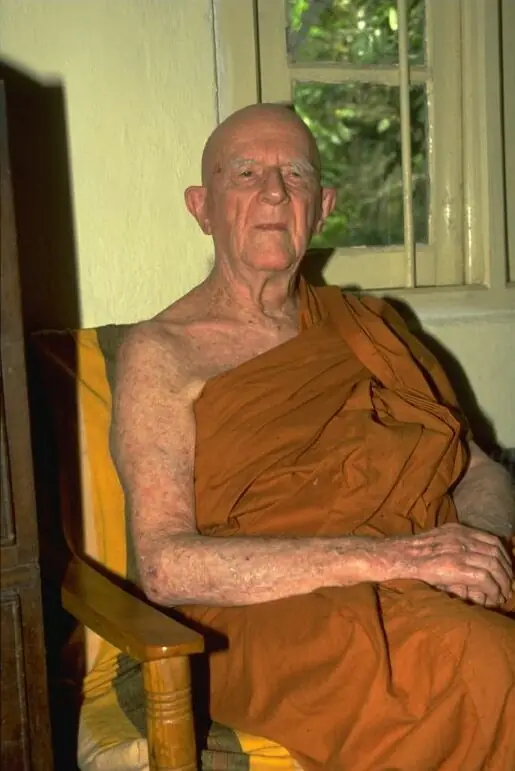
1901–1994 · Sri Lanka
German-born monk and scholar in Sri Lanka who co-founded the Buddhist Publication Society
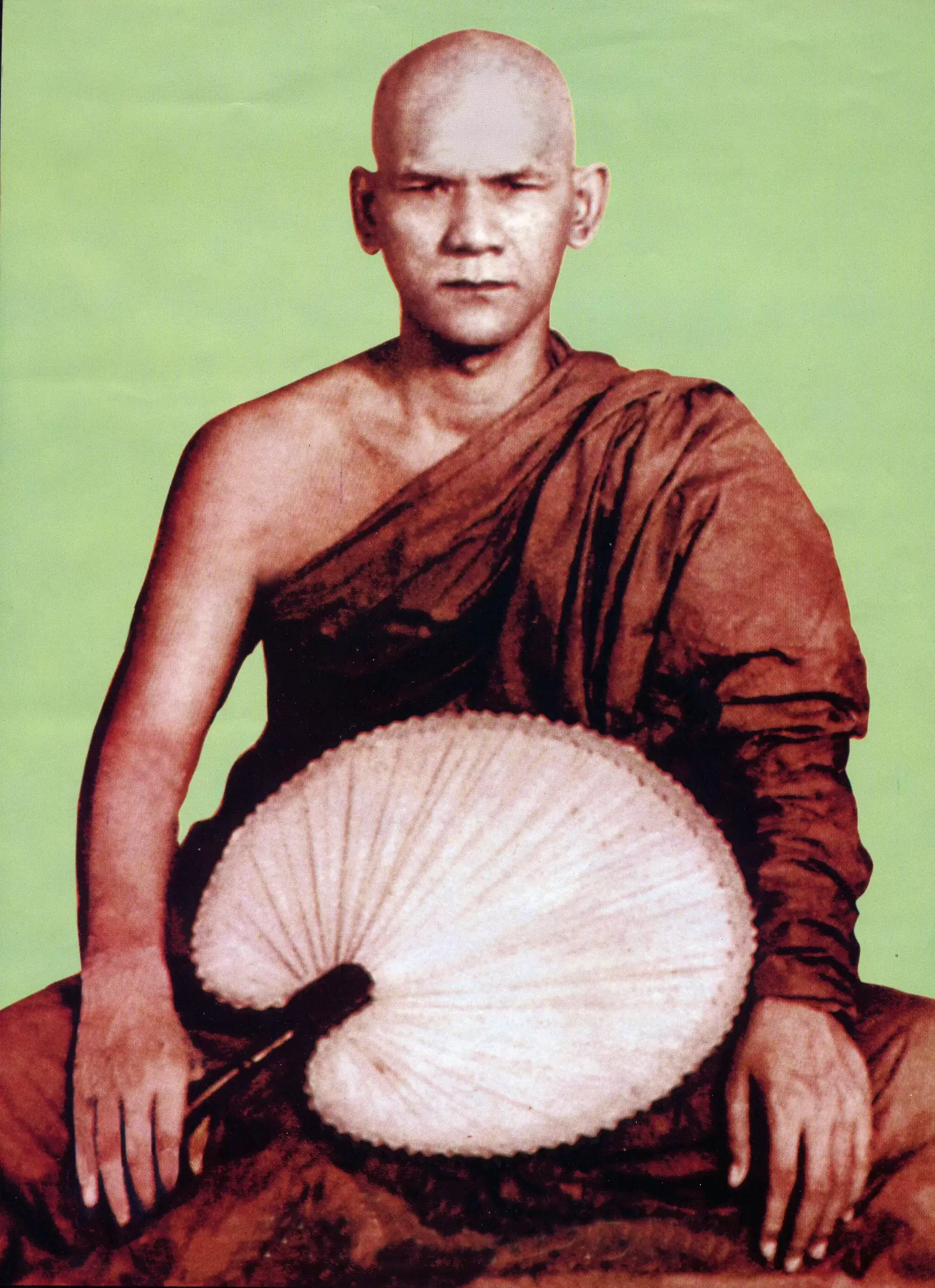
1904–1982 · Myanmar
Burmese scholar-monk whose method of mental noting spread insight meditation across Asia and the West.
1911–1989 · India
Bengali householder who became a respected Mahasi-lineage teacher and taught the founders of IMS
1914–2003 · India
Bengali Buddhist teacher trained by Mahasi Sayadaw who taught early Western insight students at Bodh Gaya
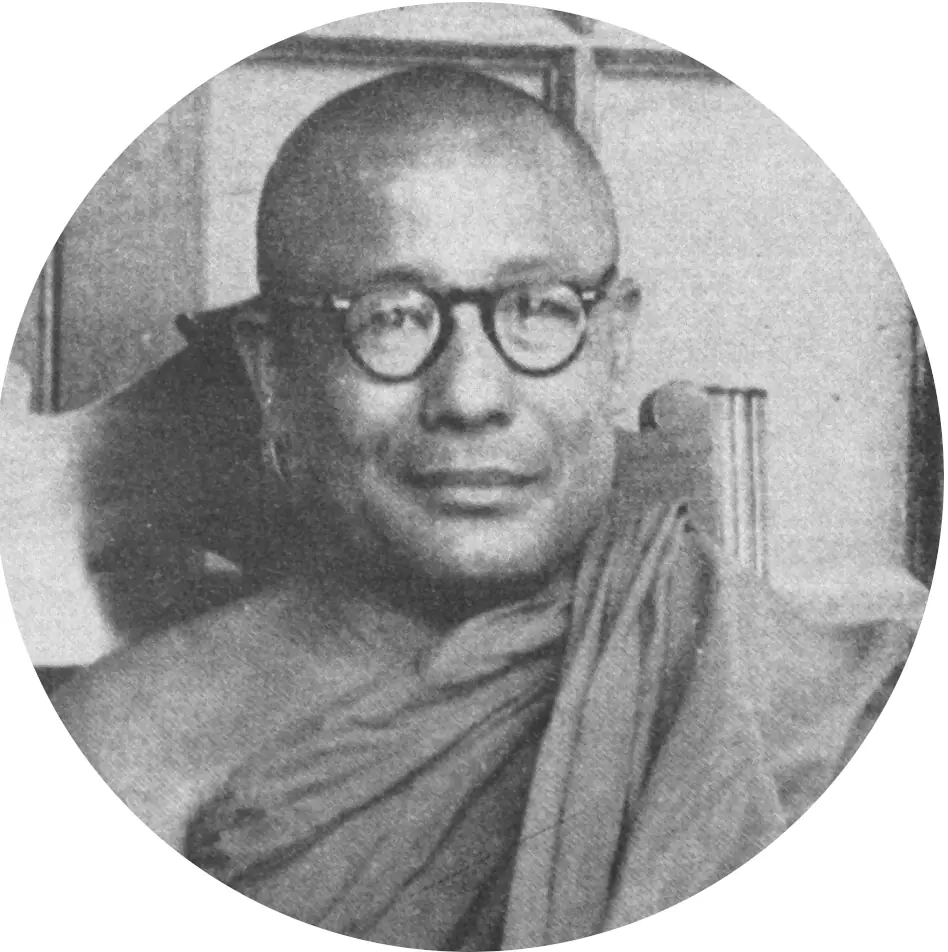
1921–2016 · Myanmar
Mahasi-lineage master known for exacting retreats, who founded Panditarama and its centre at Lumbini, Nepal.
1928–2026 · Myanmar
Mahasi-trained meditation master and head of Chanmyay Yeiktha, Yangon, who taught in many countries.
1929–1999 · Nepal
Kathmandu monk who ran one of Nepal's first regular Vipassana classes, from 1975, and helped fund IBMC.
1934 · Nepal
Nepali nun who founded Dharmakirti Vihara, led the nuns' order and taught Vipassana to nuns and lay women.
1939–2020 · Nepal
Nepali Pali scholar-monk who interpreted for Mahasi Sayadaw and U Paṇḍita and taught at IBMC, Kathmandu.
9 centres in 5 countries. Always check dates and rules on the centre’s own site.
Mayangone Township, Yangon, Myanmar · Chanmyay Yeiktha Meditation Center
Buddhanagar (Sankhamul), Kathmandu, Bagmati Province, Nepal · IBMC
Kanduboda, Delgoda, Western Province, Sri Lanka · Siyane Vipassana Meditation Centre
Bahan Township, Yangon, Myanmar · Mahasi Meditation Center
Inntakaw Township, Bago, Myanmar · Panditarama Hse Mine Gon Forest Center
West Monastic Zone, Lumbini, Rupandehi, Lumbini Province, Nepal · Paṇḍitārāma Lumbini
Bahan Township, Yangon, Myanmar · Paṇḍitārāma Shwe Taung Gon Sasana Yeiktha
San Jose, California, United States · Như Lai Thiền Viện
Suthep, Mueang Chiang Mai, Chiang Mai, Thailand · Northern Insight Meditation Center