Loading…
Mahasi noting · 1921–2016
Mahasi-lineage master known for exacting retreats, who founded Panditarama and its centre at Lumbini, Nepal.
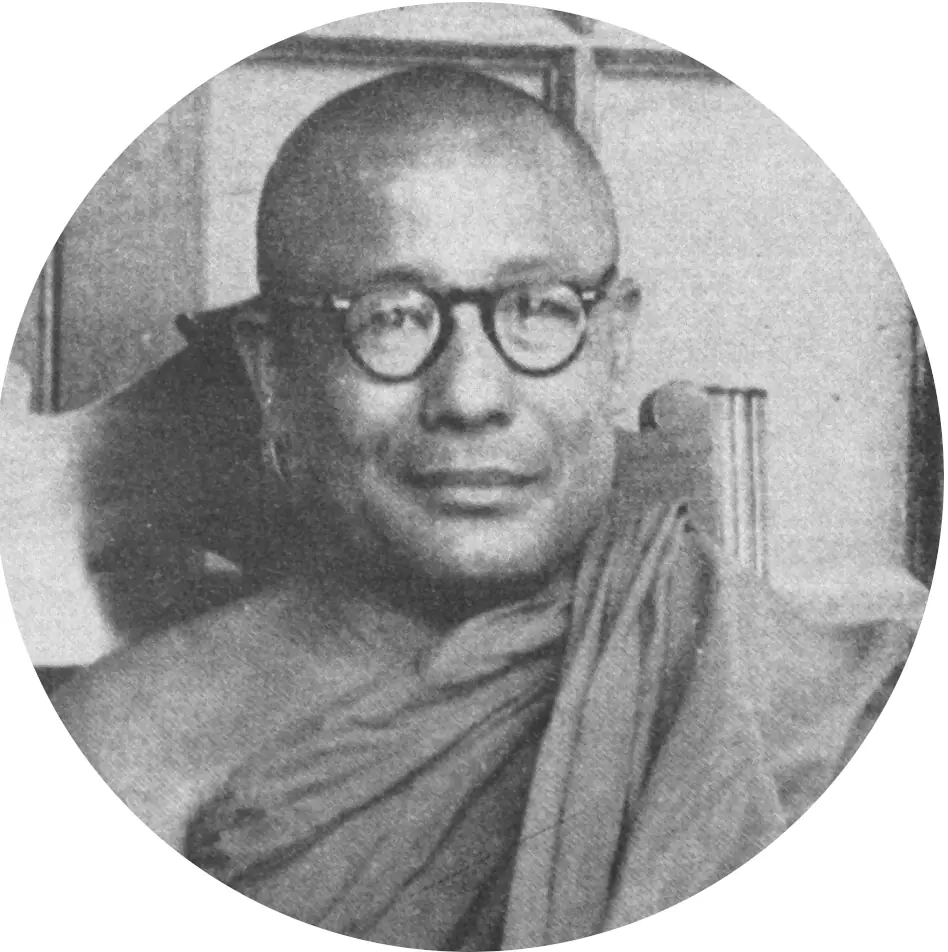
Sayadaw U Pandita was a Burmese monk in the line of Mahasi Sayadaw, known for strict, detailed retreats in the Mahasi method of noting. He taught several of the teachers who shaped insight meditation in the West. In 1999 he founded Panditarama Lumbini, a meditation centre near the Buddha's birthplace in Nepal that still teaches his method.
He was born in July 1921. The sources differ on the details: the Buddhist Channel and Insight Myanmar give 29 July, and Insight Myanmar names his hometown as Bago (Pegu); Wikipedia's article gives 28 July and Insein, in greater Yangon. His monastic name in full is U Paṇḍitābhivaṃsa.
He trained under Mahasi Sayadaw in the noting method. Insight Myanmar reports that in the 1950s Mahasi chose him as one of three monks to send to Sri Lanka.
He founded his own centre in Yangon, Panditarama Shwe Taung Gon Sasana Yeiktha: in October 1990 according to the Buddhist Channel, in 1991 according to Wikipedia. He later added a forest centre north of the city, Hse Mine Gon (Buddhist Channel). Both are listed on this site: Panditarama Shwe Taung Gon and Panditarama Hse Main Gon Forest Center.
He first taught at the Insight Meditation Society (IMS) in Massachusetts in 1984, and the talks from that retreat became the book In This Very Life (Spirit Rock). In a tribute published by Spirit Rock, the teacher Diana Winston describes his style as a meticulous "boot camp": students were expected to note every experience, and his well-known question to them was "Did you wake up on the in-breath or the out-breath?" She also credits him with first suggesting mindfulness retreats for teenagers to the Western insight community.
His students included Joseph Goldstein and Sharon Salzberg (Buddhist Channel; Spirit Rock), Aung San Suu Kyi and Diana Winston herself (Spirit Rock). Pa-Auk Sayadaw, who later developed his own method, practised under him and Mahasi Sayadaw in 1964 (Pa-Auk Thailand).
On teaching tours abroad, including retreats in France and Germany, his chief interpreter was the Nepali monk Bhikkhu Gyanapurnik, who had also translated Mahasi Sayadaw's sermons (Kantipur).
Panditarama Lumbini International Vipassana Meditation Center was inaugurated by U Pandita on 7 February 1999 (panditarama-lumbini.info). It describes itself as teaching "intensive vipassana in the tradition of the Venerable Mahasi Sayadaw". Between 1999 and 2020 it hosted 2,611 meditators from 76 countries. Its resident teachers are the German-born Sayadaw U Vivekānanda, who has trained under U Pandita since 1988, and Sayalay Daw Bhaddamanika.
As of 2026 the centre is open from the beginning of September to the end of March, accepts individual retreats from seven days to several months, and runs on donations with no set daily fees (Panditarama Lumbini). The article Lumbini and the Buddha's places in Nepal covers the wider site.
At the beginning of April 2016 he was moved to Bumrungrad hospital in Bangkok, where he died two weeks later, on 16 April 2016 (Buddhist Channel; Insight Myanmar). Insight Myanmar gives his age as 94; the Buddhist Channel gives 95. The method he taught is described in Mahasi noting.
1901–1994 · Sri Lanka
German-born monk and scholar in Sri Lanka who co-founded the Buddhist Publication Society
1904–1982 · Myanmar
Burmese scholar-monk whose method of mental noting spread insight meditation across Asia and the West.
1911–1989 · India
Bengali householder who became a respected Mahasi-lineage teacher and taught the founders of IMS
1914–2003 · India
Bengali Buddhist teacher trained by Mahasi Sayadaw who taught early Western insight students at Bodh Gaya
1928–2026 · Myanmar
Mahasi-trained meditation master and head of Chanmyay Yeiktha, Yangon, who taught in many countries.
1929–1999 · Nepal
Kathmandu monk who ran one of Nepal's first regular Vipassana classes, from 1975, and helped fund IBMC.