
Loading…
Tradition
Sayadaw U Tejaniya's teaching in the Shwe Oo Min lineage near Yangon: relaxed, continuous awareness, with the attitude of the watching mind put first.
Sayadaw U Tejaniya is a Burmese monk who teaches a relaxed, continuous awareness of whatever is happening, with close attention to the attitude of the mind that is doing the watching. He teaches in Yangon, at the Shwe Oo Min Dhammasukha Tawya forest centre and at Dhammavibhajja, in a lineage that runs back to Mahasi Sayadaw. His approach grew out of the Mahasi tradition but differs from it in emphasis.
This page describes the teaching from his own publications. It is not a replacement for a teacher: he teaches through retreats, interviews and Dhamma talks.
Shwe Oo Min Sayadaw was born on 15 September 1913. According to the lineage page of U Tejaniya's website, he furthered his vipassanā practice under Mahasi Sayadaw at the Mahasi Sasana Yeiktha in Yangon. In 1960 he established his own monastery, Shwe Oo Min Tawya ("Golden Cave Hermitage"), and in 1998 he started the Shwe Oo Min Dhammasukha Tawya meditation centre in Kon Tala Paung village, on the northern edge of Yangon. He died there on 20 November 2002.
Sayadaw U Tejaniya began practising under Shwe Oo Min Sayadaw in his early teens and ordained several times as a novice. He then lived as a householder and businessman, and took the robe as a monk in 1996. He now teaches at the centre his teacher founded.
His teaching is also known in the West. Spirit Rock Meditation Center in California names Sayadaw U Tejaniya, with Pa-Auk Sayadaw, among the recent influences on its practice; see Insight Meditation in the West.
The teaching puts less weight on what you attend to and more on how. Wisdom's Roar, a website of his teachings, has a whole section called "Attitude in Practice", about the tone, quality and orientation of the mind rather than techniques or objects. A short booklet, Right Attitude, sets out 23 points to help establish a right attitude for practice.
Many of his excerpts carry titles that sum up the approach: "Awareness Means Just Knowing, Not Focusing", "Relax and Let Awareness to Expand" and "Focusing Will Lead to Paying Attention on Concepts". The aim is to keep a light, relaxed awareness going, rather than to fix the mind hard on one object. Another excerpt is titled "The Foundation of the Practice Is Continuity of Awareness". Practice is not meant to stop when a sitting ends: his site has a section on daily-life practice, and several of his books deal with practice in everyday life.
One excerpt is titled "Why Sayadaw Doesn't Teach Concentration Meditation". Stability of mind (samādhi) is still discussed, in a section of its own, but it is not built up first as a separate stage.
Greed, aversion and delusion, the kilesa, are treated as things to study. One excerpt is titled "Watch the Defilement to Understand, Not to Make It Go Away". The booklet Don't Look Down on the Defilements, They Will Laugh at You covers right attitude, the right effort of continuity, meditation as mind work, working with pain, posture, sounds and the wandering mind.
Walking is part of every day on retreat, and the advice is summed up in the excerpt title "Walking Meditation: Walk Naturally". For how other traditions walk, see walking meditation. Chairs are fine: the centre's retreat page says there are plenty.
In the classical Mahasi method, meditators note the rising and falling of the abdomen as a home object, name other experiences as they arise, and walk slowly in stages (see Mahasi noting and mental noting). Wikipedia describes U Tejaniya's teaching as differing "in emphasis somewhat" from the style generally practised in Myanmar: there is no single primary object, and less weight on formal posture and walking style. His own excerpt titles warn that focusing can lead attention to concepts.
Both belong to the same Burmese lineage, and the Shwe Oo Min retreat page describes its practice as mindfulness meditation according to the Satipaṭṭhāna Sutta. The differences are of method and emphasis, not a ranking.
The centre's retreat page describes the following (in its most recent version, which dates from 2020):
Cost: the page says all facilities, teachings, CDs and publications are free of charge, and that you may offer a meal or make other donations if you wish (dāna).
Several of his books are free distribution, among them Don't Look Down on the Defilements, Awareness Alone Is Not Enough, Dhamma Everywhere and Right Attitude, all listed on ashintejaniya.org. When Awareness Becomes Natural: A Guide to Cultivating Mindfulness in Everyday Life was published by Shambhala in 2016. The site sayadawutejaniya.com (Wisdom's Roar) collects transcribed excerpts by theme, and Wisdom Streams distributes his books in North America.
The main place is the Shwe Oo Min Dhamma Sukha Tawya near Yangon; other centres in the country are listed under Myanmar. His own website, ashintejaniya.org, is the place to look for any change in the centre's status.
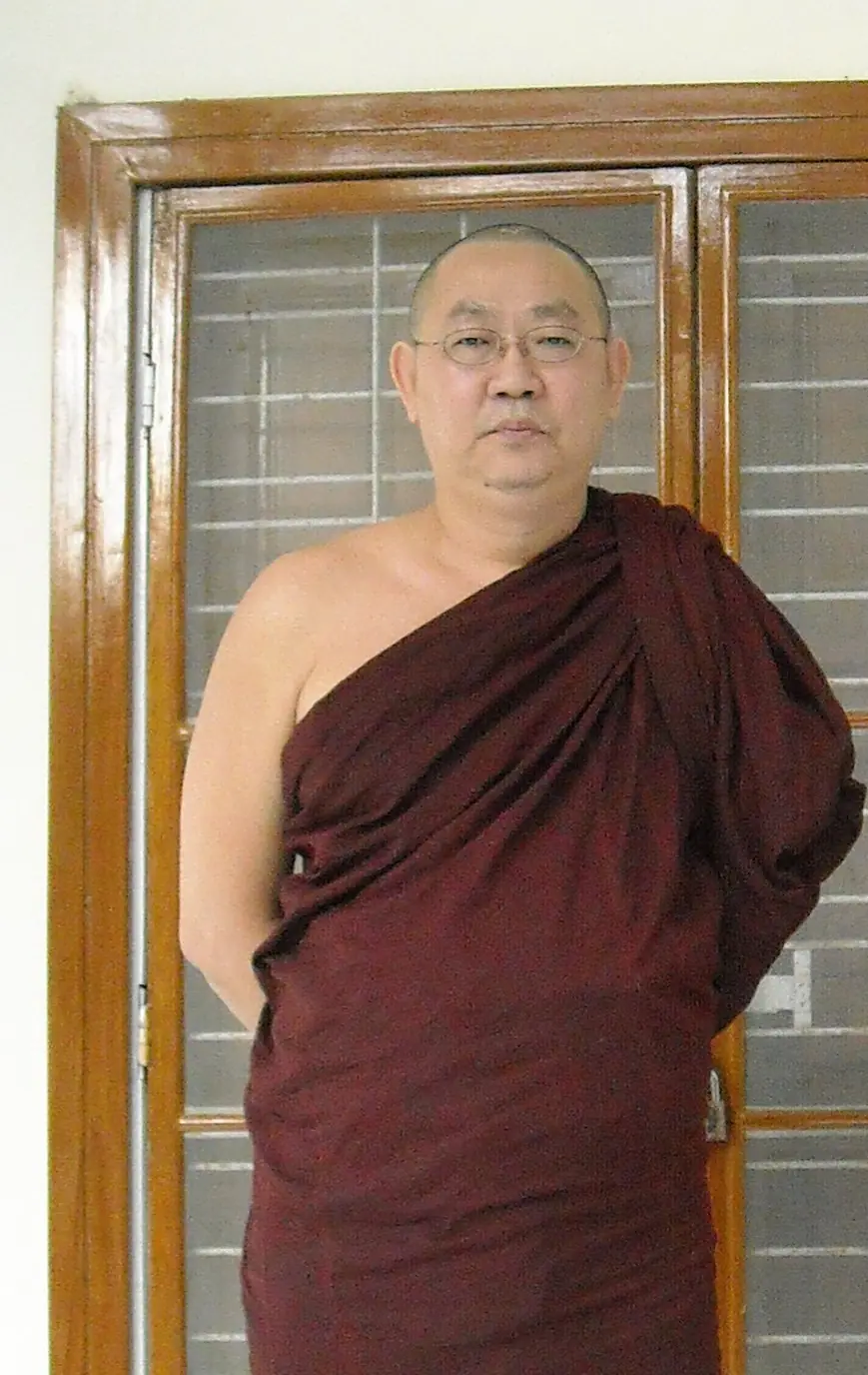
1962 · Myanmar
Burmese monk and former businessman who teaches relaxed, continuous awareness of the mind in daily life
1 centres in 1 countries. Always check dates and rules on the centre’s own site.
Kon Tala Paung Village, Mingaladon Township, Yangon, Myanmar · Shwe Oo Min Dhamma Sukha Forest Meditation Center