
Loading…
Tradition
The Pa-Auk method from Myanmar trains deep concentration (jhāna) first, then detailed insight that follows the Visuddhimagga, in long stays at a monastery.
The Pa-Auk method is taught by the Pa-Auk Tawya Sayadaw, Bhaddanta Āciṇṇa, at his forest monastery near Mawlamyine in Myanmar and at its branches. It trains deep concentration first and then uses it as the basis for a long, detailed practice of insight, following the Pāli commentaries, above all the Visuddhimagga. It is practised in long stays at a monastery, not on fixed courses. The monastery's list of branches includes two in Nepal.
This page describes the method from what the monastery and the Sayadaw's books publish. Meditators learn it at the monastery, through regular interviews with a teacher.
Pa-Auk Forest Monastery (Pa-Auk Tawya) was founded in 1926, in forest along the Taung Nyo range near Pa-Auk village, 15 km south-east of Mawlamyine in Mon State. Pa-Auk Sayadaw was born in 1934, became a novice at ten and a fully ordained monk at twenty, and passed the Dhammācariya (teacher of Dhamma) examinations at twenty-two. In 1964 he took up forest dwelling and sought out meditation teachers of the time; the monastery's pages do not name them. In 1981 he became abbot of Pa-Auk, at the invitation of the previous abbot.
Monks, nuns and lay people have come to practise under him since 1983, and foreigners since the early 1990s. The monastery has between about 1,000 and 1,800 residents, depending on the season, including more than 300 foreign monks, nuns and lay people from over 20 countries. The Pa-Auk Group has more than 40 branches and associate centres: 29 in Myanmar, and others in Sri Lanka, Singapore, Malaysia, Indonesia, Thailand, Nepal, China, Taiwan and the United States.
The Sayadaw's teaching reached English readers through Knowing and Seeing, talks he gave during a two-month retreat in Taiwan, first published in 1999 for free distribution. Its editors stress that the system is not his own invention: they present it as drawn directly from the Theravāda canon, commentaries and sub-commentaries. Spirit Rock, in its account of its own lineage, counts him among recent Burmese influences on Western insight teachers and describes his teaching as "a rigorous sequence of deep concentration and directed insight".
The monastery sets the path out as the three trainings of sīla, samādhi and paññā, and as the seven stages of purification of the Visuddhimagga (see The three trainings). As its own pages and Knowing and Seeing describe it:
Knowing and Seeing says the Sayadaw's main approach is calm first and then insight, but that he also teaches a pure-insight approach and sets out instructions for both. Its editors add that each meditator is guided individually, so a student's practice may differ in order and detail from the book.
There are no fixed-length courses. Meditators, lay and monastic, live at the monastery for the length of stay the monastery has approved, and all of them need that approval before they come. The monastery asks applicants to read its conditions and its rules for foreign meditators first, and then to apply on its form.
For stays of more than a month, the monastery issues a sponsorship letter, after receiving a signed Letter of Agreement, which the visitor uses to apply for a Myanmar meditation visa. Visitors on a visa obtained this way agree to stay at the monastery for its whole duration. The monastery says a tourist or entry visa covers stays of up to 28 days, and notes that visa rules change; check them, and current travel advice for Myanmar, before planning a stay.
Lodging and two meals a day are free of charge, and donations are voluntary. Travel, visas, medical care and other personal needs are the visitor's own responsibility. Lay meditators and nuns keep eight or ten precepts, monks keep the full monastic rules, and everyone attends group sittings and regular interviews and keeps noble silence. The two main languages of instruction for foreigners are English and Chinese.
Pa-Auk treats concentration, meaning jhāna or at least access concentration, as the basis for insight. Other Burmese methods take a different line. Spirit Rock describes both U Ba Khin's method, which S. N. Goenka teaches, and Mahasi noting as ways of experiencing impermanence directly without first attaining jhāna.
The commentaries themselves allow for both. In his translation of Mahasi's The Progress of Insight, Nyanaponika Thera explains the commentarial distinction between meditators who build calm first and those who take "bare insight" as their vehicle, and adds that the second group still needs a high degree of concentration. In a 1997 essay, Thanissaro Bhikkhu reads the suttas differently again: in his view calm and insight are not separate paths at all, but qualities developed together, with jhāna at the centre. Samatha and vipassanā sets out the question in more detail.
Pa-Auk's detailed map, from rūpa-kalāpas to the discernment of past lives, comes from the Visuddhimagga and the Abhidhamma rather than from the suttas alone. Knowing and Seeing presents this as a strength: the voice of a tradition handed down through generations of monks, in strict accordance with the authoritative texts. How much weight to give the commentaries, compared with the suttas, is one of the questions on which Theravāda teachers differ. Thanissaro Bhikkhu's essay, for example, builds its case from the suttas alone. The suttas' own framework for this practice is described in The four foundations of mindfulness.
The main monastery is Pa-Auk Tawya, 15 km beyond Mawlamyine, which is about 300 km south-east of Yangon. It also runs a branch for foreign meditators at Pyin Oo Lwin (Maymyo), and other branches across Myanmar.
In Nepal, the monastery's own list names two associated centres: Dhamma Earth-Himalaya at Dhampus, near Pokhara, and the Dhammadāyāda Pa-Auk Tawya Meditation Centre in Dolakha. The list gives no contact details for either, and this site could not verify their current retreat arrangements, so ask the main monastery before you plan a visit. Other centres in Nepal, of other traditions, are listed on Vipassana centres in Nepal.
In Sri Lanka, Na Uyana Aranya teaches the Pa-Auk method of samatha and vipassanā, and the Pa-Auk Group has centres in Singapore, Malaysia, Taiwan and the United States. Knowing and Seeing is distributed free and can be read online.
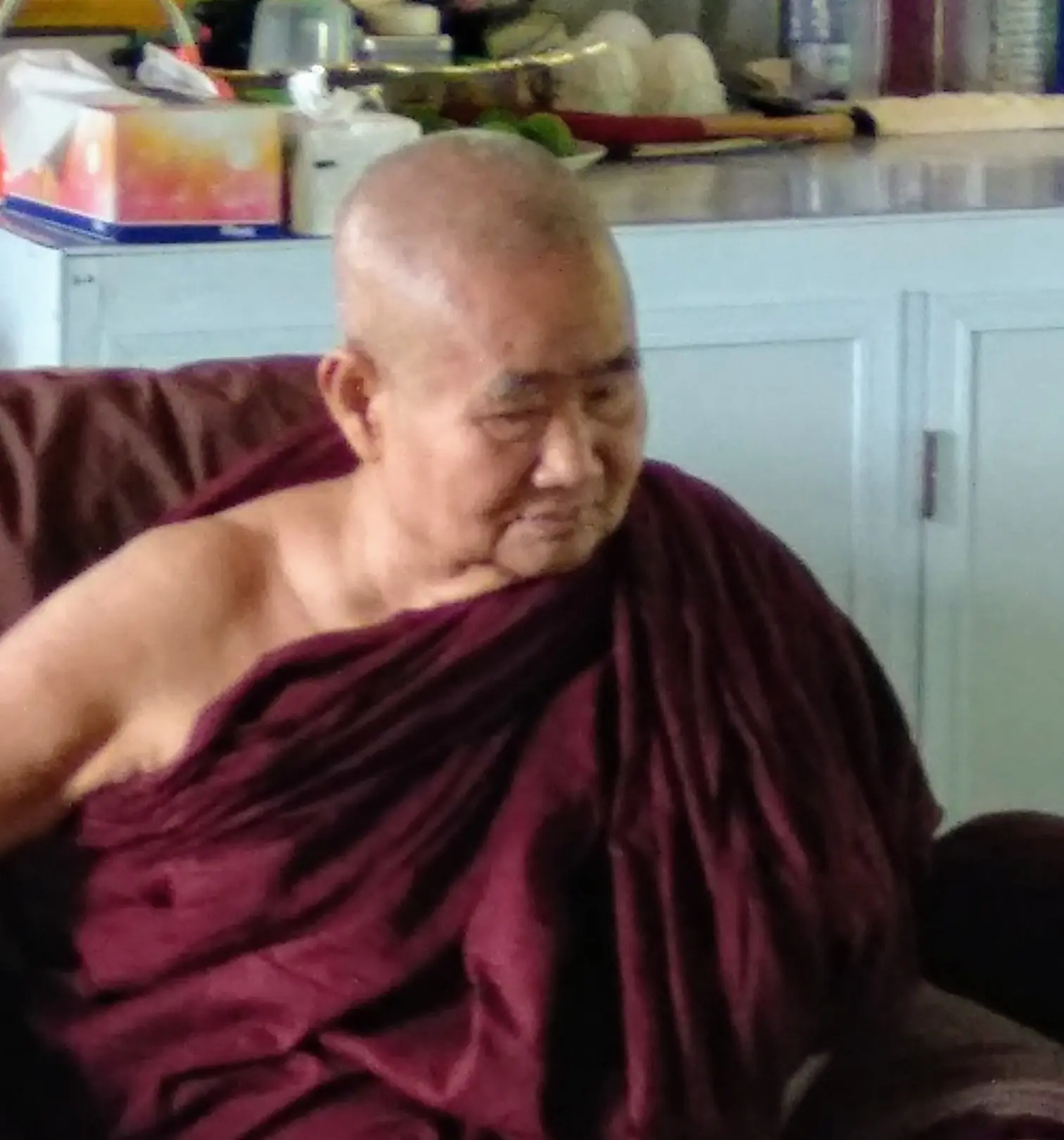
1934 · Myanmar
Burmese forest monk and scholar whose training develops deep concentration (jhāna) before insight.
2 centres in 2 countries. Always check dates and rules on the centre’s own site.
Pansiyagama, Melsiripura, North Western Province, Sri Lanka · Na Uyana Monastery
Pa-Auk village, near Mawlamyine, Mon State, Myanmar · Pa-Auk Forest Monastery