
The essentials · Part 8 of 10
The 10-day course, day by day
What happens on a 10-day Vipassana course in S. N. Goenka's tradition: arrival, the Code of Discipline, the daily timetable and each stage.
· 8 min read
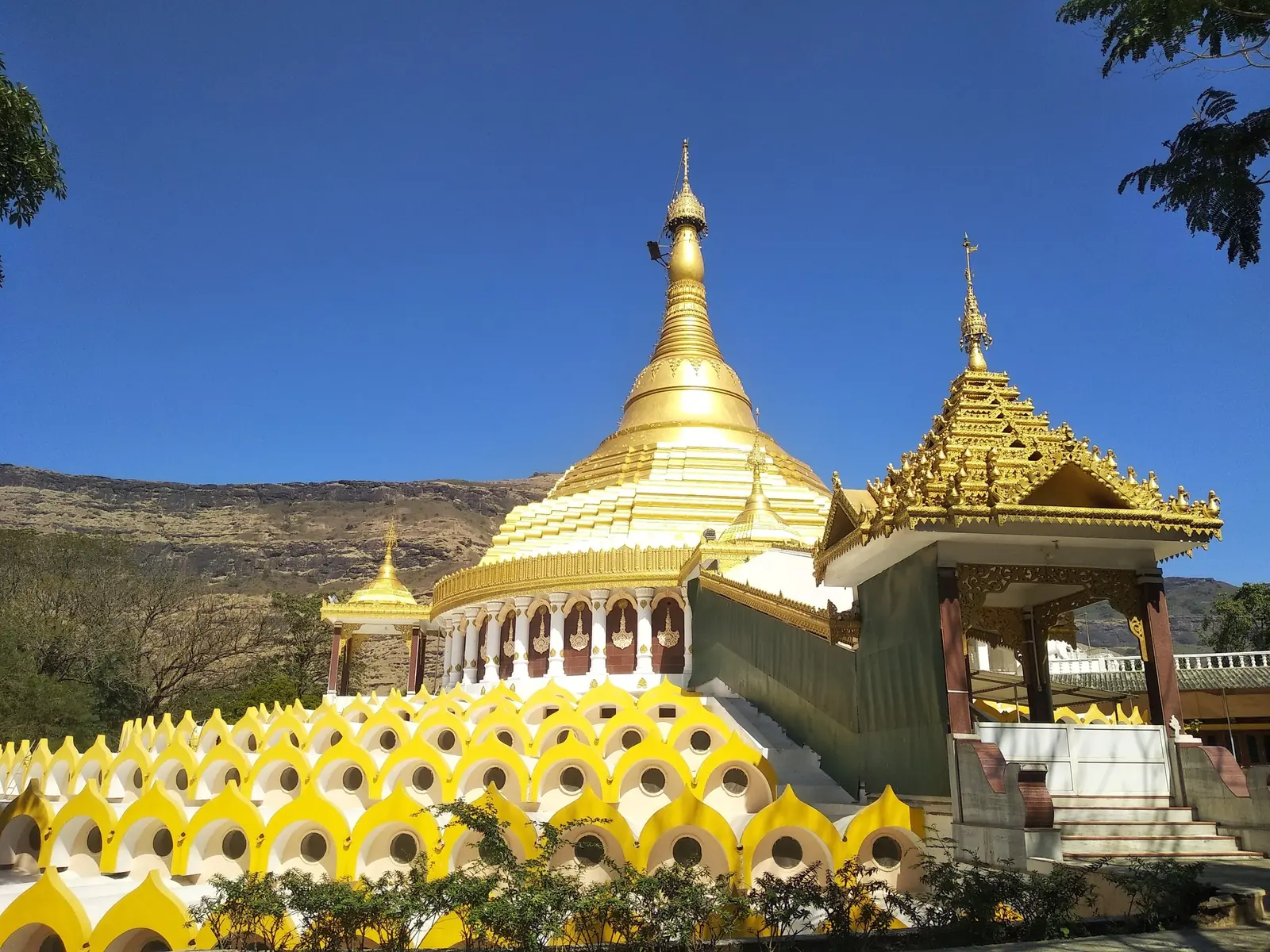
The 10-day residential course is how S. N. Goenka's tradition teaches Vipassana, at centres around the world, including about 20 in Nepal. This page describes what happens on one, from arrival to departure. It does not teach the technique: the course does that, with a teacher. Rules and times are those dhamma.org publishes, as of September 2026; check local details with your centre.
What a 10-day course is
dhamma.org explains the word Vipassana as seeing things as they really are. The course starts with observing the natural breath to concentrate the mind, then moves on to observing the changing nature of body and mind. The instructions and evening talks are recordings of Goenka; assistant teachers conduct the course and answer questions.
dhamma.org calls ten days the minimum: Vipassana was traditionally taught in seven-week retreats, and teachers found that less than ten days was not enough for the mind to settle down and work deeply. With the arrival and departure days, the course spans 12 calendar days.
The Code of Discipline says a course is not a rite based on blind faith, not a rest cure or holiday, and not meant to cure disease. More on the tradition: Vipassana as taught by S. N. Goenka and S. N. Goenka.
Arrival day, often called Day 0
dhamma.org's course glossary says 10-day courses begin after a registration period from 2 to 4 pm and an orientation. Phones, smartwatches and other devices are handed to the management until the course ends. Some centres do this differently: for Dhamma Shringa, north of Kathmandu, students register at the City Office in the city and travel to the centre on a chartered bus.
That evening the course is formally opened. Students take refuge in the Buddha, the Dhamma and the Sangha, take the precepts, accept the teacher's guidance for the length of the course, and ask to be taught Anapana, the first practice. In the Day Ten discourse, as summarised by the Vipassana Research Institute (VRI), Goenka told students that taking refuge did not convert them from one organised religion to another. Noble Silence begins with the course.
The Code of Discipline in plain words
Applicants are asked to read the Code of Discipline first and to apply only if they can follow it honestly. The Code's reason for the rules: ten days is short, continuity of practice in seclusion is what makes the technique work, and the rules come from meditators' experience rather than orthodoxy. Its summary rule is to meditate as if you were alone.
Five precepts, or eight for old students
Everyone keeps five precepts: no killing, stealing, sexual activity, lying or intoxicants. Old students (people who have completed a course with Goenka or one of his assistant teachers) keep three more: no food after midday, no entertainment or bodily decoration, and no high or luxurious beds. So at the 5 pm break old students take only lemon water or tea without milk, while new students have tea with milk and fruit; the teacher can excuse an old student for health reasons.
The Code calls moral conduct (sīla) the foundation of the practice: it supports concentration (samādhi), and the mind is purified through insight (paññā). See the three trainings.
Noble Silence
Noble Silence means silence of body, speech and mind. Students do not talk to each other or communicate by gesture, sign language or written notes, though they may speak to the teacher and to the management. dhamma.org's reason is continuity: it calls continuity of practice the secret of success on a course, and silence an essential part of keeping it.
Men and women are completely separated. Couples, friends and relatives do not contact each other, and there is no physical contact between participants.
No other practices during the course
Prayer, worship, religious ceremony, mantras, beads and incense are set aside for the ten days, and so are other meditation techniques, healing practices and exercise programmes; walking in designated areas is allowed in breaks. The Code says this is not to condemn other practices but to give Vipassana a fair trial in its pure form. Religious objects and talismans stay at home or go to the management.
Staying within the course
Students stay inside the course boundaries. There is no reading, writing, music or news: the restriction on reading and writing, the Code says, emphasises the practical nature of the meditation. Clothing is modest, to avoid distracting others. Meals are vegetarian, fasting is not permitted, and smoking, vaping and chewing tobacco are not allowed.
The daily timetable
The Code of Discipline publishes this timetable, designed, it says, to keep the practice continuous.
| Time | Activity |
|---|---|
| 4:00 am | Morning wake-up bell |
| 4:30–6:30 am | Meditate in the hall or in your room |
| 6:30–8:00 am | Breakfast break |
| 8:00–9:00 am | Group meditation in the hall |
| 9:00–11:00 am | Meditate in the hall or in your room according to the teacher's instructions |
| 11:00–12:00 noon | Lunch break |
| 12 noon–1:00 pm | Rest (and interviews with the teacher) |
| 1:00–2:30 pm | Meditate in the hall or in your room |
| 2:30–3:30 pm | Group meditation in the hall |
| 3:30–5:00 pm | Meditate in the hall or in your own room according to the teacher's instructions |
| 5:00–6:00 pm | Tea break |
| 6:00–7:00 pm | Group meditation in the hall |
| 7:00–8:15 pm | Teacher's Discourse in the hall |
| 8:15–9:00 pm | Group meditation in the hall |
| 9:00–9:30 pm | Question time in the hall |
| 9:30 pm | Retire to your own room; lights out |
dhamma.org counts about ten hours of meditation a day. The teacher meets students privately between noon and 1 pm and answers questions in the hall from 9:00 to 9:30 pm; both times are for clarifying the technique and the evening discourse.
How the course unfolds
Days 1 to 3: Anapana
The first days are spent on ānāpāna, which dhamma.org describes as fixing attention on the natural flow of the breath as it enters and leaves the nostrils, to calm and focus the mind. Goenka's Day One discourse, as summarised by VRI, calls the first day full of difficulties, partly because students are not used to sitting all day. See Anapana.
Day 4: Vipassana is given
dhamma.org says that by the fourth day the mind is ready for Vipassana itself: observing sensations throughout the body, understanding their nature, and developing equanimity by learning not to react to them. Its self-course guidance places the change on the afternoon of Day 4; no exact hour is published for teacher-led courses. The instructions are given only on the course; body scanning describes the practice in outline.
Sittings of strong determination
From then on, the three daily group sittings are sittings of strong determination (adhiṭṭhāna): students try to sit the hour without changing position. dhamma.org's guidance says that if it becomes too uncomfortable, move as little as possible and carry on without any sense of defeat, and not to try such sittings if they might worsen a physical weakness or injury.
Days 5 to 9
The timetable stays the same. The evening discourses, as summarised by VRI, take up what students meet along the way: pain on Day Five, the hindrances of craving, aversion, drowsiness, agitation and doubt on Day Six, and poor sleep on Day Seven. Participants often say Day 2 and Day 6 are the hardest; neither dhamma.org nor the discourse summaries say so.
Day 10: mettā, and speech again
On the last full day students learn mettā, which dhamma.org calls the meditation of loving kindness or goodwill towards all. Noble Silence ends that morning, and speech is resumed, dhamma.org says, to re-establish the normal pattern of daily life. The self-course guidance starts mettā at 9 am; no exact time is published for teacher-led courses. See Mettā.
Day 11: leaving
The course ends on the morning of the eleventh day, by 7:30 am according to dhamma.org's course glossary.
The evening discourses
Every evening from 7:00 to 8:15 pm students watch a recorded talk by Goenka, which dhamma.org says gives a context for understanding the day's experience. The recordings are in English or Hindi, with translations into many languages; on bilingual courses the two language groups hear the discourses separately.
VRI also publishes a condensed text, The Discourse Summaries, whose introduction warns that it is not a do-it-yourself manual or a substitute for a ten-day course.
Why the course is free
There is no charge for teaching, food or accommodation. Courses in this tradition run only on donations (dāna), and donations are accepted only from people who have completed at least one 10-day course; a first-time student may give at the end. The Code explains the reasoning: each course is paid for by earlier students who benefited and wish to share that benefit. It suggests the donation be given with this wish:
"The course I have taken has been paid for through the generosity of past students; now let me give something towards the cost of a future course, so that others may also benefit by this technique."
No amount is suggested; people give according to their means and volition. Neither teachers nor organisers are paid, and dhamma.org says teachers must have their own means of support.
Leaving early
Students commit to staying for the entire course, and dhamma.org's Q&A answers "Yes" to whether you must stay to the end. In the Day One discourse, as summarised by VRI, Goenka puts it this way:
"You are performing an operation on your mind; remain in the operating room."
He adds that it can be harmful to leave in the middle, and that some difficulty is expected: impurities hidden in the unconscious can surface as mental or physical discomfort. The Code asks students troubled by doubt to talk to the teacher straight away. So apply for dates when you can give all 12 days; before your first course covers the health questions and preparation.
How other traditions run retreats
Other traditions organise retreats differently:
- Insight Meditation Society (Barre, Massachusetts) runs courses from a weekend to three months. A typical day runs from 5:30 am to 10 pm in silence, alternating sitting and walking, with a one-hour work period. Fees are on a sliding scale, and teachers are supported separately by dāna. See insight meditation in the West.
- Panditarama Lumbini, in Nepal, teaches in the tradition of Mahasi Sayadaw. From September to March, meditators book individual retreats of seven days to several months: sitting, walking and mindfulness of daily activities, four interviews a week, daily talks, eight precepts and Noble Silence, with no set daily fees. See Mahasi noting.
- Suan Mokkh International Dharma Hermitage in Thailand runs a 10-day retreat from the 1st of each month, with registration in person only, the day before; the fee was 2,000 baht as of 2026. See Suan Mokkh ānāpānasati.
Sources
- Introduction to the Technique and Code of Discipline, dhamma.org
- Questions & Answers About the Technique of Vipassana Meditation, dhamma.org
- Vipassana Meditation, dhamma.org
- Course Glossary, dhamma.org
- Self-Course FAQs, dhamma.org
- The Discourse Summaries (S. N. Goenka, condensed by William Hart), Vipassana Research Institute
- Center Information: Dhamma Shringa, Nepal Vipassana Center
- Retreat Center, Insight Meditation Society
- Panditarama Lumbini International Vipassana Meditation Center, Panditarama Lumbini
- Registration, Suan Mokkh International Dharma Hermitage