
Loading…
Tradition
Mogok Sayadaw's Burmese method: learn dependent origination first, then watch feeling and mind arise and pass away in your own experience.
The Mogok method is a Burmese way of practising vipassanā that puts understanding before technique. It comes from the Mogok Sayadaw, U Vimala (1899–1962), who taught that a meditator should first learn how dependent origination works and then see it happen in their own feelings and mind. The method is widely practised in Myanmar, but its teaching has been little known outside the country, and few of its materials exist in English.
This page describes the method from the Sayadaw's translated talks and a Mogok centre's booklet on dependent origination. It is not a set of instructions: the tradition teaches through its centres and teachers.
U Vimala was born in 1899 near Amarapura, not far from Mandalay, and was ordained as a novice at the age of eight. As a young monk he became a well-known teacher of the Abhidhamma, the analytical part of the Buddhist canon. From 1934, lay supporters in the ruby-mining town of Mogok invited him to teach there every year, and, according to the biography summarised by his English translator, these ties are why he became known as the Mogok Sayadaw. (A sayadaw is a senior Burmese monk and teacher.) Wikipedia gives a different origin for the name: that Mogok residents sponsored his ordination as a monk in 1920.
During the Second World War he moved to Mogok, and from mid-1942 until late 1945 he practised in a cave outside the town. When he came out in 1945 he began teaching vipassanā practice, not only Abhidhamma. In his last years he divided the year between Amarapura, Mandalay and Mogok, giving a talk every evening. His disciples began recording the talks in 1954, and after his death in 1962 some were transcribed into 33 volumes.
More about his life: Mogok Sayadaw.
Mogok teaching begins with study. In one of the translated talks the Sayadaw puts it plainly:
Contemplation without any knowledge beforehand is impossible. Without understanding the dependent arising you never dispel wrong view.
He goes on to say that before the knowledge of rise and fall can come, a meditator needs two earlier kinds of knowledge: of mind and form, and of cause and effect.
The tool for this study is a circular chart of paṭicca-samuppāda, dependent origination. At first the Sayadaw laid out betel nuts on a table, one for each of the twelve links; the chart grew out of later discussions with his disciples and, his translator writes, became well known to most Buddhists in Burma. It sets the twelve links in four groups across past, present and future lives, with ignorance and craving written at the centre as the two roots that keep the wheel turning.
Students learn eight points about the chart by heart: two roots, two truths, four groups, twelve factors, three connections, three rounds of existence, three periods of time, and twenty factors of cause and effect. Learning them is called pariyatti (study), understanding them in practice paṭipatti, and the result paṭivedha (realisation). A booklet from Mogok Yeiktha in Yangon explains the same chart and points to key junctions in it, such as the link between feeling and craving.
The main objects of contemplation are feeling (vedanā) and mind (citta). In the translated talks the Sayadaw pairs them with two problems: contemplating the mind works against wrong view, and contemplating feeling works against craving. Whatever mind state arises is an object of insight. The arising of a feeling, he says, is the arising of dependent origination, and its passing away is its cessation.
The breath has a supporting role. If the mind is restless, the talks advise first developing some calm with ānāpānasati, mindfulness of breathing, and then turning to feeling. In a talk dated 14 November 1960, he describes a meditator sitting with the breath until a sensation, such as an itch that was not there before, draws attention to change; the meditator follows what arises and passes, and returns to the breath when concentration and discernment weaken. He speaks of observing the knowing mind at the "heart base" (hadaya-vatthu).
In the terms of the four foundations of mindfulness, this is mainly contemplation of feeling and of mind, aimed at seeing impermanence directly. For breath awareness as a practice in its own right, see Anapana.
The clearest difference is the place of doctrine. In S. N. Goenka's Day 11 discourse, the practice of Dhamma matters more than theory, and students may set aside theory they cannot accept. Mogok teaching asks for study of dependent origination before and during practice. On Goenka courses the breath is also used first, for about three and a half days, before observing sensations through the body; in Mogok teaching the breath is used only as needed. See Vipassana as taught by S. N. Goenka and Mahasi noting for two other Burmese methods.
A 2016 post on the Insight Myanmar blog placed the Mogok method between the structured, prescriptive Goenka course and the open approach of Sayadaw U Tejaniya. The Mogok chart also follows the traditional reading of dependent origination across three lives. Buddhadāsa Bhikkhu in Thailand criticised that reading and taught the twelve links as events in the present moment (see Suan Mokkh). These are differences of method and interpretation, not a ranking.
No official English-language website for the Mogok organisation was found as of September 2026, and no published course format or fee. The format varies, so ask the centre directly about length, timetable, language and cost.
A first-hand account in English gives some idea, though it dates from 2016. In the Insight Myanmar post, the author described an eight-day Mogok course on the outskirts of Yangon. He found at least two teachers who spoke English, but wrote that the method and facilities had yet to be adapted for foreign students, and that the English texts were full of examples specific to Myanmar.
The Mogok Vipassana centre in Yangon, Mogok Yeiktha, is named in the translated talks, and one of its teachers wrote the chart booklet cited on this page. Wikipedia, citing the scholar Kate Crosby, puts the number of centres in Myanmar teaching the method at over 300. Their names and addresses could not be confirmed from official sources, so none is listed in the Myanmar centres directory yet.
The town of Mogok also has two Vipassana centres in S. N. Goenka's tradition, Dhamma Ratana and Dhamma Makuta. They teach the Goenka course, not the Mogok method.
For reading in English, Bhikkhu Uttamo's translations of the talks are free to download, and U Sun Lwin (later Ven. Ādiccaramsī) wrote a Manual of Vipassanā Contemplation from Mogok Teaching.
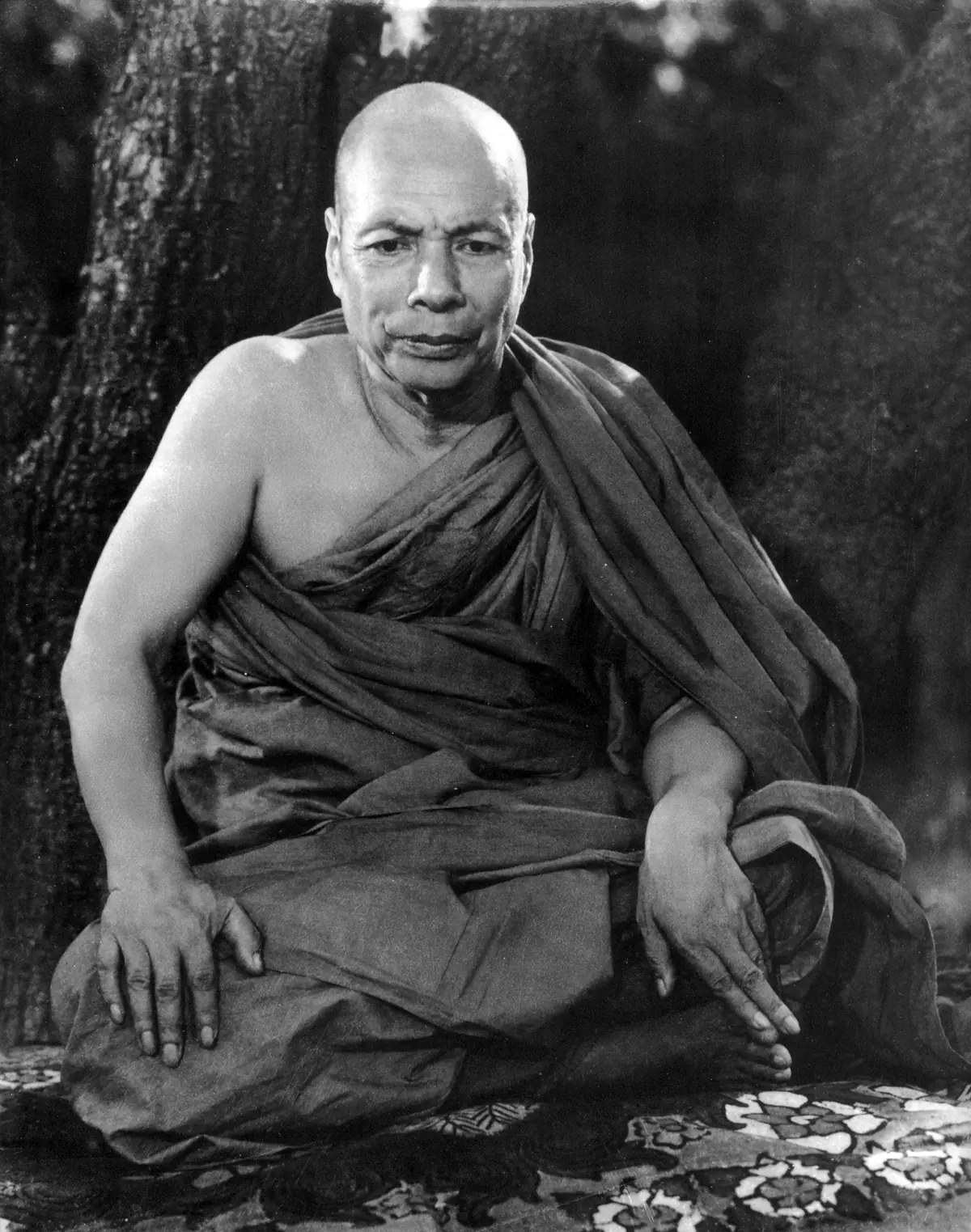
1899–1962 · Myanmar
Burmese Abhidhamma teacher whose insight method centres on dependent origination, feeling and mind.