
Loading…
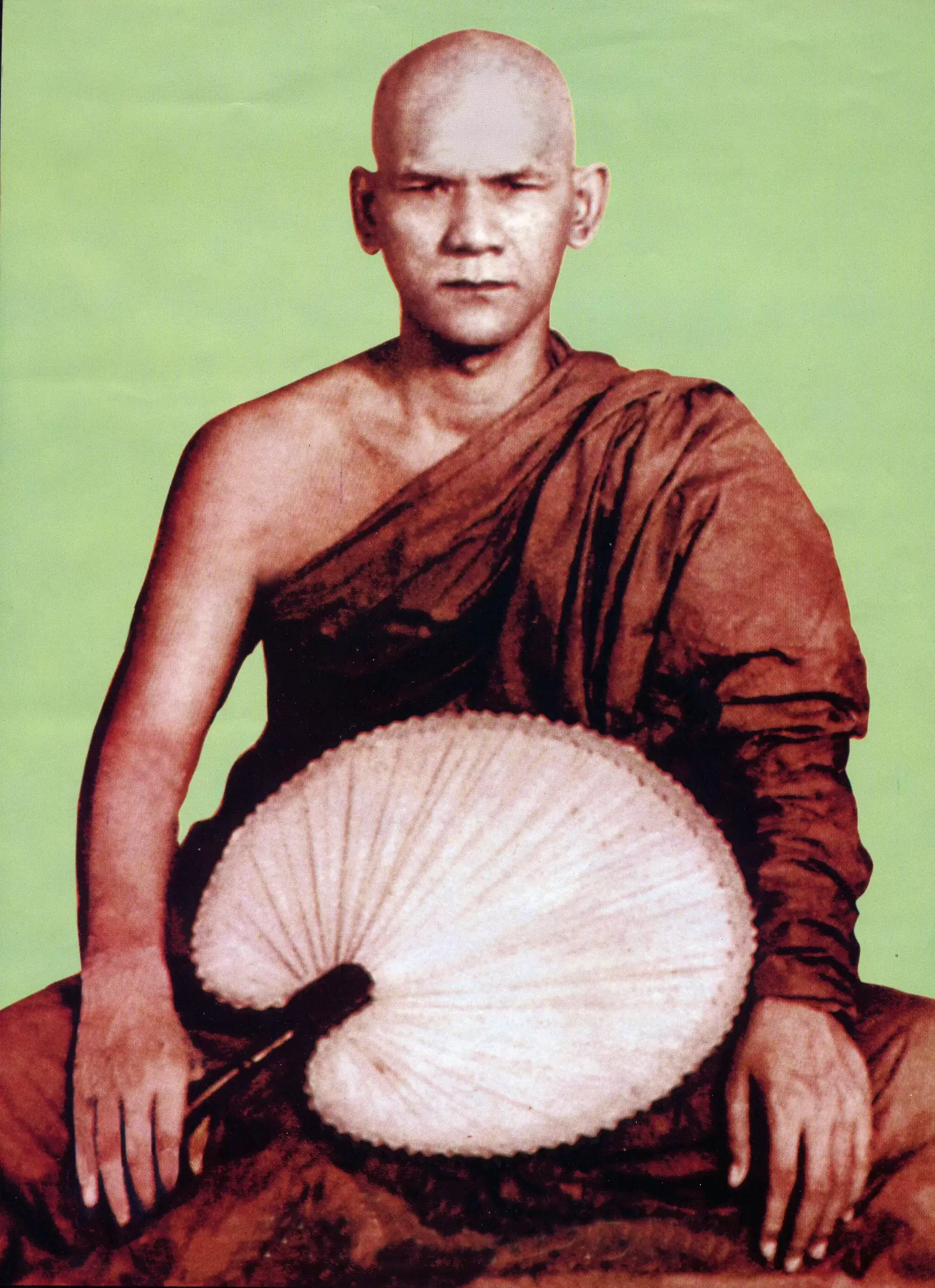 Photo: Unknown author, Public domain
Mahasi noting · 1904–1982
Burmese scholar-monk whose method of mental noting spread insight meditation across Asia and the West.
Mahasi Sayadaw was a Burmese monk and scholar whose method of insight meditation, based on noting each experience as it happens, spread from Burma to Thailand, Sri Lanka, Nepal and the West. Several of the first Western Vipassana teachers trained with him or with his students.
He was born on 29 July 1904 in Seikkhun, a village about seven miles west of Shwebo in Upper Burma. His parents were U Kan Taw and Daw Oke. At twelve he became a novice under U Adicca, with the name Shin Sobhana (BuddhaNet).
While teaching in Moulmein, he went to Thaton to practise under the Mingun Jetavana Sayadaw, U Nārada. BuddhaNet's biography says that within four months he was able to teach the method himself. He taught his first three students at Seikkhun in 1938. During the Second World War he wrote his Manual of Vipassana Meditation at the Mahāsī monastery in Seikkhun; the monastery's name, which means "big drum", became his own (BuddhaNet; Lion's Roar).
Prime Minister U Nu invited him to Rangoon. BuddhaNet and Access to Insight date this to 1949; other accounts give 1947. The Sāsana Yeiktha on Hermitage Road opened on 4 December 1949, when he instructed the first group of meditators himself: 25 people according to BuddhaNet, 15 according to Access to Insight. From July 1951 a taped introductory talk was used for newcomers.
The centre, now Mahasi Sasana Yeiktha, became the hub of a network. BuddhaNet reports that by a 1972 count, centres under his guidance in Burma and abroad had trained more than 700,000 meditators.
He was also a leading scholar. At the Sixth Buddhist Council, which opened on 17 May 1954, he served as final editor (osana) and as the questioner (pucchaka) (BuddhaNet; Access to Insight).
In his own instructions, published in English as Satipatthana Vipassana, the meditator keeps attention on the abdomen and silently notes "rising" and "falling" as it moves with the breath. Anything more prominent, such as a thought, a sound or a pain, is noted in turn, and walking is noted step by step. The labels are only a support: "it is more important to know the object than to know it by a term or name."
Spirit Rock Meditation Center describes the method as using "continuous mental noting as a support for 'momentary concentration' (khaṇika samādhi)", aiming at insight without first developing the absorptions (jhāna). Not everyone accepted it at first. BuddhaNet records that he was "severely criticised in certain quarters for his advocacy of the allegedly unorthodox method of noting the rising and falling of the abdomen"; his biographer replies that the Mingun Sayadaw had approved it and that it is a way of observing the air element (vāyodhātu).
The method is described more fully in Mahasi noting and Mental noting, and compared with Goenka's approach in Goenka and Mahasi: two Burmese methods.
His monks took the method to Thailand from 1952 and to Sri Lanka from 1955, and he led a mission to Sri Lanka himself in January 1959 (BuddhaNet). The German-born monk Nyanaponika Thera meditated under him in 1952 and later translated The Progress of Insight (Buddhist Publication Society). Anagarika Munindra and Dipa Ma were among his students who later taught at the Insight Meditation Society in the USA (Spirit Rock).
In 1979, 1980 and 1981 he made missions to the West and to India and Nepal (BuddhaNet). At the Insight Meditation Society in 1979 he authorised Joseph Goldstein, Sharon Salzberg, Jack Kornfield and Jacqueline Mandell to teach (Spirit Rock). Among his students in Myanmar were Sayadaw U Pandita and Chanmyay Sayadaw (Lion's Roar). He died on 14 August 1982 (BuddhaNet; Access to Insight).
In 1981 he visited Kathmandu and instructed monks, nuns and lay people (LeVine). The Nepali monk Bhikkhu Gyanapurnik, who had studied in Burma, translated his sermons (Kantipur). LeVine writes that before the 1980s very few Theravada monks, nuns or lay people in Nepal practised meditation; by the end of that decade all the larger Theravada monasteries in the Kathmandu Valley offered Vipassana instruction.
His method is taught in Nepal today at Panditarama Lumbini, founded by U Pandita in 1999, and at the International Buddhist Meditation Center in Kathmandu.
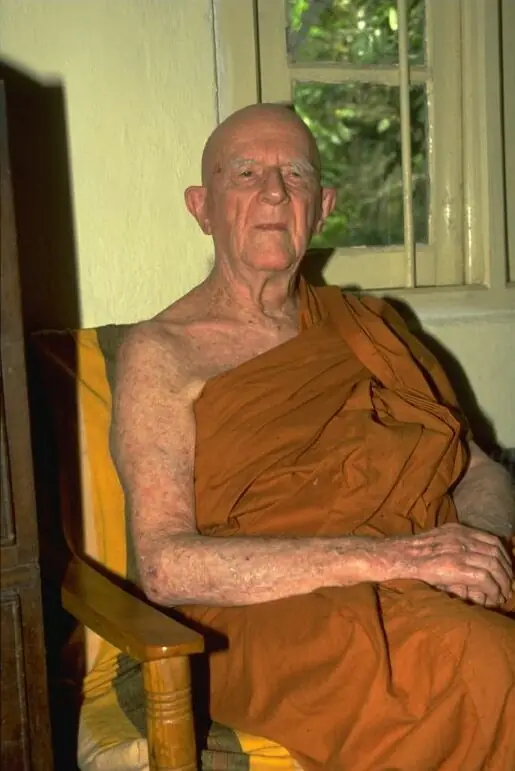
1901–1994 · Sri Lanka
German-born monk and scholar in Sri Lanka who co-founded the Buddhist Publication Society
1911–1989 · India
Bengali householder who became a respected Mahasi-lineage teacher and taught the founders of IMS
1914–2003 · India
Bengali Buddhist teacher trained by Mahasi Sayadaw who taught early Western insight students at Bodh Gaya
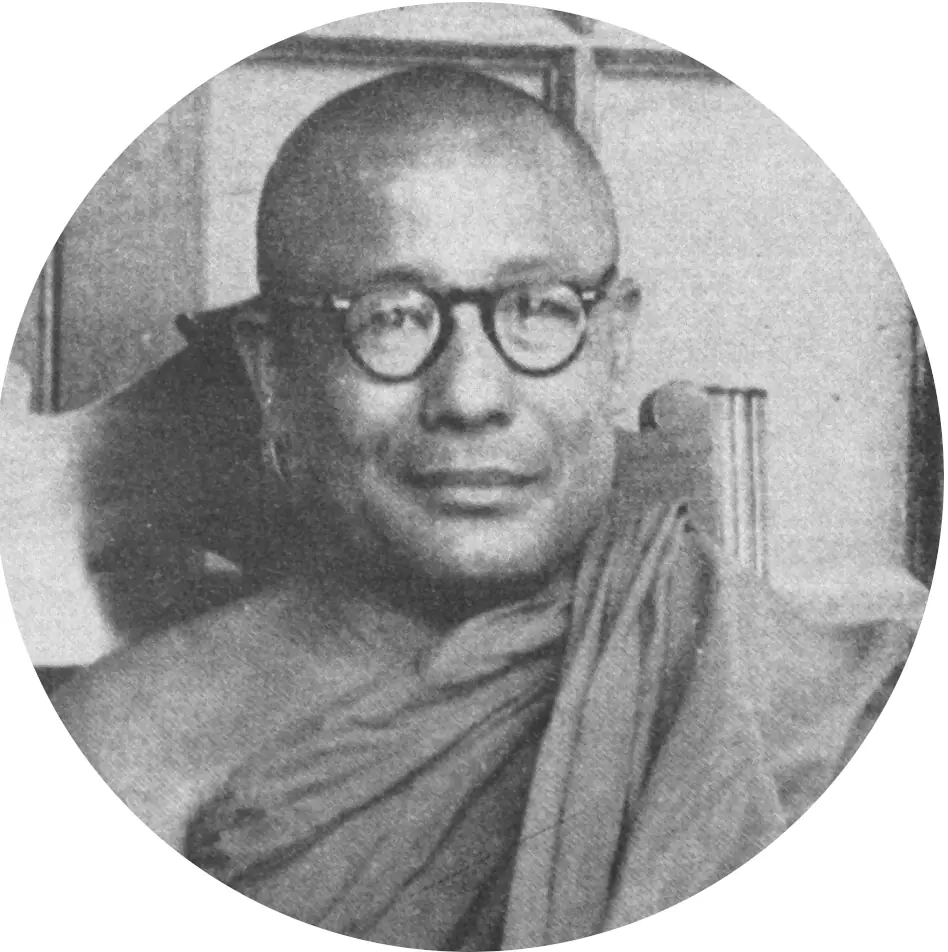
1921–2016 · Myanmar
Mahasi-lineage master known for exacting retreats, who founded Panditarama and its centre at Lumbini, Nepal.
1928–2026 · Myanmar
Mahasi-trained meditation master and head of Chanmyay Yeiktha, Yangon, who taught in many countries.
1929–1999 · Nepal
Kathmandu monk who ran one of Nepal's first regular Vipassana classes, from 1975, and helped fund IBMC.