
Loading…
Mahasi noting · 1914–2003
Bengali Buddhist teacher trained by Mahasi Sayadaw who taught early Western insight students at Bodh Gaya
Anagarika Munindra was a Bengali Buddhist teacher who trained for nine years at Mahasi Sayadaw's meditation centre in Rangoon and then taught insight meditation at Bodh Gaya, the place of the Buddha's awakening. The Americans who later founded the Insight Meditation Society learned the Mahasi method partly from him and from his student Dipa Ma. His students called him Munindraji.
Munindra was born in Chittagong, now in Bangladesh, into the Barua family. Tricycle's obituary describes the Baruas as descendants of India's early Buddhists who were driven east by an invasion in the eleventh century.
Sources differ on the year of his birth. Tricycle gives 1914, which fits its statement that he was 89 when he died in October 2003. Spirit Rock Meditation Center's lineage page gives 1915. This page follows the obituary.
In the 1940s he went to India to work with the Mahabodhi Society at Sarnath, near Varanasi, where the Buddha gave his first discourse. In the 1950s he was appointed superintendent of the Mahabodhi Temple at Bodh Gaya.
Mahasi Sayadaw invited him to Rangoon (now Yangon) to study at the Thathana Yeiktha, the centre now known as Mahasi Sasana Yeiktha. He stayed for nine years. According to Tricycle, he then went on to study with about 25 other Burmese teachers.
In Rangoon he was a family friend and near neighbour of Nani Bala Barua, later known as Dipa Ma. The website devoted to her says he encouraged her, when she was 53, to come to the centre where he was practising under Mahasi Sayadaw. Spirit Rock's lineage page calls her "Munindra's student", and she went on to teach the method herself.
Munindra returned to India in 1966 and began teaching Vipassana at Bodh Gaya, and later elsewhere in India, in Europe and in the United States. Joseph Goldstein met him at Bodh Gaya in 1967, a year after his return from Burma, and was one of his first Western students.
In Tricycle's obituary Goldstein recalled Munindra's "deeply nonsectarian attitude" and his advice to be simple without being simple-minded.
Goldstein, Sharon Salzberg and Jack Kornfield went on to open the Insight Meditation Society in Barre, Massachusetts, in February 1976. Spirit Rock's lineage page lists Munindra among the students of Mahasi Sayadaw who later taught at IMS.
What Munindra passed on was Mahasi Sayadaw's method. Spirit Rock describes it as using "continuous mental noting as a support for 'momentary concentration'" (khaṇika samādhi), with the aim of insight without first developing the absorptions called jhāna. In practice this means noting the rising and falling of the abdomen, and then whatever else becomes prominent, through sitting and walking (see mental noting).
According to Spirit Rock, this is the primary technique the founders of IMS brought back from their study in India and Southeast Asia, learned through Sayadaw U Pandita, Munindra and Dipa Ma. Spirit Rock still calls it the foundational approach to practice in its lineage, which is part of the Western Insight Meditation movement and also draws on other teachers.
Munindra died on the morning of 14 October 2003, after a long illness, aged 89.
The Mahasi noting tradition he trained in is still taught at Mahasi Sasana Yeiktha in Yangon and at centres such as Panditarama Lumbini in Nepal.
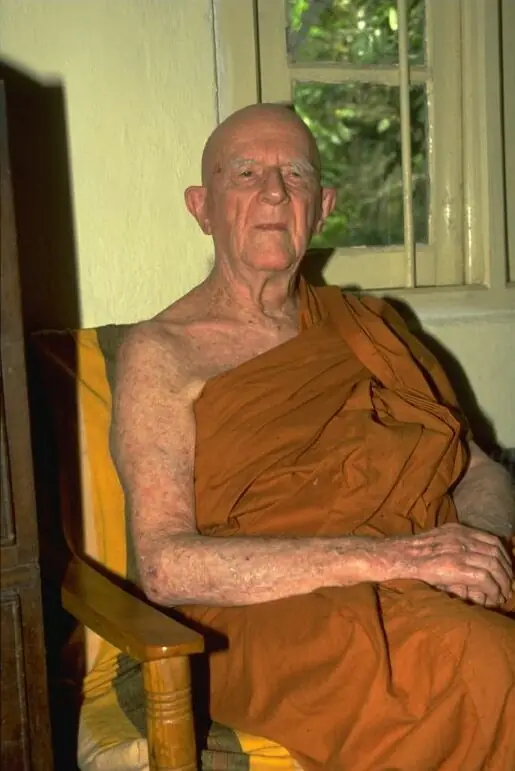
1901–1994 · Sri Lanka
German-born monk and scholar in Sri Lanka who co-founded the Buddhist Publication Society
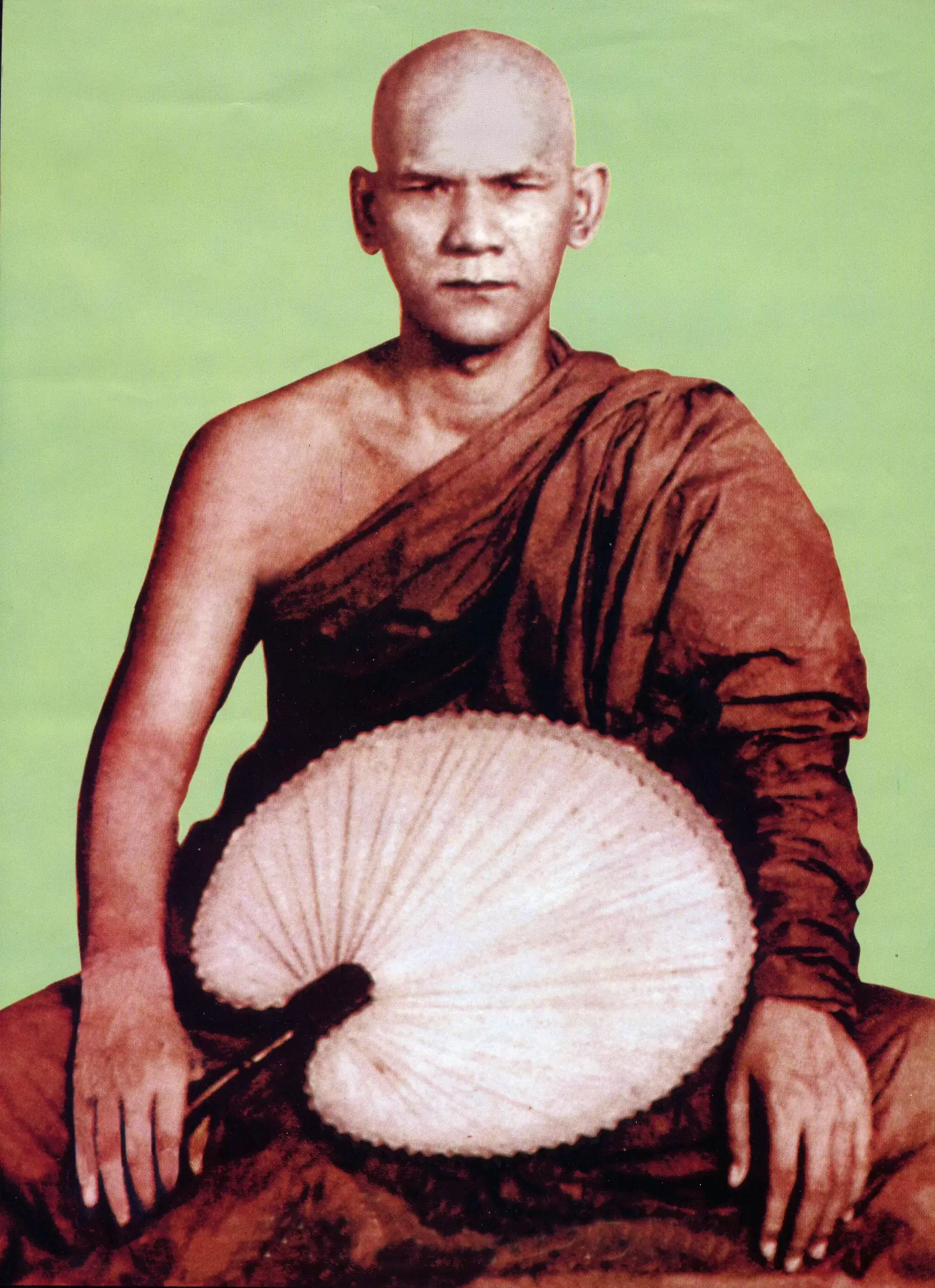
1904–1982 · Myanmar
Burmese scholar-monk whose method of mental noting spread insight meditation across Asia and the West.
1911–1989 · India
Bengali householder who became a respected Mahasi-lineage teacher and taught the founders of IMS
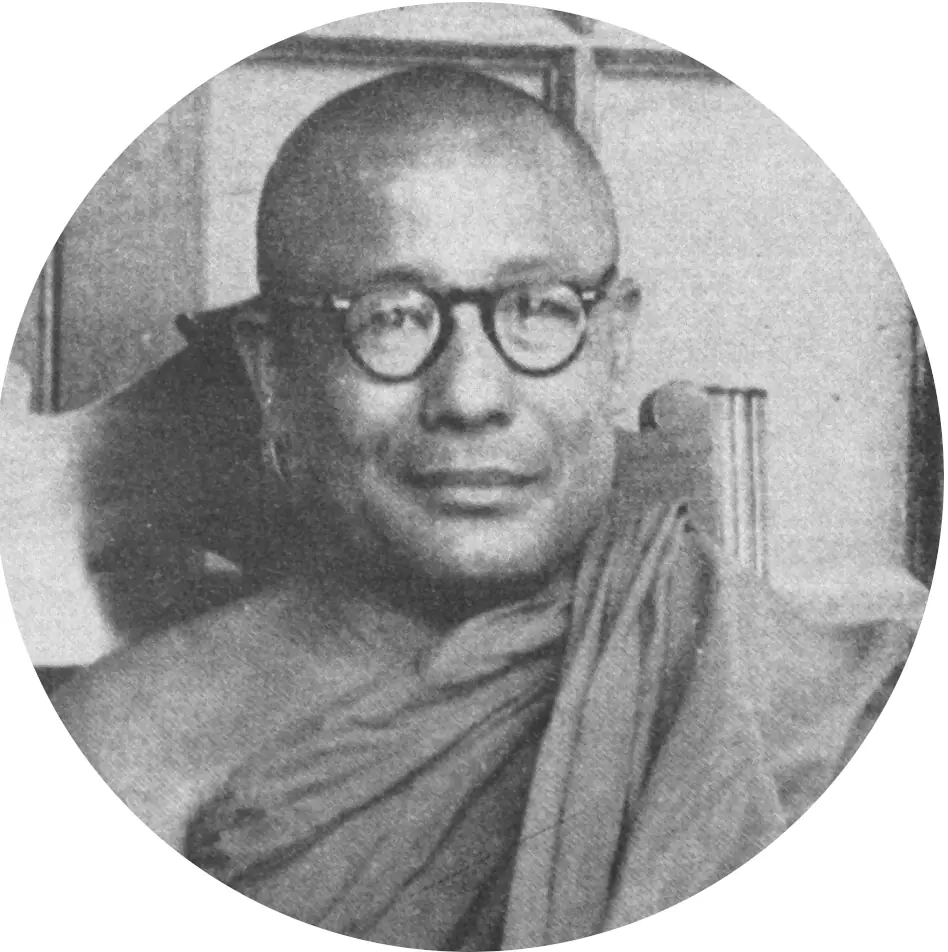
1921–2016 · Myanmar
Mahasi-lineage master known for exacting retreats, who founded Panditarama and its centre at Lumbini, Nepal.
1928–2026 · Myanmar
Mahasi-trained meditation master and head of Chanmyay Yeiktha, Yangon, who taught in many countries.
1929–1999 · Nepal
Kathmandu monk who ran one of Nepal's first regular Vipassana classes, from 1975, and helped fund IBMC.