
Loading…
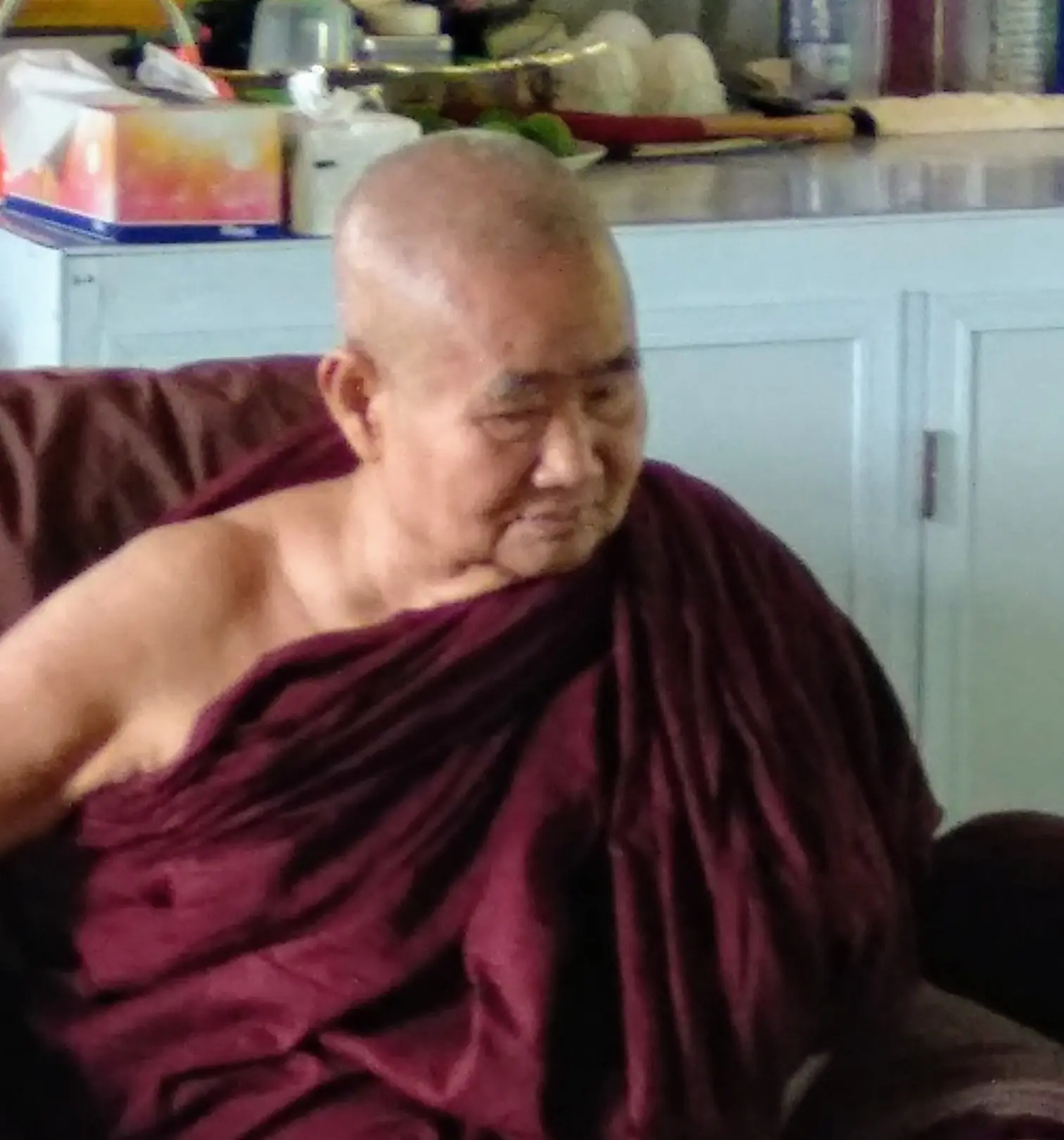 Photo: Paingpeace, CC BY-SA 4.0
Pa-Auk · 1934
Burmese forest monk and scholar whose training develops deep concentration (jhāna) before insight.
Pa-Auk Sayadaw, Bhaddanta Āciṇṇa, is a Burmese monk and scholar known for a detailed method of meditation built closely on the Pali texts and their commentaries, above all the Visuddhimagga. Students first develop deep concentration, most often through mindfulness of breathing, and then use it to examine body and mind in fine detail. In 1981 he became abbot of the Pa-Auk Forest Monastery near Mawlamyine in southern Myanmar.
According to the biography published by the Pa-Auk centre in Thailand, he was born at about 8 am on Sunday, 24 June 1934, in Leigh-chaung village, Hinthada township, in the Ayeyarwady delta. He was the fourth son of U Phyu and Daw Saw Tin.
He became a novice on 2 May 1944, at the age of ten, and took full ordination as a bhikkhu on 10 May 1954. In 1956, aged twenty-two, he passed the Dhammācariya examinations in the scriptures (Pa-Auk Thailand; Pa-Auk Forest Monastery).
In 1964, his tenth rains retreat as a monk, he made forest-dwelling his main practice and went looking for meditation teachers. The Thai centre's biography lists them:
He spent thirteen rains retreats in Ye township, Mon State (Pa-Auk Thailand).
The Pa-Auk Forest Monastery was founded in 1926, in forest along the Taung Nyo range near Pa-Auk village, 15 km south-east of Mawlamyine in Mon State. In 1981 its abbot, Ven. Aggapañña, asked him to look after the monastery (Pa-Auk Thailand; Pa-Auk Forest Monastery).
Monks, nuns and lay people began coming to practise under him in 1983, and foreign meditators in the early 1990s. The monastery's own site gives its population as roughly 1,000 to 1,800 residents, including more than 300 foreign monks, nuns and lay practitioners from over 20 countries. It lists more than 40 branch and associate centres: 29 in Myanmar and others in Sri Lanka, Singapore, Malaysia, Indonesia, Thailand, Nepal, China, Taiwan and the USA. In Sri Lanka, Na Uyana Aranya teaches the Pa-Auk method.
There are no fixed courses: meditators stay for weeks, months or longer, with the monastery's approval. Lodging and two meals a day are free, and donations are voluntary (Pa-Auk Forest Monastery). The main monastery is listed as Pa-Auk Tawya Meditation Centre.
An English speaker, he began leading retreats outside Myanmar in 1997. The Thai centre counts 42 books by him in Burmese and 14 in English, and records that he received the title Agga Mahā Kammaṭṭhānācariya in 1999.
The monastery describes a path laid out in the Visuddhimagga's seven stages of purification. It begins with ethical conduct and then with calm meditation (samatha) aimed at full absorption (jhāna). A meditator may choose any of the forty traditional samatha subjects; at Pa-Auk, most develop jhāna through mindfulness of breathing. Some are taught instead to develop the less powerful "access" concentration through four-elements meditation. Four "protective" meditations follow: loving-kindness, recollection of the Buddha, the unattractiveness of the body and recollection of death.
With that concentration, students are taught to discern what the monastery calls ultimate materiality and mentality. In Knowing and Seeing, the Sayadaw describes the body breaking down into tiny particles called rūpa-kalāpas, and treats their analysis as the beginning of insight. Students also examine dependent origination, which, the monastery says, includes discerning past and future lives. Only then does insight practice (vipassanā) proper begin: seeing impermanence, suffering and non-self in all of these. The method is set out in more detail on the Pa-Auk method page.
Mahasi Sayadaw's noting method, as Spirit Rock describes it, aims at insight without first attaining jhāna. The Pa-Auk method asks for jhāna, or at least access concentration, first. Spirit Rock Meditation Center in California, a Western insight centre, counts him among the teachers who have influenced its own, and describes him as teaching "a rigorous sequence of deep concentration and directed insight". The wider question is discussed in Samatha and Vipassana.