
Loading…
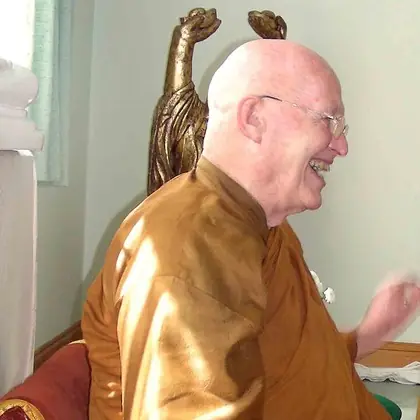 Photo: Jake Barnes, CC BY 2.0
Thai Forest · b. 1934
American-born disciple of Ajahn Chah and founding abbot of Cittaviveka and Amaravati monasteries in England
Ajahn Sumedho is an American-born Theravada monk who trained for ten years under Ajahn Chah in north-east Thailand and then led the founding of the Thai Forest tradition's monasteries in England. Spirit Rock Meditation Center describes the first of them, Cittaviveka, as "the first Forest Saṅgha monastery outside of Thailand". He was still giving recorded talks in 2026.
He was born Robert Jackman in Seattle, Washington, in 1934. BuddhaNet's biography records that he studied Chinese and history at university, then spent four years as a navy medic during the Korean War. After the war he completed a BA in Far Eastern studies, worked for a year as a Red Cross social worker, and in 1963 finished a master's degree in South Asian studies. From 1964 to 1966 he taught English in Borneo for the Peace Corps.
In June 1966 he was ordained as a novice (sāmaṇera) at Wat Sri Saket in Nong Khai province, and he received full ordination as a monk in 1967.
From 1967 to 1977 he lived and practised under Ajahn Chah at Wat Nong Pah Pong. The biography on ajahnchah.org calls him the first Westerner to stay there and dates his arrival to 1966; Spirit Rock and BuddhaNet give 1967. In 1973 he made a tudong pilgrimage on foot to India.
As more Western monks arrived, Ajahn Chah set up Wat Pah Nanachat, the International Forest Monastery, in 1975, with Sumedho as its first abbot. It still trains English-speaking people in forest monastic life, and guests follow the monastic routine on eight precepts.
In 1977 Ajahn Chah and Ajahn Sumedho were invited to Britain. According to BuddhaNet, Ajahn Chah saw an interest in Buddhism there and decided that Sumedho should stay to set up an English order. The English Sangha Trust invited him to run its vihāra in Hampstead, London.
In 1979 the Trust sold the Hampstead house and bought Chithurst House in West Sussex, which became Cittaviveka, with Sumedho as its first abbot. The community grew after a sīmā, a formal monastic boundary, was established in 1981 and he was given authority to ordain.
Today Cittaviveka is home to monks and sīladharā nuns. It does not run lay retreats and refers people to Amaravati. According to BuddhaNet, monasteries in the same line have since opened in Northumberland, Devon, California, New Zealand, Switzerland and Italy.
Amaravati Buddhist Monastery, near Hemel Hempstead in Hertfordshire, opened in August 1984, according to BuddhaNet. Amaravati's own site dates its formal opening under Ajahn Sumedho to 1985. Between twenty and thirty monks and nuns live there, and its retreat centre runs residential retreats for lay people for nine months of the year.
Sumedho led Amaravati as abbot for many years. According to the monastery, Ajahn Amaro has been its abbot since 2010.
BuddhaNet describes him as known for the humour and accessibility of his teaching. Amaravati Publications offers many books for free distribution, and Abhayagiri Monastery in California publishes The Four Noble Truths, a free booklet compiled from his talks. It sets out the Buddha's central teaching that human unhappiness can be overcome through spiritual practice. Wisdom Publications published a larger collection, The Sound of Silence, in 2007.
Amaravati continues to publish his talks. A recorded talk titled "From Solitude to Community" is dated 22 May 2026, and new episodes of the Amaravati podcast of his teachings were still appearing in September 2026. The monasteries in his line, and how lay people can visit them, are described on the Thai Forest tradition page.
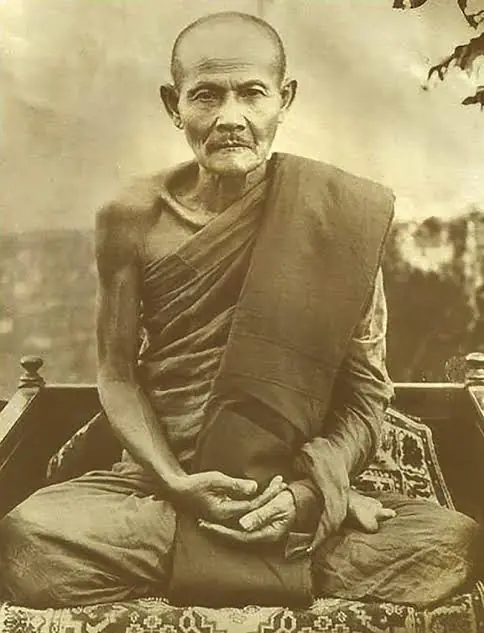
1870–1949 · Thailand
Wandering Thai monk who, with his teacher Ajahn Sao, established the Thai Forest (Kammatthana) tradition
1918–1992 · Thailand
Thai forest master whose plain teaching and Western disciples carried the Forest tradition abroad