How to join a Vipassana course in Nepal
Choosing one of Nepal's 20 Goenka-tradition centres, applying online, the Kathmandu city office, languages, costs and the Mahasi-tradition alternatives.
Vipassana Nepal team · · 9 min read
Of the 22 Vipassana centres in Nepal listed on this site, 20 teach in the tradition of S. N. Goenka, where the introductory course is a 10-day residential course, and dhamma.org lists them in all seven provinces. This post goes through choosing a centre, applying online, registering in Kathmandu for Dhamma Shringa, the languages on offer and what a course costs. Two centres in the Mahasi tradition take meditators on different terms, and they are covered at the end. What happens during the course itself is in the 10-day course, day by day.
Choosing a centre
dhamma.org lists 20 centres in Nepal and no non-centre course sites. The Nepal portal, np.dhamma.org, lists 18, leaving out two sites that are still being built. Each centre runs itself and answers its own enquiries, so questions go to the centre you want, not to a head office.
Two of the 20 serve particular groups (monks at Dhamma Ādhāra, prisoners and officials at Dhamma Āsaya), and two are not yet holding courses. The notes below come from each centre's dhamma.org listing as checked in September 2026.
| Province | Centre | Place | Notes |
|---|---|---|---|
| Koshi | Dhamma Birāṭa | Itahari, Sunsari | Since 2002; Biratnagar airport is about 20 km away |
| Koshi | Dhamma Sagar | Near Lukla, Solukhumbu | About 2,850 m; usually reached by a 30-minute flight from Kathmandu |
| Koshi | Dhamma Suriyo | Phikkal, Ilam | 10-day courses since 2018; hall for 30 |
| Madhesh | Dhamma Tarāi | Parwanipur, near Birgunj | Since 1996, the second-oldest centre; long courses too |
| Bagmati | Dhamma Shringa | Budhanilkantha, Kathmandu | The first centre (1981); about 250 places; courses up to 60 days |
| Bagmati | Dhamma Kitti | Kirtipur, Kathmandu | 6 km south-west of central Kathmandu; about 40 students |
| Bagmati | Dhammāgāra | Kotdanda, Godawari, Lalitpur | Monthly 10-day courses; children's courses |
| Bagmati | Dhamma Nibhā | Kakani, Nuwakot | About 20 km from Balaju; basic facilities for 10-day courses |
| Bagmati | Dhamma Citavana | Bharatpur, Chitwan | Since 2004; Satipatthana and 30-day courses too |
| Bagmati | Dhamma Ādhāra | Swayambhu, Kathmandu | Mainly for monks and anagarikas |
| Bagmati | Dhamma Āsaya | Nakkhu Prison, Lalitpur | Prisoners and government officials only |
| Bagmati | Dhamma Dhāma | Hetauda | Under construction; dhamma.org gives 2027 for the first course |
| Gandaki | Dhamma Pokharā | Lekhnath, Pokhara | 10-day, Satipatthana and 20-day courses; children's courses |
| Lumbini | Dhamma Jananī | Lumbini, Rupandehi | Hall for nearly 200; some courses in English and Chinese |
| Lumbini | Dhamma Nandana | Banganga, Kapilvastu | About 40 km north-west of Lumbini; hall for about 50 |
| Lumbini | Dhamma Sīsa | Tansen, Palpa | Basic facilities; hall for about 40 |
| Lumbini | Dhamma Parāga | Ghorahi, Dang | Basic facilities; 10-day and short courses |
| Lumbini | Dhamma Gāma | Ramgram area, Nawalparasi | Land acquired; no permanent buildings yet |
| Karnali | Dhamma Surakhetta | Birendranagar, Surkhet | Since 2012; Satipatthana and short courses too |
| Sudurpashchim | Dhammayāna | Tilachaur, near Mahendranagar | Rooms for nearly 50; near the Banbasa border crossing |
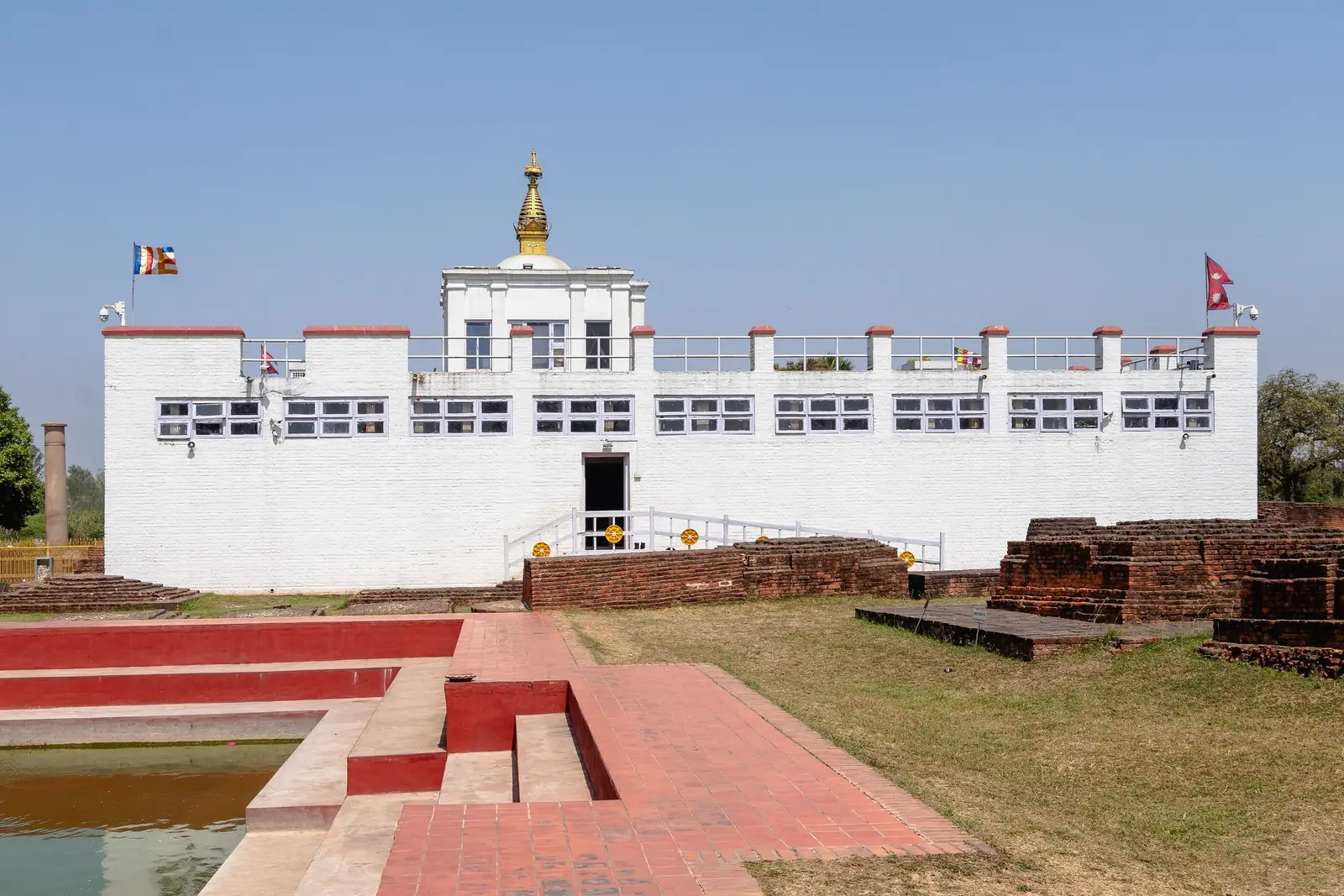
If you want a date soon, the centres with the most frequent 10-day courses are Dhamma Shringa, with two a month, and Dhamma Jananī and Dhammāgāra, with one a month each. Combining a course with a visit to the Buddha's birthplace is covered in Lumbini and the Buddha's places in Nepal.
Applying online
Start at np.dhamma.org, choose a centre and open its schedule on dhamma.org. You can also search every date on dhamma.org's course search or in the Dhamma.org app. The steps printed on each Nepal schedule are:
- Click Apply next to the course you want. Old students are also offered the option to serve.
- Read the Introduction to the Technique and Code of Discipline, which you agree to follow.
- Fill in every section of the application form and submit it. The Apply buttons lead to forms on schedule.vridhamma.org. dhamma.org's application form asks about physical and mental health, and before your first course explains why.
- Wait for an email. With many applications, a reply can take up to two weeks. Several Nepal schedules ask applicants to check their spam folder.
- If you are accepted, confirm that you will attend. Your place is secured only when you confirm.
Confirming and reconfirming
Each course shows a status such as Open or Wait List. Dhamma Shringa's schedule warns that waitlist status is not updated automatically and can lag by a day or so. It also says you may be accepted on more than one course but can attend only one, so tell the other centres if you applied to several. To check an application or cancel, contact the centre directly: only it can see its applications.
No single rule is published for reconfirming nearer the date, and centres differ, so follow the instructions in your acceptance email. In September 2026 Dhamma Shringa was opening applications about three months ahead: the course of 1–12 January 2027 was marked as accepting applications from 3 October.
The Kathmandu city office and getting to Dhamma Shringa
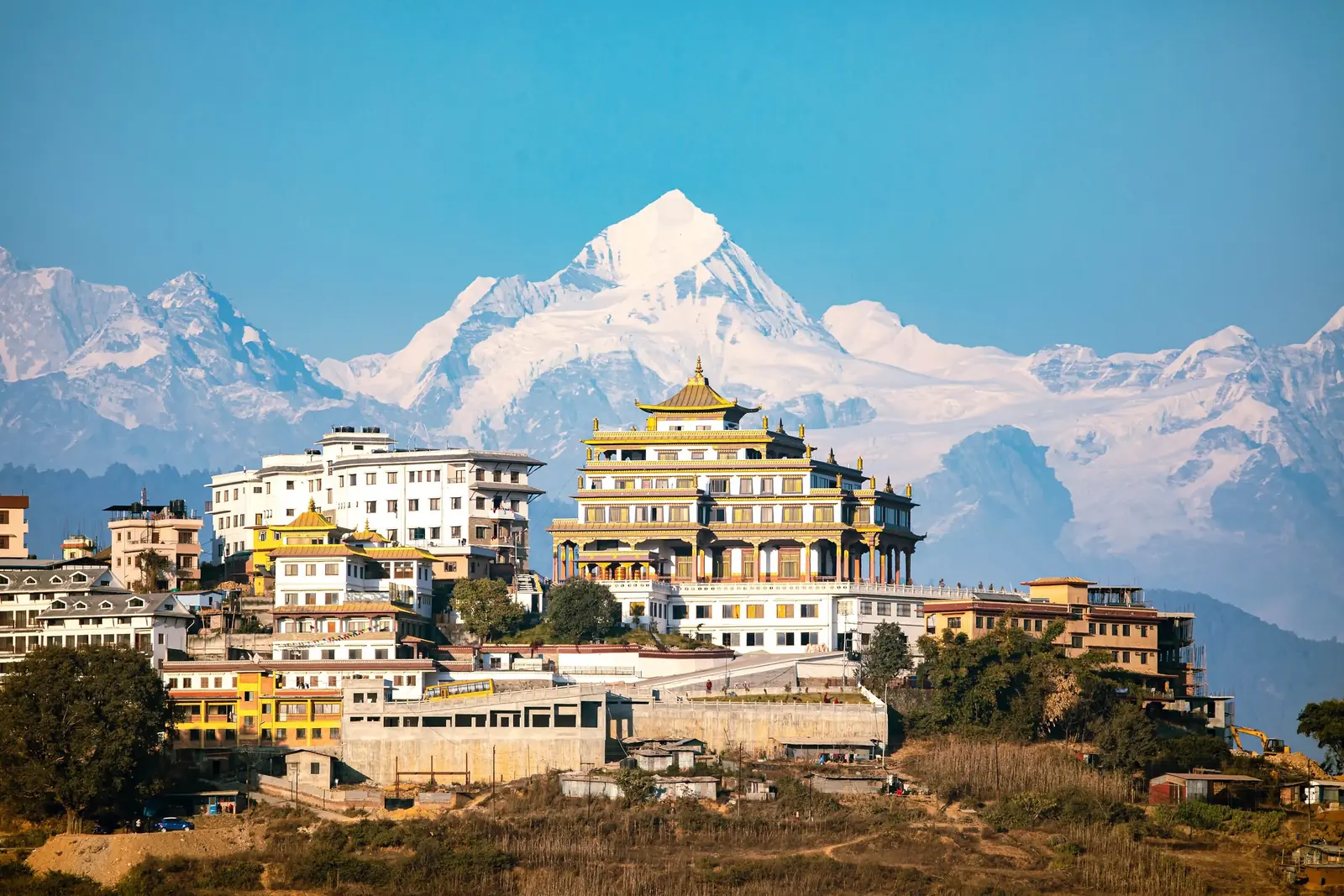
Dhamma Shringa, the Nepal Vipassana Center, is at Budhanilkantha (Muhan Pokhari) on the northern edge of the Kathmandu valley, at the gate of Shivapuri National Park. Its intake works differently from most centres. Students register at the Nepal Vipassana Center's city office at Jyoti Bhawan, Kantipath, in central Kathmandu, and on the day the course starts a chartered bus takes them to the centre.
The city office's postal address is P.O. Box 12896, Kathmandu, and its phone numbers are +977-1-535 0581, 531 5656 and 532 5490. Shringa's schedule asks you to register for short courses for old students, and for children's and teenagers' courses, by contacting this office.
If you need to reach the centre on your own, its location page says the drive from Kathmandu to Muhan Pokhari takes about 30 minutes, and micro buses run there from Jamal and Shahid Gate. The centre's pages give the distance from the city as about 12 km on one page and about 16 km on another.
Course dates at Shringa
As of 2026, Dhamma Shringa holds two 10-day courses every month: from the 1st to the 12th and from the 14th to the 25th. Each begins on the evening of the first date and ends on the morning of the last. The centre says the pattern may change in the festival months of October and November. In 2026 the course of 17–28 October was a Dashain course for Nepalis only, and foreigners were asked to apply for another date.
Satipatthana, 20-day, 30-day and other old-student courses are fixed at the start of each year. Seven-day courses for teenagers aged 15–19 also appear on the schedule.
Languages offered
On Goenka courses the instructions and evening discourses are Goenka's own recordings in English or Hindi, with translations. What each Nepal centre offers is printed on its schedule:
- Dhamma Shringa says conversational Nepali or English is compulsory, although it may be able to provide meditation materials in your own language. Its schedule adds that a good understanding of Hindi, English, Nepali or Newari is essential.
- Dhamma Jananī gives instructions in Hindi, English, Nepali and Mandarin, and marks some courses as English and Chinese only.
- Dhamma Pokharā, Dhamma Kitti and most other centres list Hindi, English and Nepali. Dhammāgāra also lists Newari.
The Pokharā and Jananī schedules say that students who speak none of the announced languages may still apply, but acceptance depends on course materials, a translator and the teacher's permission.
What a course costs
On courses in Goenka's tradition there is no charge for the teaching, food or accommodation. Courses run on dāna: the Code of Discipline says donations are accepted only from people who have completed at least one 10-day course, and a first-time student may give at the end of the course. No amount is suggested, and the teachers and organisers are unpaid. Dhamma Shringa publishes bank details for donations in rupees and US dollars on its centre information page.
Travel is your own cost. For Dhamma Sagar that usually means the flight to Lukla.
What to bring
For Nepal centres the main source is dhamma.org's Code of Discipline, which applies at every centre in the tradition. Bring enough simple, modest clothing for ten days, because there are no washing machines. Leave behind reading and writing materials, religious objects, intoxicants and food from home. Phones and other devices are handed in for the length of the course.
No English packing list was found on np.dhamma.org or shringa.dhamma.org in September 2026. Other centres' lists give an idea: Dhamma Bāvarī in India asks students to bring their own bedsheets and pillow cover, unscented toiletries, a torch, a water bottle and all regular medicines. Ask your centre what it provides.
Two Nepal centres give climate information. Dhamma Shringa is at about 5,200 feet, and its own figures give lows of 0–5 °C between October and March. Dhamma Sagar, at about 2,850 m, asks students to bring warm clothes.
The Mahasi-tradition alternatives
Two centres in Nepal teach Vipassana in the Mahasi Sayadaw tradition: sitting and walking meditation, with mindfulness of ordinary activities through the day. Both set a minimum stay rather than a fixed 10-day course (seven days at Panditarama Lumbini, 10 days plus arrival and departure for newcomers at IBMC), and meditators at both keep the eight precepts.
Panditarama Lumbini
Panditarama Lumbini International Vipassana Meditation Center is in the West Monastic Zone at Lumbini. It was set up by Sayadaw U Paṇḍitābhivaṃsa and inaugurated in 1999. Its season runs from the beginning of September to the end of March. Meditators book an individual retreat of at least seven days, up to several months, with four interviews a week and daily Dhamma talks, in Noble Silence.
The centre runs on dāna and has no set daily fees. It asks you to read its Guidelines for Meditators and then contact it to arrange your arrival date and length of stay.
International Buddhist Meditation Center, Kathmandu
The International Buddhist Meditation Center (IBMC) at Buddhanagar, Kathmandu, says it was founded in 1985 by U Paṇḍitābhivaṃsa and teaches Mahasi Sayadaw's method under a resident teacher. New meditators stay at least 10 days, plus two days to arrive and leave; after that, stays can last from a day to several months. The day holds about 14 hours of sitting and walking meditation.
To apply, send a signed form with a recent photograph to the IBMC office at Buddhanagar, so that it arrives at least a week before you do. The form and rules are on IBMC's information page, and the office may call you for an interview. The page does not state any fees, so ask the office.
Sources
- Vipassana Centres in Nepal, np.dhamma.org
- Location directory (Nepal), dhamma.org
- Course schedule: Dhamma Shringa, dhamma.org
- Center Information: Dhamma Shringa, Nepal Vipassana Center
- Location and Contact: Dhamma Shringa, Nepal Vipassana Center
- Course schedule: Dhamma Jananī, dhamma.org
- Introduction to the Technique and Code of Discipline, dhamma.org
- Questions & Answers About the Technique of Vipassana Meditation, dhamma.org
- What to Bring, Dhamma Bāvarī
- Panditarama Lumbini International Vipassana Meditation Center, Panditarama Lumbini
- Information (meditation instructions and application procedure), International Buddhist Meditation Center