
Loading…
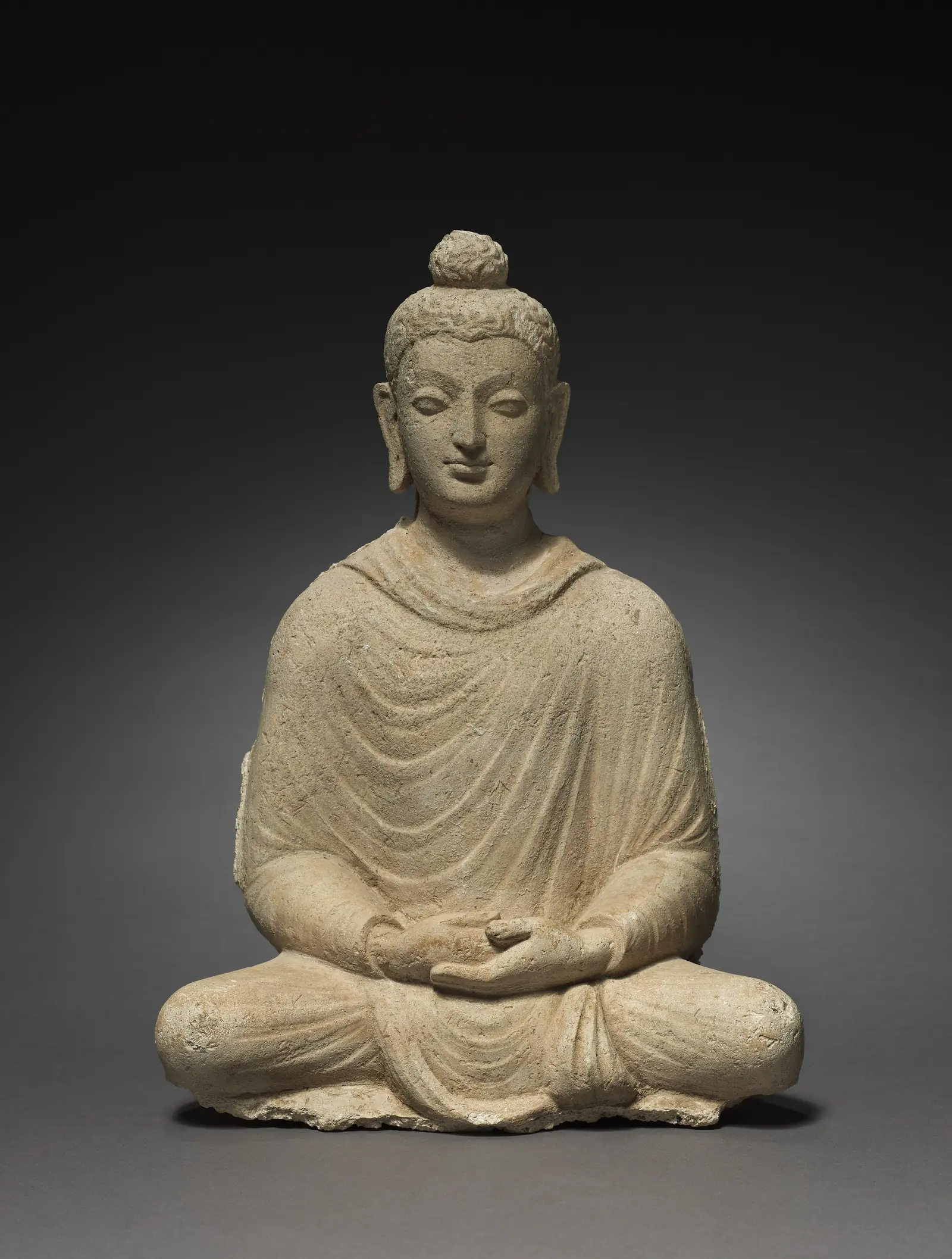 Photo: Cleveland Museum of Art, CC0 1.0
Teacher · c. 5th century BCE
सिद्धार्थ गौतम
The teacher whose instructions on mindfulness and insight are the source of every Vipassana tradition.
Siddhattha Gotama, the Buddha, was born at Lumbini in the Terai plains of what is now southern Nepal. He spent about 45 years teaching in the Ganges plain of northern India. The instructions on mindfulness and insight preserved in his discourses are the common source of every tradition described on this site. This page sets out what the early texts and modern scholars say about his life, and where they disagree.
UNESCO's World Heritage listing for Lumbini opens with his birth:
The Lord Buddha was born in 623 BC in the sacred area of Lumbini located in the Terai plains of southern Nepal, testified by the inscription on the pillar erected by the Mauryan Emperor Asoka in 249 BC.
The sandstone pillar still stands beside the Maya Devi Temple and carries a Pali inscription in Brahmi script. UNESCO notes that remains inside the temple date from the 3rd century BCE.
In the Mahāparinibbāna Sutta (DN 16), the Buddha names four places that a faithful follower should go to see: where he was born, where he awoke, where he first taught and where he died. Lumbini is the first of them, and the only one in Nepal.
The Stanford Encyclopedia of Philosophy (SEP) describes him as born into a family "of some wealth and power", members of the Śākya clan, "in the area of the present border between India and Nepal". His mother, Mahāmāyā, died shortly after his birth. Her sister, Mahāpajāpatī, raised him (Lion's Roar).
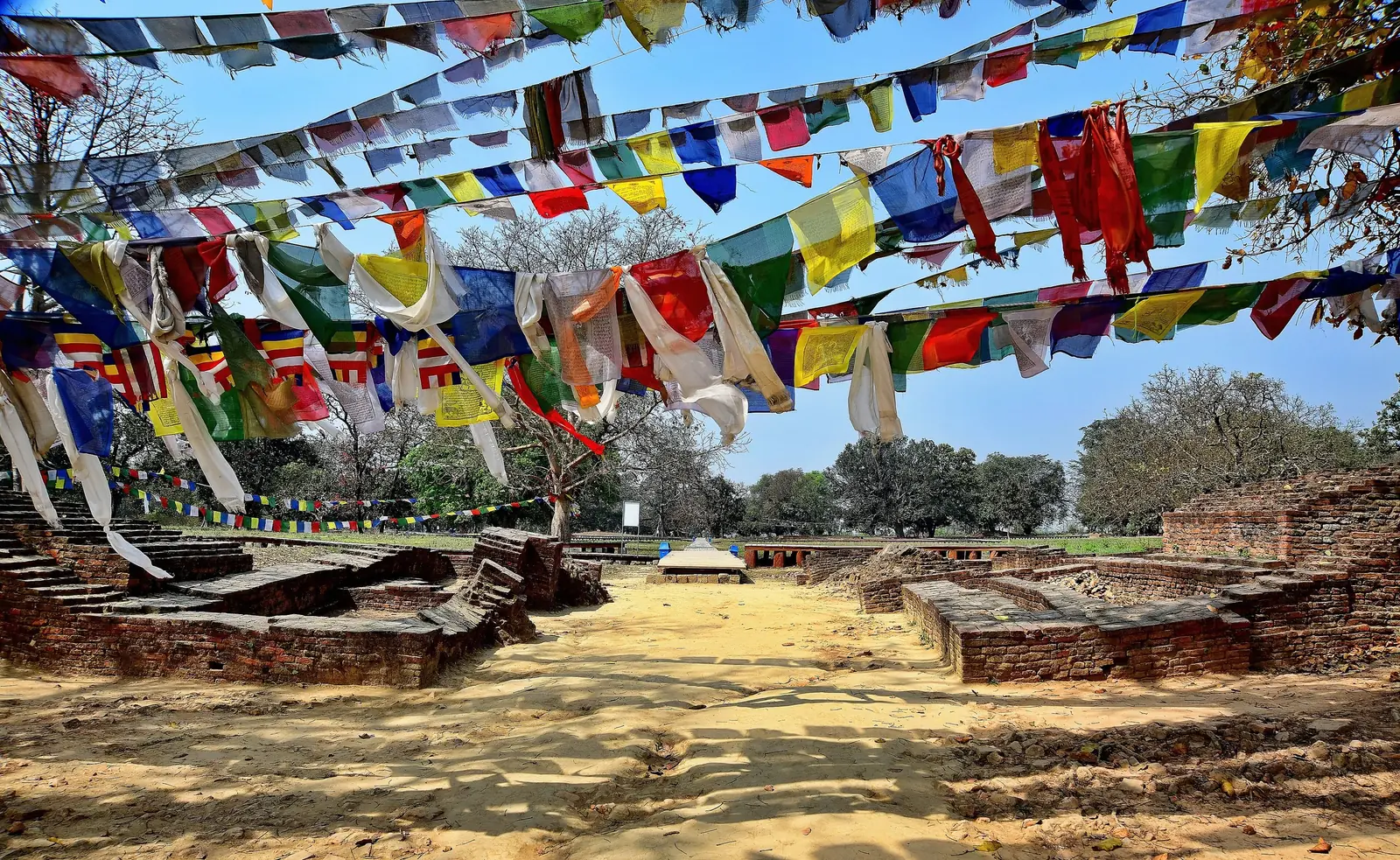
Tradition places his childhood at Kapilavastu, the Sakya town. Where Kapilavastu stood is still argued over. Nepal identifies it with Tilaurakot, near Lumbini; India identifies it with Piprahwa. Excavations at Tilaurakot in 2001, funded by UNESCO, strengthened the Nepali case, but Tricycle's review of the evidence concluded that the question was not settled.
In early adulthood he left his life as a householder, and his wife and young son, to look for a way out of suffering (SEP). In his own account in the Ariyapariyesana Sutta (MN 26), he went forth while still young, against the wishes of his parents.
MN 26 names two teachers. The first, Āḷāra Kālāma, taught a meditative attainment the text calls the dimension of nothingness. The second, Uddaka Rāmaputta, taught the dimension of neither perception nor non-perception. Gotama reached both attainments quickly, and each teacher offered him a leading place. He left both, judging that their teachings did not lead to awakening.
He then travelled through the Magadhan lands to Senā in Uruvelā, the area now called Bodh Gaya in Bihar, and settled there to practise (MN 26). SEP says that through "a combination of insight and meditational practice" he reached awakening (bodhi), which is said to end all further suffering.
His first discourse, the Dhammacakkappavattana Sutta (SN 56.11), was given "near Varanasi in the deer park at Isipatana", the place now called Sarnath, to a group of five monks. It describes a middle way between indulging in sensual pleasure and punishing the body. It then sets out the Four Noble Truths: dukkha (suffering), its origin in craving, its ending, and the path that leads to its ending.
That path is the Noble Eightfold Path. The guide The three trainings explains how its eight factors are grouped into ethics, concentration and wisdom, the order Vipassana courses still follow.
SEP says he spent the remaining 45 years of his life teaching others what had led him to awakening. By the time of his death, DN 16 speaks of four groups of followers: monks, nuns, laymen and laywomen.
According to tradition, he agreed to ordain Mahāpajāpatī at Vaishali, and she became the first Buddhist nun. This founded the order of nuns (Lion's Roar). His teachings are preserved in the Pali Nikāyas and the Sanskrit and Chinese Āgamas (SEP).
Two of his discourses matter most for this site's subject. The Satipaṭṭhāna Sutta (MN 10) sets out the four foundations of mindfulness: body, feelings, mind and mental qualities. The Ānāpānasati Sutta (MN 118) sets out mindfulness of breathing in sixteen steps. The guides The four foundations of mindfulness and Anapana describe them.
DN 16 follows the last months of his life, with his attendant Ānanda at his side throughout. In it the Buddha says he is eighty years old. He died between a pair of sal trees in the sal forest of the Mallas at Upavattana, near Kusinārā, the present Kushinagar in Uttar Pradesh, India.
His last words in Bhikkhu Sujato's translation are "Conditions fall apart. Persist with diligence." (vayadhammā saṅkhārā, appamādena sampādetha). The same text says his funeral pyre caught fire only after the monk Mahākassapa arrived from Pāvā with five hundred monks and paid his respects.
His dates are debated. The traditional dates and those many modern scholars accept differ by about 150 years.
| Reckoning | Birth | Death |
|---|---|---|
| Traditional, used in UNESCO's listing for Lumbini and by Nepal | 623 BCE | 543 BCE |
| Earlier scholarship (SEP) | c. 560 BCE | c. 480 BCE |
| Many modern scholars (SEP) | c. 485 BCE | c. 405 BCE |
The traditional date comes from Buddhist chronicles. Bhikkhu Ñāṇamoli explains that the Sri Lankan chronicles, counted backwards through their list of kings, give 543 BCE for the Buddha's death; with a life of eighty years, that puts his birth in 623 BCE, the year UNESCO gives. Ñāṇamoli adds that a corrected calculation moved the death to 483 BCE, which he called the date most generally accepted in Europe.
SEP puts the modern view this way:
Up until recently his dates were thought to be approximately 560–480 BCE, but many scholars now hold that he must have died around 405 BCE.
SEP itself dates him "fl. circa 450 BCE". Where this site needs one short label, it says "c. 5th century BCE", and it gives both chronologies wherever dates matter. The guide The Buddha and the origins of Vipassana covers his teaching in more detail, and How Vipassana survived follows the texts from the first recitations to Burma, where teachers such as Ledi Sayadaw revived meditation for lay people.
Lumbini, in Rupandehi district, is the one place of the four in Nepal. Two meditation centres near it teach Vipassana: Dhamma Jananī, in S. N. Goenka's tradition, and Panditarama Lumbini, in the Mahasi tradition. The other three places are in India: Bodh Gaya in Bihar, Sarnath near Varanasi, and Kushinagar in Uttar Pradesh. The article Lumbini and the Buddha's places in Nepal covers the Nepali sites, including Tilaurakot.