The Buddha and His Dhamma: Dr B. R. Ambedkar's book explained
Ambedkar's last book, published in 1957 after his death: what it says, how it reads the Buddha, its Marathi and Hindi editions, and where to read it free.
Vipassana Nepal team · · 7 min read
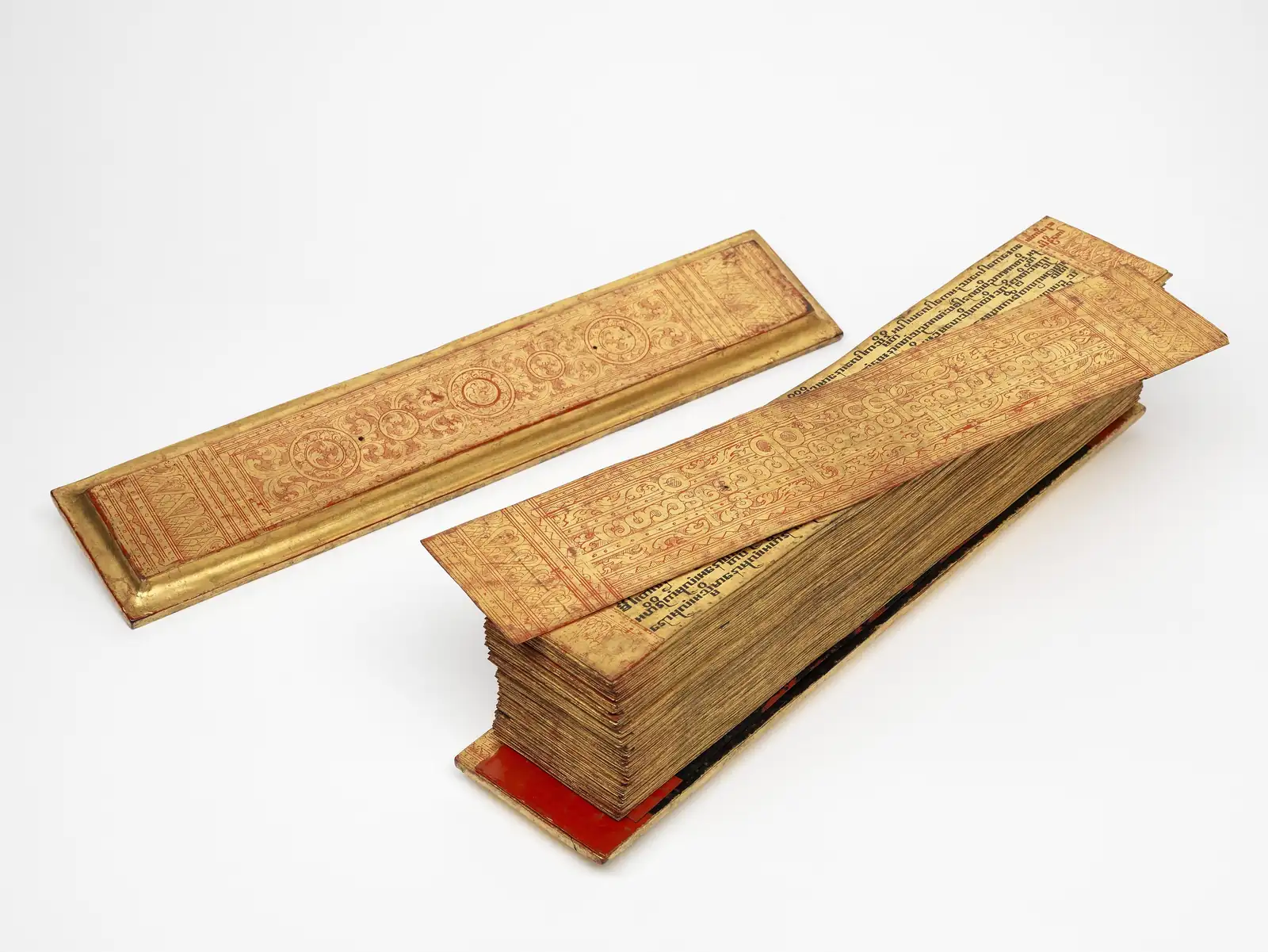
The Buddha and His Dhamma is Dr B. R. Ambedkar's account of the life and teaching of the Buddha, written in English between 1951 and 1956 and published in 1957, the year after his death. It presents the Buddha's teaching as a guide to ethics and social equality, and on several points it differs from the traditional Theravāda account. Ambedkar finished the main text a few months before he and hundreds of thousands of Dalits became Buddhists at Nagpur in 1956, and the book has been translated into Marathi and Hindi.
Who wrote it, and why
Bhimrao Ramji Ambedkar was born on 14 April 1891 at Mhow and died on 6 December 1956 in New Delhi. Britannica describes him as a leader of the Dalits, then called untouchables, and as India's law minister from 1947 to 1951, who took a leading part in framing the Indian constitution.
In a preface he wrote in 1956, which was left out of the printed book, Ambedkar traced his interest in the Buddha to a life of the Buddha given to him as a boy by Dada Keluskar, at a meeting held to congratulate him on passing an examination. The book itself, he wrote, answered requests from readers of a 1951 article. In it he had argued, among other things, that Buddhism's literature was so vast that no one could read the whole of it, and that it lacked a single handy book like the Christian Bible. He was modest about its method: "I claim no originality for the book. It is a compilation and assembly plant."
The Buddhist teacher Sangharakshita, who met Ambedkar and later worked among his followers, dates the writing from November 1951 to February 1956, years in which Ambedkar was often seriously ill. Speaking at Dehu Road near Pune in December 1955, Sangharakshita records, Ambedkar described it as a book explaining the tenets of Buddhism "in simple language for the benefit of the common man".
The 1956 conversion at Nagpur
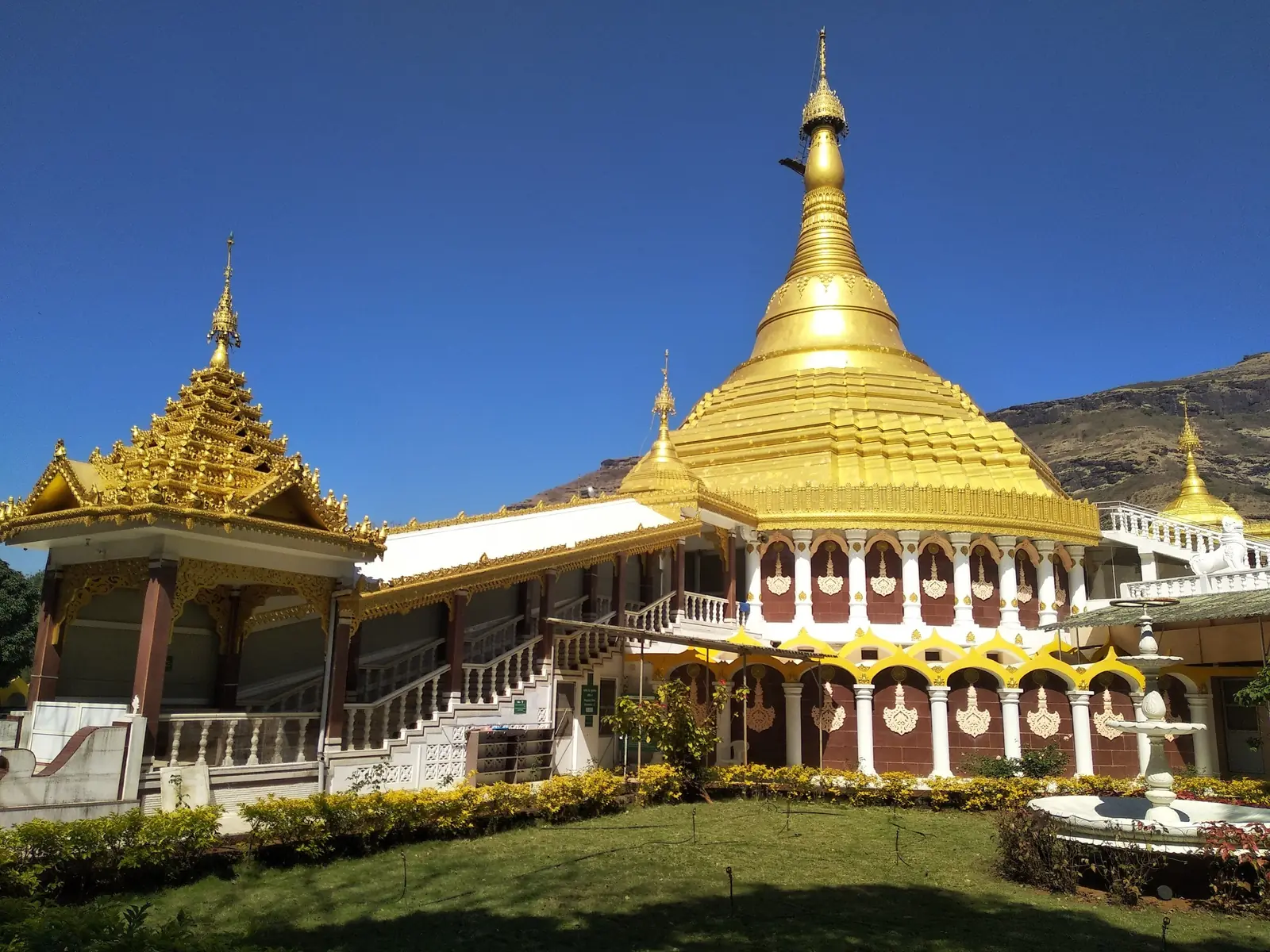
On 14 October 1956, in Nagpur, Ambedkar took the three refuges and five precepts from a Buddhist monk. He then gave them himself, together with twenty-two vows of his own, to a very large crowd of followers, most of them Dalits. The site, now called Deekshabhoomi, is marked by a large hollow stupa. Published figures for the crowd differ widely: about 200,000 in Britannica, 380,000 in Sangharakshita's account, and over 500,000 on a Government of India page about Deekshabhoomi.
A few weeks later, Sangharakshita records, Ambedkar travelled to Kathmandu for the fourth conference of the World Fellowship of Buddhists and spoke to the delegates on "The Buddha and Karl Marx". On the evening of 5 December, back in Delhi, he asked for the preface and introduction of the book to be brought to his bedside so he could work on them. He was found dead the next morning.
The book was published in Bombay in 1957. Frances Pritchett of Columbia University, who edited the online text, reminds readers that Ambedkar "compiled this book in haste, during the last years of his life, when he was chronically ill and also very busy".
How the book is organised
The book has eight parts, which Ambedkar called books:
- How a Bodhisatta became the Buddha: his life up to the awakening
- Campaign of conversion: whom he taught, including "the low and the lowly", women, and "the fallen and the criminals"
- What the Buddha taught
- Religion and Dhamma
- The Sangh (the monastic community)
- He and his contemporaries
- The wanderer's last journey
- The man who was Siddhartha Gautama
Sangharakshita estimates that about three-quarters of the text consists of extracts from, or adaptations of, Buddhist literature, mostly the discourses and monastic rules of the Pali Canon, with passages from Aśvaghoṣa's poem Buddhacarita. The remaining quarter is Ambedkar's own explanation. One section of Book Four consists almost entirely of verses from the Dhammapada.
The four questions Ambedkar raised
The introduction sets out four problems which, Ambedkar wrote, made the Buddha's life and teaching hard to present "in a manner which would make it a consistent whole". He raised them "with a view to raise a discussion":
- Why did the Buddha leave home? He called the traditional answer, that the young prince first saw an old man, a sick man and a dead man, "absurd on the face of it".
- Are the Four Noble Truths part of the Buddha's original teaching, or "a later accretion by the monks"?
- If the Buddha denied the soul, in what sense did he teach karma and rebirth?
- Was the monk meant to be a perfected individual, or "a social servant"?
How its reading differs from the traditional account
The book answers each question in its own way. The table sets its answers beside the traditional Theravāda account, drawn from the Pali texts and the later stories of the Buddha's life. This site does not rank the two; both are read and practised today.
| Topic | Traditional account | The Buddha and His Dhamma |
|---|---|---|
| Leaving home | The prince leaves after seeing, for the first time, an old man, a sick man, a corpse and a wandering ascetic (the traditional story, as Sangharakshita summarises it) | Siddharth opposes his Sakya clan's vote for war with the neighbouring Koliyas over the water of the Rohini river, and accepts exile as a wandering ascetic rather than fight |
| The first sermon | The Four Noble Truths and the Noble Eightfold Path, taught at Isipatana (SN 56.11) | The Dhamma "had nothing to do with God and [the] Soul" or life after death; "The centre of his Dhamma is man, and the relation of man to man in his life on earth"; three paths of purity, righteousness and virtue |
| Rebirth | Beings are reborn according to their deeds, without an unchanging self | The Buddha believed in rebirth, but rebirth of the same being is "most improbable"; the elements of the dead combine anew |
| Karma | "Sentient beings are the owners of their deeds and heir to their deeds" (MN 135), including across lives | The Buddha "did not believe in the inheritance of Past Karma" |
| The purpose of Dhamma | Freedom from suffering through ethics, concentration and wisdom | "Dhamma is righteousness, which means right relations between man and man in all spheres of life" |
Sangharakshita read the book as, in effect, replacing the traditional triad of ethics, concentration and wisdom (sīla, samādhi, paññā) with Ambedkar's own triad of ethics, wisdom, and compassion with loving-kindness (karuṇā and maitrī). In his summary, the book holds that true Dhamma must "break down the barriers between man and man" and "promote equality between man and man". He wrote that this lets Ambedkar "bring out the social implications of the Buddha's teaching more fully and clearly than they had been brought out before".
He was more doubtful about the story of the Rohini dispute. He found it "consistent and psychologically convincing", but judged it "an imaginative reconstruction rather than the product of strictly scientific research", accepted by many of Ambedkar's followers but not taken seriously by Buddhist scholars.
The word Dhamma itself carries different weight in the two readings; what is Dhamma? explains its traditional meanings.
Editions in English, Marathi and Hindi
| Language | Title | Notes |
|---|---|---|
| English | The Buddha and His Dhamma | First published in Bombay, 1957; reprinted as volume 11 of Dr. Babasaheb Ambedkar: Writings and Speeches (Government of Maharashtra) |
| Marathi | भगवान बुद्ध आणि त्यांचा धम्म (Bhagwan Buddha ani Tyancha Dhamma) | One edition in print is translated by Ghanshyam Talwatkar, M. B. Chitnis and S. S. Rege |
| Hindi | भगवान बुद्ध और उनका धम्म (Bhagwan Buddha aur Unka Dhamma) | One translation is by the monk Bhadant Anand Kausalyayan; the Government of India's Hindi collected works include the book as volume 22, titled बुद्ध और उनका धम्म |
A critical edition, edited and annotated by Aakash Singh Rathore and Ajay Verma, was published by Oxford University Press in 2011. Its notes identify Ambedkar's sources and discuss how he adapted them.
Where to read it
- Free online in English: Columbia University hosts the full text, edited by Frances Pritchett from the Government of Maharashtra edition, at columbia.edu. A scan of the 1957 edition is on the Internet Archive.
- Free online in Hindi: the Dr. Ambedkar Foundation's collected works, volume 22, are on the Internet Archive.
- In print: editions in English, Marathi and Hindi are sold by several Indian publishers.
To read the Buddha's teaching in the words of the Pali texts that Ambedkar drew on, start with the Buddha and the origins of Vipassana.
Sources
- B. R. Ambedkar, Encyclopaedia Britannica
- The Buddha and His Dhamma, by Dr B. R. Ambedkar (online text, ed. Frances W. Pritchett), Columbia University
- Editor's introduction to the online text (Frances W. Pritchett), Columbia University
- Unpublished preface to The Buddha and His Dhamma (B. R. Ambedkar, 1956), Columbia University
- Introduction to The Buddha and His Dhamma (B. R. Ambedkar), Columbia University
- Ambedkar and Buddhism (Sangharakshita, Windhorse 1986), Windhorse Publications
- Deeksha Bhoomi, India Cine Hub, Government of India
- Saṁyutta Nikāya 56.11: Rolling Forth the Wheel of Dhamma (trans. Bhikkhu Sujato), SuttaCentral
- Majjhima Nikāya 135: The Shorter Analysis of Deeds (trans. Bhikkhu Sujato), SuttaCentral
- The Buddha and His Dhamma: A Critical Edition (ed. Aakash Singh Rathore and Ajay Verma, 2011), Oxford University Press
- The Buddha and His Dhamma (1957 edition, scan), Internet Archive
- Buddha Aur Unka Dhamma, trans. Bhadant Anand Kausalyayan (scan), Internet Archive
- Babasaheb Dr. Ambedkar Sampoorna Vangmay, vol. 22: Buddha aur Unka Dhamma (Hindi), Dr. Ambedkar Foundation, Ministry of Social Justice and Empowerment, Government of India
- Bhagvan Buddha Ani Tyancha Dhamma (Marathi, trans. Ghanshyam Talwatkar, M. B. Chitnis and S. S. Rege), Gatha Cognition (book listing)