Loading…
Teacher · 1890
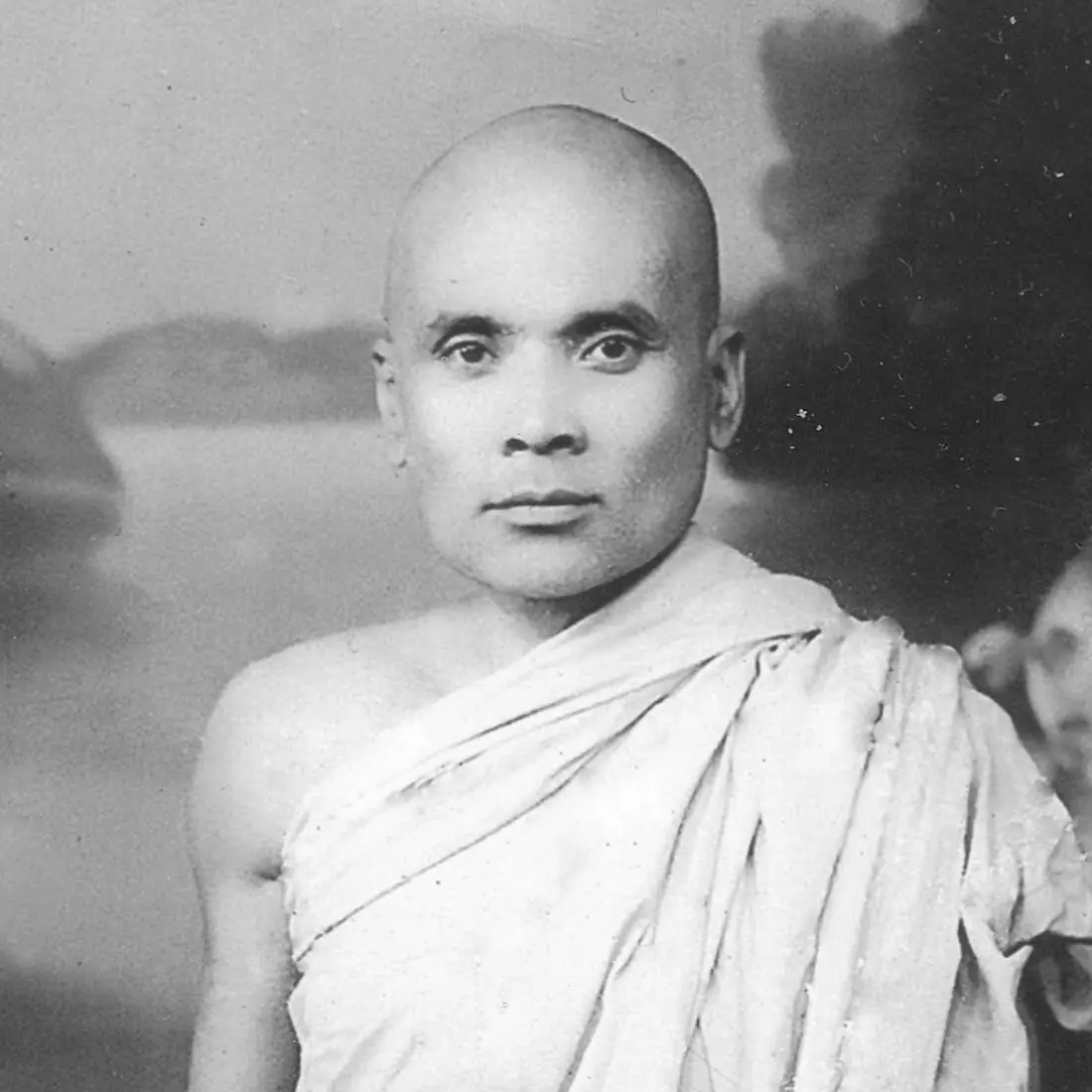
भिक्षु धम्मालोक महास्थविर
Kathmandu trader turned monk who taught at Kindo Baha, was exiled in 1944 and founded Ananda Kuti Vihara.
Bhikkhu Dhammalok was a Kathmandu merchant who became one of the three founders of the Theravāda revival in Nepal, with Mahapragya and Pragyananda. He taught Buddhism as a layman at Kindo Baha, was jailed in 1931 and exiled in 1944 by the Rana government, and founded Ananda Kuti Vihara at Swayambhu, which became the headquarters of Nepal's Theravāda monks. He also wrote in Nepal Bhasa (Newari), a language in which the government forbade the monks to print books in 1944.
He was born Das Ratna Tuladhar in Asan, Kathmandu, in 1890 (LeVine and Gellner's appendix gives 1891). He traded in Lhasa, and the death of his wife while he was away affected him deeply. After coming home in 1925 he and his son began teaching Tibetan Buddhism at Kindo Baha, a small monastery at the foot of Swayambhu hill that became the first base of the revival (LeVine and Gellner). His son later went to Sri Lanka and became the monk Aniruddha, who was head of the Nepali Sangha when he died in 2003.
Dhammalok visited his son in Sri Lanka and came back with yellow robes and a begging bowl. Kloppenborg records that he later described himself as the first Nepali monk to wear the yellow robe; the usual account gives that place to Pragyananda, in 1930. In 1930, still a householder, Dhammalok organised a Buddhist fasting ceremony at Kindo Baha at which Pragyananda gave the Eight Precepts. Three women who took part went on to become the first Theravāda nuns of modern Nepal (LeVine and Gellner).
In November 1931 the police arrested a number of Buddhists, including Dhammalok (Kloppenborg). LeVine and Gellner write that he had been reported for propagating an unorthodox religion, and that he and eleven other men of the Uday merchant community were punished with fines and short prison terms. After a visit to Burma in 1932 he began translating Buddhist texts into Newari at Kushinagar, starting with Aśvaghoṣa's life of the Buddha, the Buddhacarita (Kloppenborg). Chandramani, the Burmese monk at Kushinagar who ordained most of the early Nepali monks, ordained him in 1933.
In 1937 he organised a celebration of the Buddha's birthday at Kindo Baha, with an exhibition of Buddhist pictures he had brought back from China. LeVine and Gellner count it as the first in the unbroken series of Buddha Jayanti celebrations that is now a national festival. They also name him and Amritananda as the monks who did most to encourage the singing of devotional hymns in the vernacular.
Some years earlier he had built a hut in the woods on Swayambhu hill as a retreat for the rainy season. When Amritananda came back from Sri Lanka at the end of 1942, Dhammalok invited him to preach during the rains retreat (vassa), and lay supporters began building a vihara on the spot (Journal of Buddhist Studies; Kloppenborg). Kesar Lall's biography of Amritananda dates the founding of Ananda Kuti Vihara by Dhammalok to 1943. In 1944 he brought a marble Buddha image from Kushinagar for it (Kloppenborg).
That year the police stopped him giving the precepts to a woman who wished to become a nun, and the government ordered the monks to stop teaching and ordaining. On 30 July 1944 eight monks and novices who refused, Dhammalok among them, were exiled to India (Kloppenborg; LeVine and Gellner). At Sarnath he sat on the first committee of the Dharmodaya Sabha, the exiles' Buddhist society. In 1946, after the Sri Lankan mission that Amritananda arranged, the prime minister let Dhammalok, the eldest of the exiles, return first (Kesar Lall).
Back in Kathmandu, devotees enlarged his cottage into a vihara, and the monks moved in when it became habitable in early 1947. With a Buddha relic and a sapling of the Bodhi tree brought from Sri Lanka by Narada Mahathera that year, Ananda Kuti became the headquarters of the Theravāda mission in Nepal (LeVine and Gellner). In 1981 it hosted S. N. Goenka's first Vipassana retreat in Kathmandu, and since November 2024 its grounds have held a small Goenka-tradition centre, Dhamma Ādhāra, mainly for monastics.
His account of his travels in China, Mahachin Yatra (Kalimpong, 1950), also describes the first years of the revival, and Kloppenborg drew on it for her history. Published dates for his death differ: 1966 is widely given, while LeVine and Gellner's list of leading figures gives 1977. The later story of meditation in Nepal is told in Vipassana in Nepal: a short history.