
Loading…
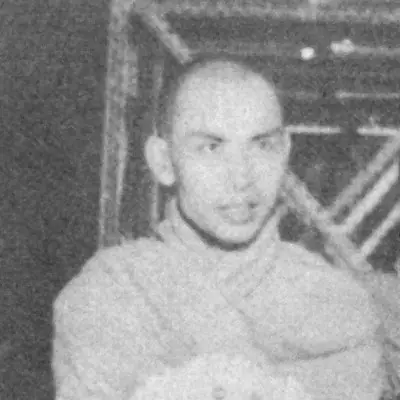 Photo: Unnamed photographer, Chaṭṭa Sangāyanā Souvenir Album, Rangoon 1956 (uploaded by Zenwort), Public domain
Teacher · 1918–1990
भिक्षु अमृतानन्द
Organiser and diplomat of Nepal's Theravāda revival, head of Ananda Kuti Vihara for some forty years.
Bhikkhu Amritananda was the main organiser of Nepal's Theravāda revival from the 1940s until his death in 1990. He did not teach meditation himself in the way later Vipassana teachers did, but the institution he led, Ananda Kuti Vihara at Swayambhu, was where S. N. Goenka held his first Kathmandu retreat. The Dutch scholar Ria Kloppenborg, writing in 1977, called him "the most important leader of the movement for the following thirty years".
He was born Lal Kaji Shakya in Tansen, Palpa, in 1918, the son of Hira Kaji Shakya, a gold and silversmith, and Moti Maya. According to Kesar Lall's 1986 biography, published by Ananda Kuti Vihara Trust, he lost both parents in 1929, was married at 14 and repeatedly ran away from home. On one of these trips he saw a monk for the first time, at Kushinagar in India, and resolved to become one.
On 2 August 1936, aged 18, he was ordained a novice at Kushinagar by Chandramani, the Burmese monk who initiated most of the first Nepali Theravāda monks and nuns. He learned his first Pali from Mahapragya in Kalimpong. When the two went to Bhojpur in eastern Nepal, they were held in jail for four months and escorted back to India (Kesar Lall; the Tribhuvan University study dates the arrest to 1937).
In 1937 he went to Burma and then to Colombo, where he studied the Pali canon at Vidyalankara Pirivena and then at Vajiraramaya under Narada Mahathera. He received full ordination (upasampadā) on 25 January 1940 (Kesar Lall).
He came back to Nepal at the end of 1942 (Kloppenborg gives 1941) and began preaching on Swayambhu hill, near the hut where Dhammalok was trying to build a vihara. Dhammalok urged him to write down his sermons in Newari, which began a long and popular series of publications (Kloppenborg).
On 30 July 1944 Prime Minister Juddha Shamsher ordered the monks to stop preaching, ordaining and printing books in Newari. Eight monks and novices who refused, among them Pragyananda and Dhammalok, were exiled to India. Amritananda happened to be at Sarnath. There, on 30 November 1944, the exiles founded the Dharmodaya Sabha, with Chandramani as president and Amritananda as general secretary, and he wrote to Buddhist organisations abroad asking them to protest (Kloppenborg; Kesar Lall; LeVine and Gellner).
In 1946 he brought a goodwill mission from Sri Lanka, led by Narada Mahathera, to Kathmandu. The prime minister, Padma Shamsher, agreed to let the monks return, Dhammalok first. Kesar Lall reports that Dhammalok told him: "Amritananda, you have rekindled the light that has been extinguished."
Ananda Kuti became the headquarters of the Theravāda mission in Nepal, and Amritananda its head for forty years (LeVine and Gellner). After the fall of the Rana regime he founded the All-Nepal Bhikkhu Mahasangha in 1951 and became its president. He was secretary of the committee, chaired by King Tribhuvan, that brought relics of Sāriputta and Moggallāna, the Buddha's two chief disciples, to Kathmandu (Kesar Lall dates this to 1951, Kloppenborg to 1952). In 1952 the Ananda Kuti Vidyapeeth school opened at Swayambhu with a handful of pupils; by the mid-1970s it had about 700 (Kloppenborg).
He travelled widely for the movement. He led a Nepali delegation to the first conference of the World Fellowship of Buddhists in Colombo in 1950, led the fourth conference in Kathmandu in 1956, and was elected the fellowship's vice-president. From 1972 he compiled and translated passages of the Pali canon into Nepali in a long series of volumes (Kesar Lall).
The revival he led was mainly about monastic life, study and preaching, and meditation came later. In 1981 Goenka led his first retreat in Kathmandu at Ananda Kuti Vihara, for a small group drawn mainly from the business community (LeVine and Gellner; the Vipassana Research Institute gives the same year). Since November 2024 a small Goenka-tradition centre, Dhamma Ādhāra, has held courses in the vihara's grounds, mainly for monastics.
He died of cardiac arrest on 20 August 1990, weeks before celebrations planned for the fiftieth year of his higher ordination (Amritanjali). How the revival led to Nepal's meditation centres is told in Vipassana in Nepal: a short history, and today's centres are listed under centres in Nepal.