Dhamma Giri, Igatpuri: the Vipassana International Academy
Dhamma Giri at Igatpuri, near Mumbai, is the Vipassana International Academy: its history since 1976, the pagoda, courses, applying and getting there.
Vipassana Nepal team · · 7 min read
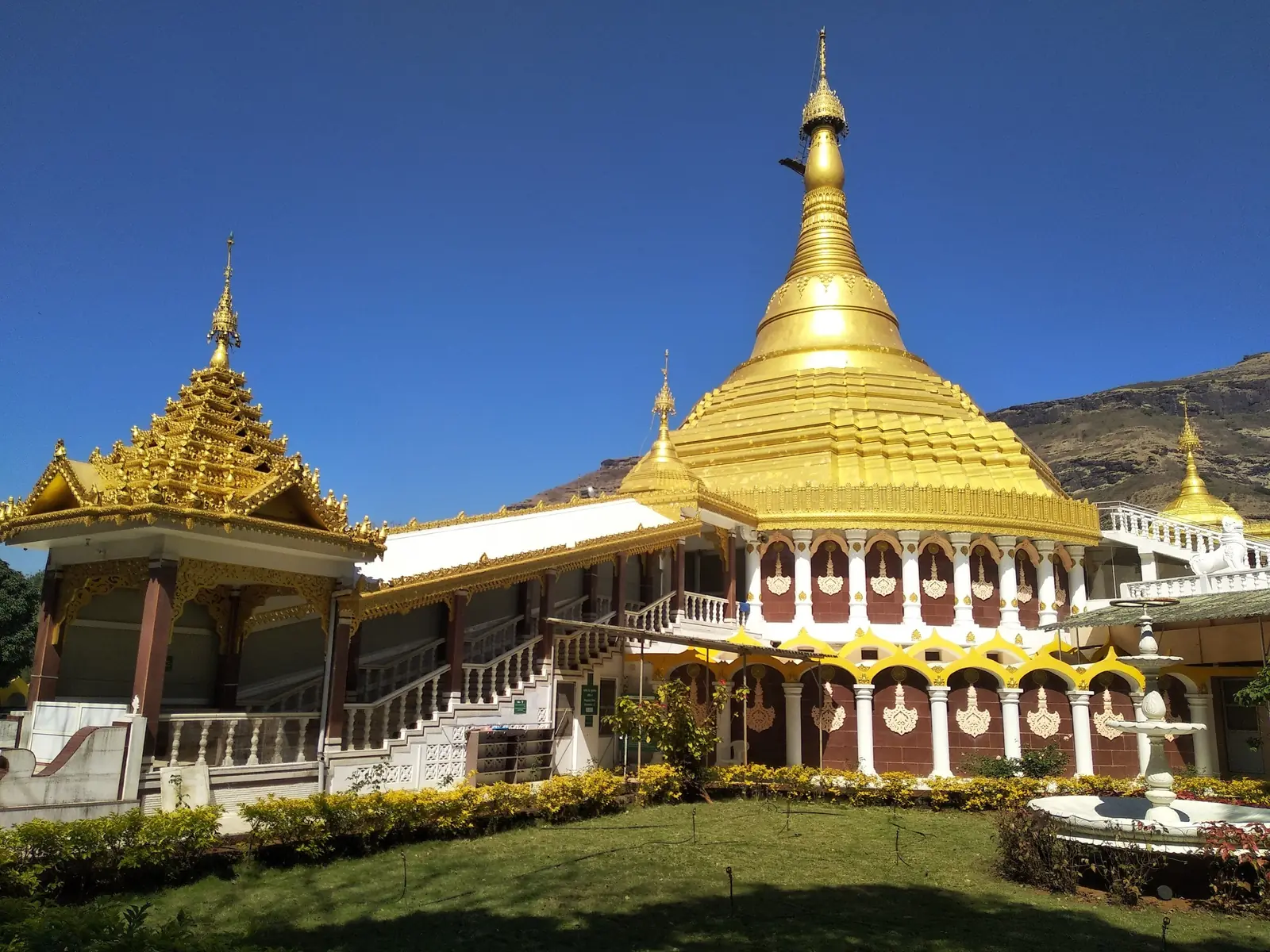
Dhamma Giri, the Vipassana International Academy, is a meditation centre at Igatpuri in Maharashtra, about 136 km north-east of Mumbai. The academy calls it "the main centre" of the worldwide organisation that teaches Vipassana as taught by S. N. Goenka. It opened in 1976 and, like every centre in this tradition, teaches Vipassana in free 10-day residential courses.
The name means "Hill of Dhamma". dhamma.org calls it one of the world's largest Vipassana centres and says tens of thousands of students study there every year. This guide covers its history, what is on the site, the courses, how to apply and how to get there. The facts come from the academy's own website and the Vipassana Research Institute (VRI) unless the text says otherwise.
Dhamma Giri at a glance
| Full name | Vipassana International Academy, Dhamma Giri |
| Place | Igatpuri, Nashik district, Maharashtra, India |
| Opened | October 1976 |
| Run by | Sayagyi U Ba Khin Memorial Trust |
| Tradition | S. N. Goenka, in the line of Sayagyi U Ba Khin |
| Courses | 10-day courses all year, teenagers' courses, short courses for old students |
| Cost | No charge; run on donations from past students |
| Apply | Online only, at schedule.vridhamma.org |
How Dhamma Giri began
From 1969, when Goenka began teaching in India, his courses were held in borrowed places: temples, churches, mosques, pilgrims' rest houses, schools and hotels. The academy's history page calls these "gypsy camps". His teacher, Sayagyi U Ba Khin, had stressed the need for a permanent centre.
The land came through a local meditator. Bhojraj Sancheti of Igatpuri sat his first course at nearby Deolali in December 1973. On the last day he invited Goenka to stop for tea at his house on the way back to Bombay, and then showed him possible sites. Goenka wanted land "not in the midst of the town but not too remote either". On 16 December 1973 he chose the hill where Dhamma Giri now stands, and a fellow meditator, Rangil Mehta, offered on the spot to buy the land and give it to the trust.
Sancheti recalls one detail of that day. Someone pointed out a cremation taking place at the foot of the hill, and he feared it would put Goenka off. Goenka answered: "Good! This will continually implant the awareness of anicca (impermanence) in the minds of meditators."
The academy opened to the public in 1976, and its first course ran from 27 October to 7 November that year. The academy's own pages differ on the details: its background page describes a ten-day course for 89 students (38 old, 51 new), while its "First Course" page describes a four-day course for 76 old students on the same dates. The water supply failed at the last moment and water came by tanker. Goenka also announced that students would no longer pay for food and lodging, and would instead give what they wished for the students who came after them. That arrangement still holds.
The pagoda and the growth of the site
Work began on a meditation pagoda on the "Plateau of Peace" (Shanti Pathar) in 1978, and its first stage opened in March 1979. At first it had only 32 cells, and sometimes six or seven people sat together in one of them.
Rings of cells were added year by year. In 1980 a large meditation hall was built beside the pagoda. In the early 1990s a larger hollow pagoda was built around the first, which remains intact inside it. The academy describes this golden, Myanmar-style structure, the one in the photograph at the top of this page, as a replica of the Shwedagon Pagoda in Yangon. Sources give different cell counts: the academy's pages say 350 or more, while dhamma.org says over 400.
The academy's "Dhamma Giri Today" page, which is undated, describes the site this way:
- Land: about 23 acres, on a plateau below a hilltop, planted over the years with thousands of trees.
- Halls: seven meditation halls; three are used on each 10-day course, two for men and one for women. Halls I and II seat about 250 each.
- Numbers: around 600 students on each 10-day course. Another page says the kitchen feeds over 900 people a day.
- Myanmar Gate: built in 2004 as a sign of gratitude to Myanmar, and a shared entrance for Dhamma Giri, Dhamma Tapovana 1 and 2, the Sayagyi U Ba Khin Village and VRI.
Can you visit Dhamma Giri?
Probably not, unless you are on a course. As of September 2026, the academy's home page says: "Only confirmed students/servers are permitted to enter the centre premises. Visitors are not allowed inside the centre premises." The older "Dhamma Giri Today" page still describes a visitor gallery by the Myanmar Gate with short films, Mini-Anapana sessions, an art gallery and a "Buddha Park", and the site's footer still lists "visiting hours" of 10 am to 5 pm. Contact the centre before travelling as a visitor. If you want to see a large Vipassana monument, the Global Vipassana Pagoda in Mumbai welcomes visitors every day.
What else is on the hill
Several institutions share the site or sit next to it:
- Vipassana Research Institute (VRI). Founded in 1985 (the academy's growth page says 1986), VRI studies the sources of Vipassana in the Buddha's teaching and publishes the Tipiṭaka, the Buddhist scriptures in Pali.
- Dhamma Tapovana 1 and 2. Two centres built for long courses of 20, 30, 45 and 60 days, which are open only to experienced students. Tapovana 1 held its first 45-day course in July and August 2001.
- Sayagyi U Ba Khin Village. Houses and flats where meditators live next to the centre and keep the five precepts.
Courses at Dhamma Giri
Dhamma Giri teaches Vipassana as taught by S. N. Goenka in the tradition of Sayagyi U Ba Khin. The course schedule for late 2026, as published on schedule.vridhamma.org, includes:
- 10-day courses, the starting point for everyone and held throughout the year, usually in Hindi and English.
- Teenagers' courses for ages 15 to 19, run separately for boys and girls. The first 7-day teenagers' course in this tradition was held at Dhamma Giri in April 2004 (VRI).
- Short courses for old students (people who have completed a 10-day course) of two or three days, and Satipaṭṭhāna Sutta courses for experienced students.
- Maintenance periods and meetings for teachers, when no courses run.
The late 2026 schedule also lists a "Golden Jubilee" programme from 26 November to 18 December, fifty years after the centre opened, including a large three-day course and a one-day course, both for old students.
For what happens on a 10-day course, from the daily timetable to Noble Silence, read the 10-day course, day by day.
How to apply for a course at Dhamma Giri
- Read the code of discipline. Every course in this tradition asks students to follow it for the whole course, including silence and staying all ten days. See before your first course.
- Check the eligibility criteria. As of September 2026, the academy asks applicants to be over 18 and healthy, and to be willing to leave if the management asks them to.
- Apply online. Dhamma Giri accepts online applications only, through schedule.vridhamma.org. The schedule shows the date applications open for each course, often about two months ahead, and some courses fill up.
- Wait for confirmation. Only confirmed students may come. Do not travel on an application that has not been accepted.
There is no fee for the teaching, food or lodging. At the end of the course, students who wish to may give a donation for future students; the academy accepts donations only from people who have completed a course.
How to reach Igatpuri and Dhamma Giri
Igatpuri is a railway town on the Central Railway line between Mumbai and Nashik, about 136 km from Mumbai and 45 km from Nashik. The academy is a 10 to 15 minute walk from Igatpuri station, and taxis and autorickshaws are available. The academy's "How to Reach" page lists these ways in:
From Mumbai
- Long-distance trains on the Mumbai–Nashik line stop at Igatpuri.
- Suburban local trains run from Mumbai CST to Kasara. From Kasara, take a taxi or bus for the last 18 km or so to Igatpuri.
- State Transport buses run from Dadar (West).
From Nashik
- Trains from Nashik Road station.
- Shared taxis and State Transport buses from the CBS bus stand.
Check the timetables and plan to arrive within the registration time given in your confirmation. For the centre's address, map and sources, see the Dhamma Giri page in the directory, or browse all Vipassana centres in India. The phone numbers and emails of every centre in the country are in Vipassana centres in India by state.
Sources
- Dhamma Giri: Vipassana International Academy (home page and eligibility criteria), Vipassana International Academy
- Background, Vipassana International Academy
- First Piece of Land, Vipassana International Academy
- First Course, Vipassana International Academy
- The Growth of Dhamma Giri, Vipassana International Academy
- Dhamma Giri Today, Vipassana International Academy
- How to Reach, Vipassana International Academy
- Course schedule: Dhamma Giri, Vipassana Research Institute
- Location directory: Dhamma Giri, dhamma.org
- Timeline, Vipassana Research Institute
- About VRI, Vipassana Research Institute