What is a silent retreat? Noble silence and who it suits
A silent retreat means days of meditation without talking. What noble silence means in each tradition, a typical day, length, cost and who it suits.
Vipassana Nepal team · · 9 min read
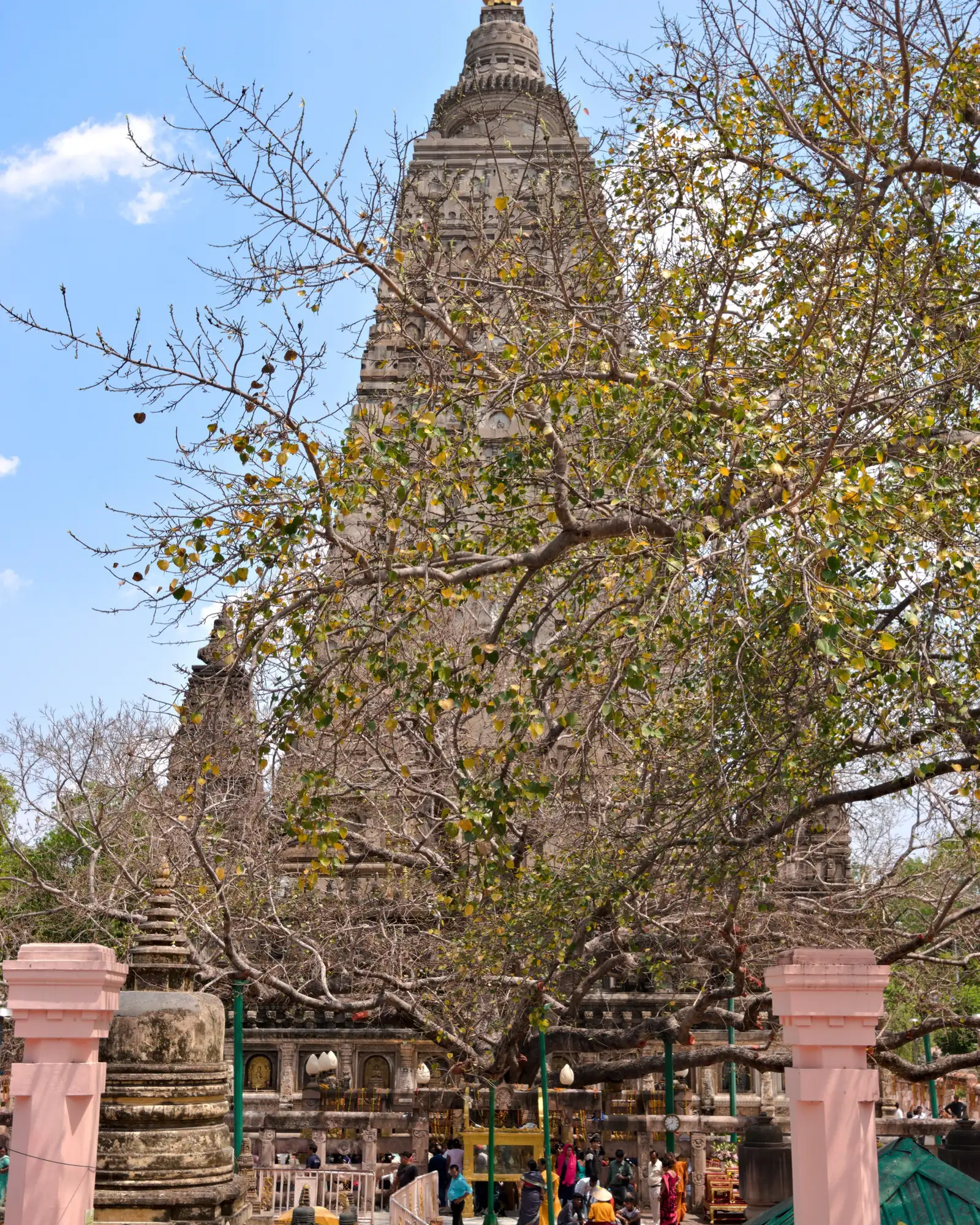
A silent retreat is a stay at a meditation centre or monastery, from a weekend to several months, where you meditate for most of the day and do not talk with the other participants. You can still speak to the teacher, and to the staff about practical needs. Each organisation sets its own rules, so this page compares what several of them publish, as of October 2026. It describes retreats; it does not teach a technique.
What a silent retreat asks of you
The published rules of the centres on this page share a core:
- No talking with other participants, and usually no gestures or notes either.
- Phones put away, handed in at the start or switched off.
- No reading or writing, or as little as possible.
- A fixed timetable, usually starting between 4 and 6 am and ending about 9 or 10 pm, followed in full.
- Five or eight precepts. The eight add no food after midday, no entertainment or adornment, and no luxurious beds.
- Staying to the end, inside the grounds.
It is silence in company, not solitude: Amaravati stresses that its retreats are group retreats, not solitary or self-led ones. Nor is it a break. dhamma.org's Code of Discipline says a course "is not a rest cure, a holiday, or an opportunity for socializing", and gives a golden rule: "to meditate as if one were alone, with one's mind turned inward".
What noble silence means
Retreat centres call the rule "noble silence", from the Pali ariyo tuṇhībhāvo. The suttas use the phrase in two ways. In the Noble Quest (MN 26), the Buddha finds his monks in discussion and tells them: "When you're sitting together you should do one of two things: discuss the teachings or keep noble silence." In SN 21.1, Moggallāna identifies noble silence with the second jhāna, a deep state of meditation reached as "the placing of the mind and keeping it connected" (vitakka and vicāra) are stilled. So noble silence can mean a quiet mind as well as a closed mouth.
Retreat rules use both senses. dhamma.org defines Noble Silence as "silence of body, speech, and mind"; IMS calls it "a quieting of the body and voice".
How noble silence differs between traditions
Courses in S. N. Goenka's tradition
On the 10-day courses listed on dhamma.org, "Any form of communication with fellow students, whether by gestures, sign language, written notes, etc., is not allowed." Students may speak with the teacher (privately from noon to 1 pm, or in the hall from 9 to 9:30 pm) and with the management about material needs. Men and women are completely separated.
dhamma.org's questions and answers explain: "Silence is observed for the first nine full days. On the tenth day, speech is resumed as a way of re-establishing the normal pattern of daily life." The reason is continuity: "silence is an essential component in maintaining this continuity." The 10-day course, day by day explains the Code of Discipline in plain words.
Insight meditation centres: IMS and Spirit Rock
At the Insight Meditation Society (IMS) in Massachusetts, noble silence "includes not reading, writing, keeping a journal, receiving mail, or otherwise keeping busy and distracted." There are scheduled times to speak with teachers. Silence is broken at the end of courses at its Retreat Center, so participants can talk about their experience; at the Forest Refuge, for longer personal retreats, it is kept throughout.
Spirit Rock in California keeps noble silence "apart from practice meetings with the teachers and necessary communications with the retreat staff." Its guidelines add: "Practitioners do not speak, leave notes, touch, or make eye contact with each other." Couples and friends are asked not to walk or sit together. Both centres teach insight meditation as it developed in the West.
Mahasi-style centres
At Panditarama Lumbini, in the Buddha's birthplace in Nepal, meditators in Mahasi Sayadaw's tradition keep Noble Silence and eight precepts. The centre's guidelines say "Talking is a great hindrance to progress in mindfulness meditation" and ask meditators to "stay alone and refrain from unnecessary speech". Reading and writing are kept "to an absolute minimum". The aim is mindfulness "from the time of waking up to that of falling asleep at night", with four interviews a week with a teacher.
Monasteries in the Thai traditions
Amaravati, a monastery in England whose retreats are led by monks and nuns of the Thai Forest tradition, explains Noble Silence as "not engaging in conversations with others unless really necessary". Notes to other retreatants are not allowed, but talking to the organisers about practical matters, or about something that is troubling you, is fine.
Wat Pah Nanachat, Ajahn Chah's international monastery in north-east Thailand, says plainly: "We do not offer private meditation teachings or retreats and courses in meditation". Lay guests follow the monks' daily routine and eight precepts instead. Its speech precept rules out "worldly gossip"; the visitors' page sets no rule of complete silence.
Suan Mokkh in southern Thailand, founded by Buddhadāsa Bhikkhu, is stricter: "Keep complete silence throughout the retreat (exceptions: personal interviews from Day 3 to Day 6 and emergencies)." The silence runs from the evening of registration day to the morning of Day 11.
A typical day on a silent retreat
The published timetables look alike: an early bell, long blocks of practice, simple meals, a talk on the teachings and short meetings with a teacher. These are the days as each organisation published them in 2026; IMS calls its own schedule "only tentative".
| Where | The day runs | What fills it |
|---|---|---|
| Goenka courses | 4:00 am to 9:30 pm | About ten hours of meditation, a recorded talk at 7 pm, questions at noon and 9 pm |
| IMS | 5:30 am to 10 pm | Sitting and walking in turn, an hour of work, daily instructions, an evening talk |
| Spirit Rock | From about 6 am | Seven sitting and six walking periods of 45 minutes, work meditation, an hour's talk |
| Panditarama Lumbini | 4:00 am to 10 pm | Sitting and walking in roughly hourly turns, a 6 pm talk; 12 to 14 hours of practice |
| Amaravati | 5:30 am to 9:30 pm | Chanting, sitting and walking, 45 minutes of working meditation, no evening meal |
| Suan Mokkh | 4:00 am to 9:30 pm | Reading, sitting, yoga or exercise, talks, walking or standing meditation, loving-kindness at 5 pm |
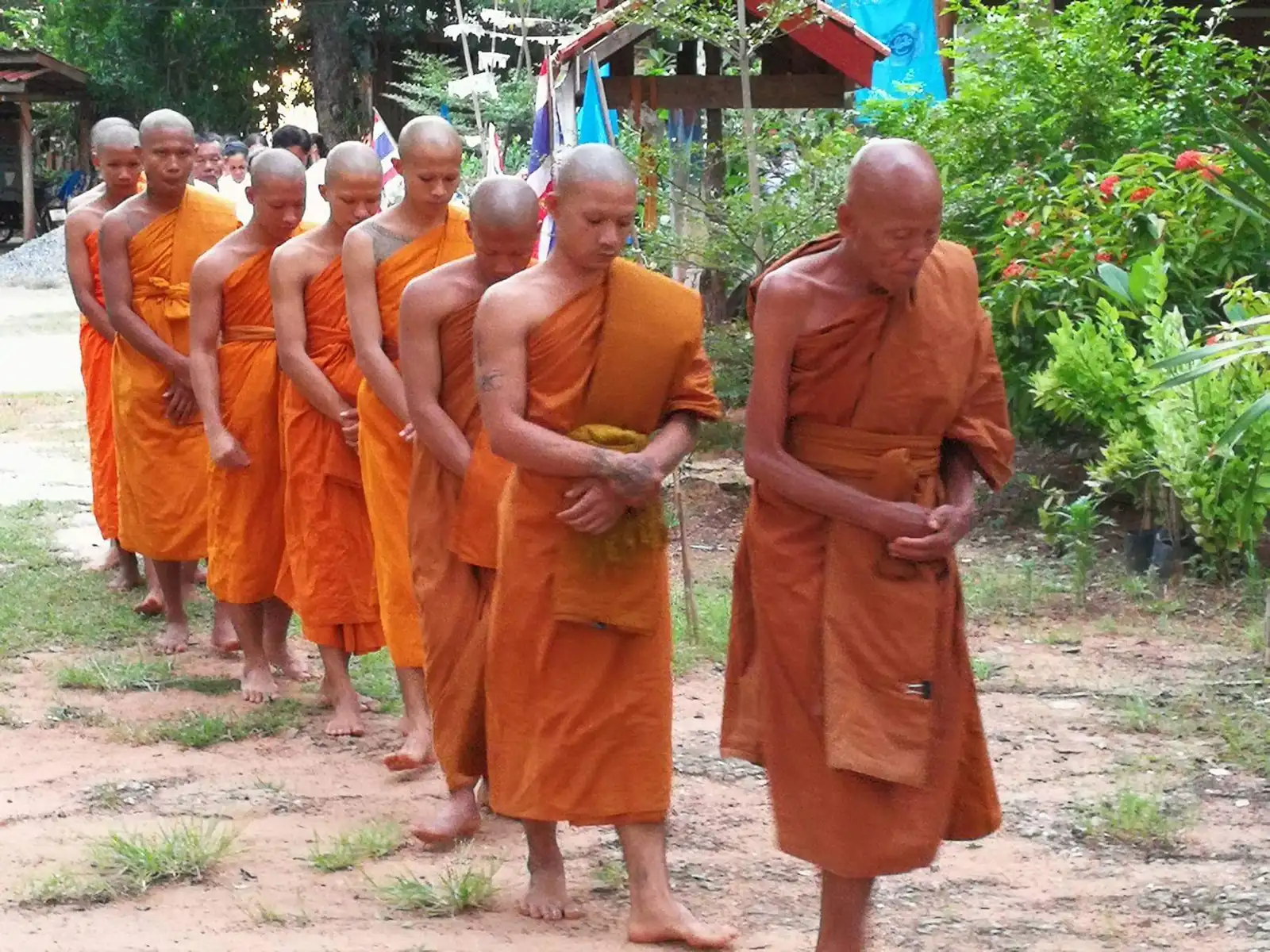
The clearest difference is walking. Most of these centres alternate sitting with formal walking meditation, the practice in the photograph above. The Goenka timetable has no walking periods: its Code allows walking "in designated areas" during rest periods, as exercise.
How long retreats last: a weekend to several months
- A weekend. IMS runs courses "from a weekend to three months". Amaravati's weekend retreats run from Friday afternoon to Sunday at 5 pm.
- Five to seven days. Amaravati also runs five-day retreats; Panditarama Lumbini's minimum stay is seven days.
- Ten days. The introductory course in Goenka's tradition is a 10-day silent retreat, spanning 12 calendar days with arrival and departure. dhamma.org calls ten days the minimum and says Vipassana was traditionally taught in seven-week retreats; its one- to three-day courses are only for people who have completed a 10-day course. Suan Mokkh runs 10-day retreats from the 1st to the 11th of each month, with "neither shorter nor longer retreats".
- A month or more. IMS courses run up to three months, and Panditarama Lumbini takes stays of up to "several months" between September and March. In Goenka's tradition, experienced students can sit courses of 20 to 60 days; see Vipassana course types.
What it costs, and where retreats are free
Several traditions charge nothing for the teaching, and some charge nothing at all:
- Goenka courses: no charge for teaching, room or food. Courses run on donations from people who have completed one; a first-time student may give only at the end.
- Amaravati: "There is no charge for attending Retreats at Amaravati." Donations are welcome, without pressure.
- Panditarama Lumbini: run on dāna (generosity), with "no set daily fees".
- Wat Pah Nanachat: food and lodging are free for lay guests.
- Suan Mokkh: a 2,000 baht registration fee covering all expenses.
- IMS and Spirit Rock: a registration fee. At IMS it is on a sliding scale and pays for rooms, meals and running costs, not the teaching. At both, teachers are supported by dāna offered at the end.
So a free silent retreat is not hard to find, though travel and time off work are still yours to cover. Is Vipassana free? explains how donation-funded courses work.
Who it suits, and who should check first
dhamma.org's answer for its own course is practical: "if you are in reasonable physical and mental health and willing to make a sincere effort, the course will be manageable." Goenka courses, Spirit Rock and Amaravati all ask you to stay for the whole retreat, so choose dates you can give in full.
The silence can feel strange at first. Amaravati says "For those new to silent retreats this can sometimes feel quite challenging", and that "This feeling of awkwardness is entirely normal". The body is less of a barrier: Goenka centres and Amaravati have chairs, and Spirit Rock's teachers help with modified positions.
Organisers are frank that intensive silence is not right for everyone at every time:
- IMS: if you have recently experienced "considerable trauma, significant depression or anxiety", or have strong PTSD now, "a silent retreat may not be appropriate for you at this time in your life."
- Spirit Rock: if you have experienced trauma and suspect being alone in silence would be hard, an intensive retreat may not be right for now. Anyone under psychiatric care should discuss attending with their professional.
- dhamma.org: old symptoms may resurface "during or after the course"; the meditation "is not a substitute for medical or psychiatric treatment" and is not recommended for people with significant mental-health issues.
- Wat Pah Nanachat does not accept guests with any past mental illness, because almost no professional help is available for foreigners in Ubon.
Research on distress during intensive retreats is summarised in difficult experiences on meditation retreats; short answers are on the FAQ page.
Choosing and finding a retreat
- Choose the tradition first. Most retreats teach one method and ask you to follow only that one. Goenka courses suspend "All other meditation techniques", and Spirit Rock tells retreatants: "This is not a self-retreat facility". The comparison on the techniques page sets the traditions side by side.
- Check that beginners can join. IMS and Spirit Rock say most of their retreats suit new and experienced meditators, and Goenka's 10-day course is the introductory one. Wat Pah Nanachat wants previous experience, "preferably a meditation retreat"; Amaravati suggests a workshop or day retreat first to people new to silent meditation.
- Read the rules before you apply, such as dhamma.org's Code of Discipline or Amaravati's "Please Read This First" section.
- Find a centre in the centres directory, country by country: Nepal, India, the United Kingdom, the United States and more. Before your first course covers applying and packing.
After the retreat
Spirit Rock lists "daily practice" among the supports for carrying a retreat into ordinary life, and keeping up the practice at home describes what Goenka's tradition asks of old students. Phones stay off on the retreat itself, so a timer belongs to the sittings afterwards. Clean Pomodoro, a free Vipassana meditation and Pomodoro timer for iPhone and Android, has timers for Vipassana and ānāpāna sittings that end with a gentle voice cue, so you can sit without watching the clock. Its calm and nature sounds are for study, work and rest, not for a sitting.
Sources
- Introduction to the Technique and Code of Discipline, dhamma.org
- Questions & Answers About the Technique of Vipassana Meditation, dhamma.org
- Course Glossary, dhamma.org
- The Noble Quest (Ariyapariyesana Sutta, MN 26), translated by Bhikkhu Sujato, SuttaCentral
- With Kolita (SN 21.1), translated by Bhikkhu Sujato, SuttaCentral
- Retreat Center, Insight Meditation Society
- FAQs About Retreats, Insight Meditation Society
- Residential Fees, Insight Meditation Society
- The Practice of Retreat, Spirit Rock Meditation Center
- Panditarama Lumbini International Vipassana Meditation Center, Panditarama Lumbini
- Resources (daily schedule), Panditarama Lumbini
- Yogi Information File (version of 31 May 2026, PDF), Panditarama Lumbini
- Coming on Retreat, Amaravati Buddhist Monastery
- Visiting, Wat Pah Nanachat
- Suan Mokkh International Dharma Hermitage (home page), Suan Mokkh International Dharma Hermitage
- General information, Suan Mokkh International Dharma Hermitage
- Registration, Suan Mokkh International Dharma Hermitage