Vipassana in prisons: from Jaipur and Tihar to Alabama
How 10-day Vipassana courses reached prisons in India, the United States and Nepal, from Jaipur in 1975 to Nakkhu in 2024, and what studies found.
Vipassana Nepal team · · 7 min read
Ten-day Vipassana courses in the tradition of S. N. Goenka have been held inside prisons since 1975. The course is the same one taught at public centres (see the 10-day course, day by day): ten days of silence, a fixed timetable and a code of conduct. In the Seattle jail described below, courses were held in an area set apart from the rest of the jail. Most of the history below comes from organisations within the tradition, chiefly the Vipassana Research Institute (VRI). These are first-hand accounts but not independent ones, so figures that come only from VRI are marked as such.
Jaipur, 1975: the first course in a jail
According to the Vipassana Research Institute, Ram Singh, then Home Secretary of Rajasthan, arranged the first course at Jaipur Central Jail in October 1975, and 114 inmates attended. Another passage on the same VRI page says courses were held "in 1975 and 1977 for 120 inmates", so the source is not consistent.
Ram Singh's own account, published by VRI, describes two problems. The jail manual allowed only prisoners, people on trial and staff to stay inside, and Goenka insisted on staying for the whole course; administrative instructions were issued, and he stayed in a makeshift room in the jail dispensary. Four prisoners were brought to the hall in handcuffs and ankle locks, and after a discussion with the Inspector General of Prisons the chains were removed.
VRI says no more prison courses were held in India for nearly 15 years, until seven courses in Rajasthan and Gujarat in 1990 and 1991.
Tihar, 1993–94: the course for a thousand
Tihar Jail in New Delhi held about 10,000 inmates, according to VRI, when Dr Kiran Bedi, then Inspector General of Prisons, arranged its first course in November 1993, for 96 inmates and 23 staff. A course for 300 inmates followed in January 1994. In April 1994 Goenka led a course for more than 1,000 inmates, which VRI calls the largest Vipassana course held up to then. VRI's page gives the number of assistant teachers who helped him as ten in one passage and thirteen in another. A permanent centre, Dhamma Tihar, was then set up inside the jail.
VRI also says that the Ministry of Home Affairs then adopted a proposal to introduce Vipassana as a reform measure in all Indian prisons; no government source for this was found. According to VRI, 75 courses were held in Indian jails in 1997, and 39 courses with 1,420 inmates in 2001. It describes a study at the All India Institute of Medical Sciences that reported less anger, tension and hostility among Tihar inmates; the study itself was not available to check.
The film Doing Time, Doing Vipassana
Two Israeli filmmakers, Ayelet Menahemi and Eilona Ariel, spent five months in India in the winter of 1994–95 researching and filming. Their documentary tells the Tihar story, including the April 1994 course, which the producers describe as an 11-day course for a thousand inmates. The film is usually dated 1997, the year Wikipedia gives; the producers' own page does not state a year.
Seattle: the first course in a North American jail
In November 1997 the King County North Rehabilitation Facility (NRF), just north of Seattle, held the first Vipassana course in a North American jail. VRI says 11 inmates completed it. A 2003 report in American Jails by University of Washington researchers and NRF staff says 20 courses were held there, every three to four months, until August 2002. Most of NRF's long-term inmates were repeat offenders heavily involved with alcohol and other drugs.
An internal NRF review of 75 course completers found that 56% had returned to King County Jail within two years, compared with 75% in an earlier study of NRF's general population. That was a comparison with a different group, not a controlled trial.
From October 1999 a University of Washington team led by G. Alan Marlatt, funded by the National Institute on Alcohol Abuse and Alcoholism, studied nine of the courses. The team wrote that a randomised trial was not possible, for design and ethical reasons, so it compared course completers with inmates who received only the jail's usual programmes. Of 306 inmates who agreed to take part, 88 completed the assessments before the course, after it and three months after release: 29 course completers and 59 in the comparison group. At three months the report found no difference in reoffending, because too few new offences had occurred in either group to detect one. NRF closed on 31 October 2002.
What the 2006 study found
The peer-reviewed paper, by Bowen and colleagues in Psychology of Addictive Behaviors (2006), reports that after release from jail, course participants showed significant reductions in alcohol, marijuana and crack cocaine use compared with a treatment-as-usual group. They also had fewer alcohol-related problems and psychiatric symptoms. The abstract does not name the jail or give the number of participants, but the authors are the University of Washington team behind the NRF project.
A follow-up analysis of the same data by Simpson and colleagues (2007) found that the fall in substance use held whatever the severity of inmates' PTSD symptoms. Neither abstract reports on reoffending.
Alabama: Donaldson and The Dhamma Brothers
According to VRI, the first 10-day course at the W. E. Donaldson Correctional Facility in Bessemer, Alabama, a maximum-security prison, was held in January 2002 for 20 inmates. The documentary The Dhamma Brothers, directed by Jenny Phillips, Andrew Kukura and Anne Marie Stein, follows inmates who took part in the programme. Its distributor calls Donaldson "the first maximum-security prison in North America to hold an extended Vipassana retreat". Wikipedia dates the film to 2007 and lists festival awards that year; some listings give 2008.
VRI says research by the University of Alabama and Stanford University found "a 20 percent reduction in disciplinary action" among inmates who took the course, and prison.dhamma.org speaks of significant decreases in disciplinary infractions and long-term recidivism. No published source for the 20 percent figure was found. A peer-reviewed study from 2012, "Meditation in a Deep South Prison" by Perelman and colleagues, followed long-term prisoners at a maximum-security prison for a year; its abstract does not name the prison. It compared 60 prisoners from three course groups with 67 in another programme. Course participants gained more in mindfulness and emotional intelligence and had less mood disturbance. On behaviour, the abstract says: "Both groups' rates of behavioral infractions were reduced at one-year follow-up."
Nepal: Nakkhu jail
According to VRI, Nepal's first jail course was held at Nakkhu Jail (नक्खु कारागार) in Lalitpur for 20 inmates in November 1998, and a second in 2000 for 23. Courses then stopped for many years. In January 2022 the Ministry of Home Affairs formally allowed the Nepal Vipassana Center to hold courses in prisons, and a third course, for 35 inmates, was held in March 2022 in two flats of the prison hospital building.
On 27 November 2023, Republica reported, a Home Ministry meeting decided to extend Vipassana camps to prisons across the country, starting at Nakkhu. Earlier camps had been held in several prisons, including Nakkhu, Bhimphedi and Parasi. The paper put Nepal's prison population at about 25,000 in 74 prisons.
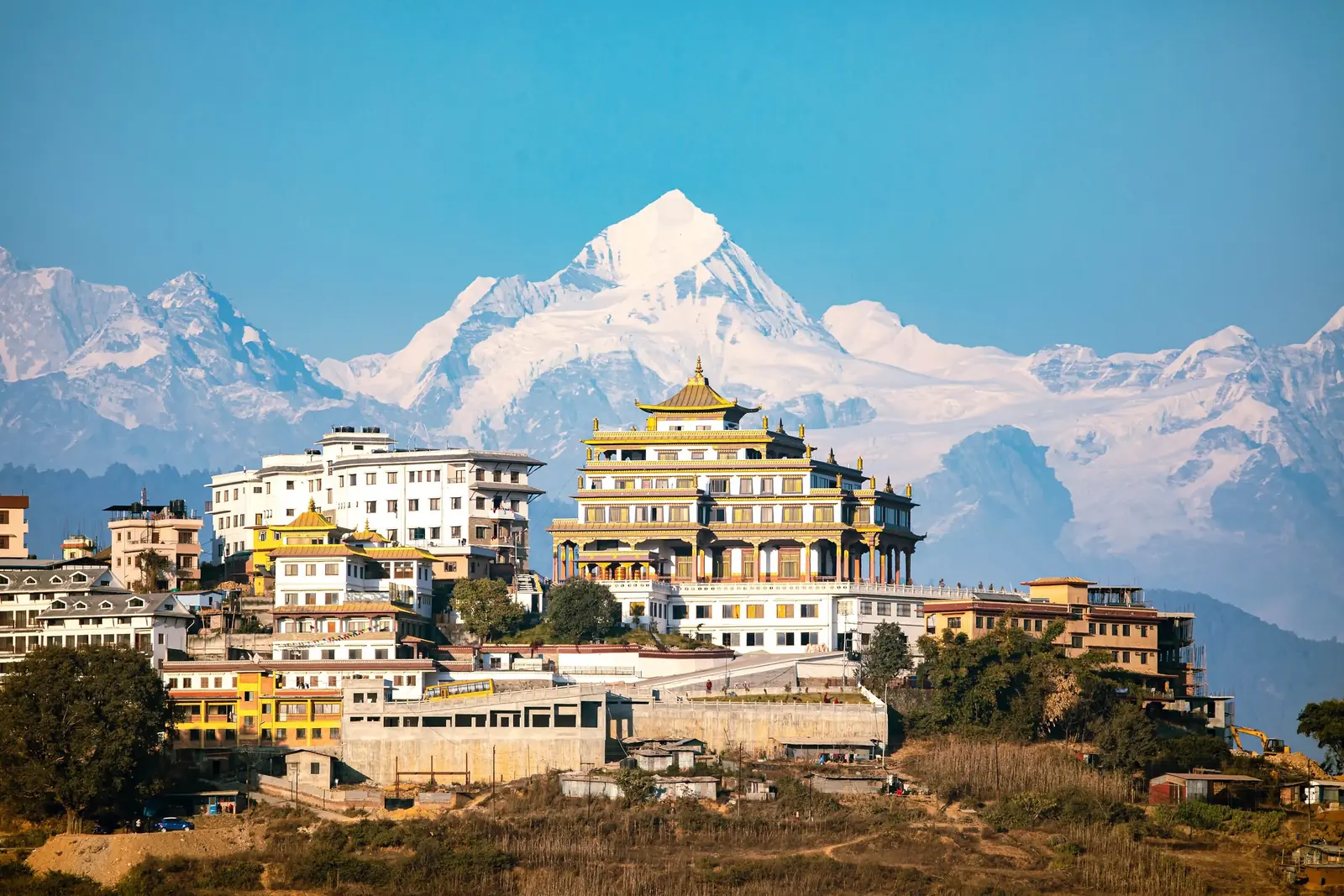
On 20 February 2024 the Deputy Prime Minister and Home Minister, Narayan Kaji Shrestha, inaugurated a Vipassana centre inside the Nakkhu prison grounds; Republica reported that a 12-day camp for 48 inmates would be held there. dhamma.org lists the centre as Dhamma Āsaya (also written Dhammāsaya). It serves prisoners from prisons across Nepal and government officials, has room for 48 students and servers, and is built and run by the Vipassana trust rather than the prison. It is not open to the public; see Dhamma Āsaya.
Other countries
VRI records first prison courses in Taiwan (Ming Te, 1996), the United Kingdom (Lancaster Castle, 8 inmates), New Zealand, Thailand, Sri Lanka (Bogambara, 2004), Mongolia, Israel (Hermon, 2006), Myanmar (Insein, 2008, with a centre inside the prison), Spain, Mexico, Colombia (2011) and Ireland (2015). prison.dhamma.org, the tradition's prison site, has sections for the United States and Canada, Brazil and Spain.
What the wider research says
A 2010 review of Vipassana studies found three in prisons; they suggested less alcohol and drug use but no effect on PTSD symptoms, and the reviewer called the data few and mainly of low quality. A 2017 meta-analysis of yoga and meditation programmes in prisons (not only Vipassana) found small gains in psychological well-being and behaviour. In the Seattle study, inmates chose whether to take the course, and people who volunteer may differ from those who do not. What research says about Vipassana explains why that matters.
Courses in prisons are free, like those at public centres in Goenka's tradition: prison.dhamma.org says they are funded only by donations from people who have completed a course, with no fees for participants or institutions.
Sources
- Vipassana in Prisons: History and Spread, Vipassana Research Institute
- About Doing Time, Doing Vipassana, Karuna Films
- Doing Time, Doing Vipassana, Wikipedia
- The University of Washington Vipassana Meditation Research Project at the North Rehabilitation Facility (American Jails, 2003, PDF), North American Vipassana Prison Trust
- Mindfulness meditation and substance use in an incarcerated population (Bowen et al., 2006), PubMed
- PTSD symptoms, substance use, and vipassana meditation among incarcerated individuals (Simpson et al., 2007), PubMed
- The Dhamma Brothers, Docuseek / Bullfrog Films
- The Dhamma Brothers, Wikipedia
- Meditation in a Deep South prison: a longitudinal study of the effects of Vipassana (Perelman et al., 2012), ERIC
- Govt introduces Vipassana program for inmates across Nepal (28 November 2023), Republica
- Vipassana Center inaugurated in Nakhu jail (20 February 2024), Republica
- नक्खु कारागारमा विपश्यना ध्यान केन्द्र (February 2024), Onlinekhabar
- Location directory: Dhamma Āsaya, dhamma.org
- Vipassana Meditation in Prisons, prison.dhamma.org
- Vipassana meditation: systematic review of current evidence (Chiesa, 2010), PubMed
- A systematic review and meta-analysis of yoga and mindfulness meditation in prison (Auty et al., 2017), PubMed