Vipassana for professionals: executive courses and the evidence
Executive courses teach the same 10-day Vipassana with extra talks on work. Where they run, what professionals said, and how thin the evidence is.
Vipassana Nepal team · · 6 min read
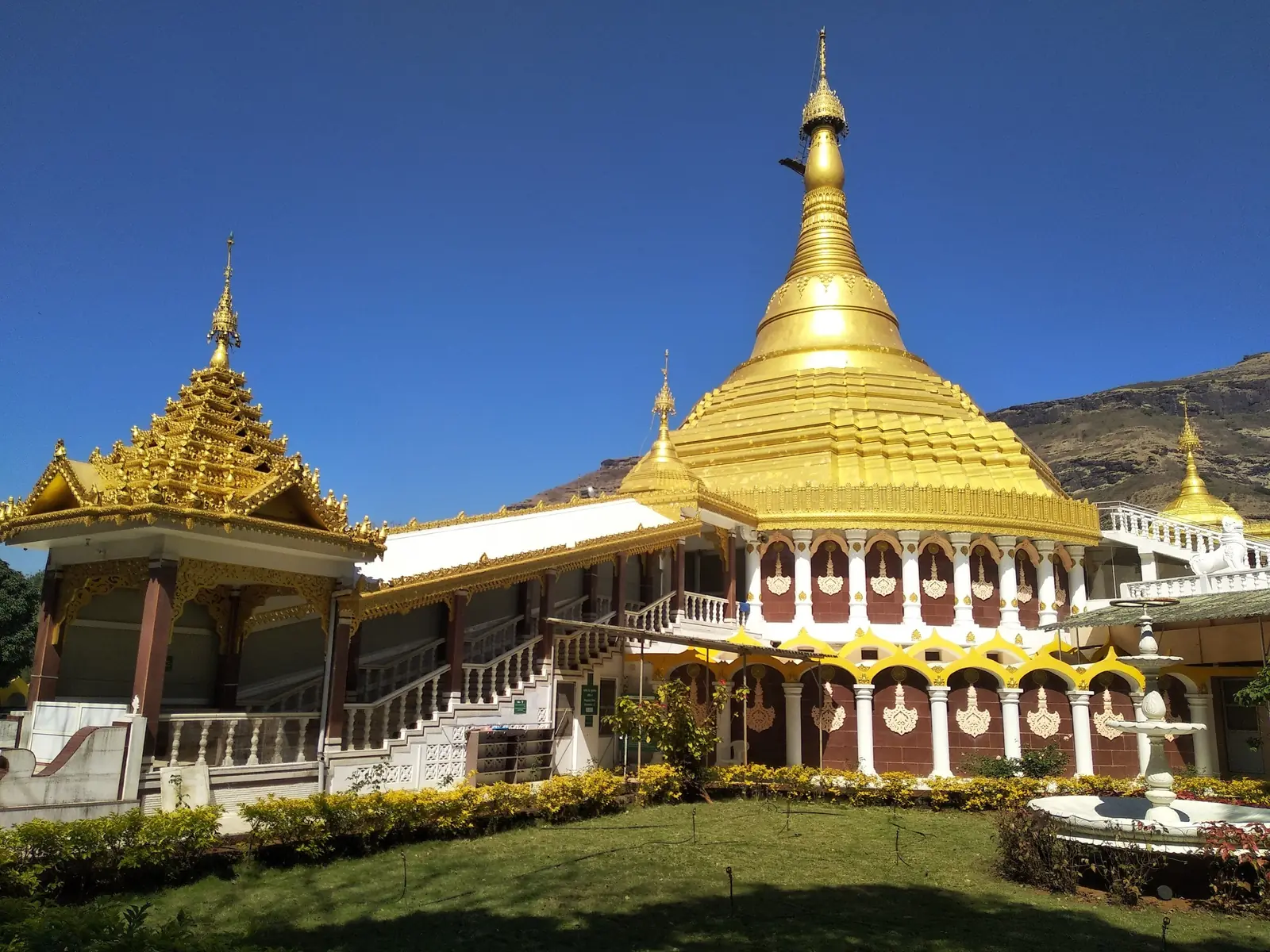
Professionals and executives learn the same Vipassana as everyone else. In S. N. Goenka's tradition, an "executive course" is a standard 10-day residential course with one extra talk and two question-and-answer sessions by Goenka about work and business, held at venues with single rooms and private bathrooms. The first centre built for these courses is Dhamma Pattana, established in 2007 at the Global Vipassana Pagoda in Mumbai.
What the courses do for working life is harder to answer. Many professionals have described benefits, and the organisation publishes their accounts, but the studies are few and small, and most were run by people close to the tradition.
What an executive course is
dhamma.org's executive site says: "The technique of Vipassana meditation that is taught in Executive courses is identical to that taught in regular 10-day courses." The timetable, the silence and the code of discipline are those of any 10-day course. The differences are:
- an additional talk and "two sets of questions and answers by Mr. Goenka, who was a businessman himself for many years", about dealing with the stresses of business;
- venues "with ideal conditions for meditation, including single accommodations with en-suite bathrooms";
- a teacher who "will usually be someone that also functions in a corporate/professional environment".
The site describes the courses as "especially designed for business executives and government officials". Like every course in the tradition, they cost nothing: donations are accepted only from people who have completed a 10-day course. Anyone may choose an ordinary 10-day course instead, and the site notes that executives "now often apply for normal 10-day courses". It says executive courses "are still held in India and Nepal, once a year in UK, and occasionally elsewhere". In dhamma.org's course search they appear under a "For Executives" tab.
How executive courses began
Goenka worked for much of his life as a businessman in Myanmar and India. VRI says that from 1989 seminars were arranged under his guidance that drew business people and other professionals, and that in January 2000 Goenka spoke at the World Economic Forum in Davos, in sessions on religion, death, anger and happiness.
In April 2002 he gave the opening address at a "Spirituality in Business" conference in the United States. From 24 April to 6 May 2002 he presided over the first 10-day course for executives, at the Eastover Resort in Lenox, Massachusetts. VRI says 100 people came, from the United States and 16 other countries, most of them business people or professionals such as doctors, lawyers, engineers and consultants.
Dhamma Pattana and Dhamma Vipula
VRI's timeline calls Dhamma Pattana "the first center to conduct the courses exclusively for the professionals and executives". Its name means "Harbour of Dhamma". It stands on a hill inside the Global Vipassana Pagoda complex at Gorai, in Mumbai's outer northern suburbs. dhamma.org's listing says "Most courses taught here are geared towards business executives and professionals", and on its schedule many courses carry the note "Executives will be given preference". The rooms are air-conditioned, with western-style bathrooms.
The second centre for executives is Dhamma Vipula, on Parsik Hill in Navi Mumbai. Nepal has no centre set aside for them, but Dhamma Shringa near Kathmandu holds executive courses alongside its regular ones: as of September 2026 its schedule listed two, from 14 to 25 March and 14 to 25 August 2027.
Employers that send staff
VRI says many businesses and public bodies give paid leave for courses: "Some have treated Vipassana as a training programme, some have included it in their Human Resources Development activity". One documented case is the Oil and Natural Gas Corporation (ONGC), India's state-owned oil and gas company. A May 1998 circular from its Institute of Management Development in Dehradun let its regions nominate up to 260 executives a year, with preference for people in high-stress posts and one course per person. Each participant was to send a response within ten days "for impact evaluation". We found no published results of that evaluation. For state governments' leave rules, see Vipassana in government and police.
What professionals have said
Roop Jyoti, described by VRI as a prominent businessman from Nepal, is quoted on its pages: "Vipassana is an art of stress management. Vipassana is an art of people management." In a longer account he wrote: "I do not easily get upset, irritated or angry; if at all, only rarely and only for a short while, so I do not waste time on these things."
VRI also collects short comments from executive course participants. L. Freese of Freese & Nichols in Fort Worth, Texas: "Vipassana leads to clearer thinking and clear thinking is good for business." S. Clute, a lawyer in Richmond, Virginia: "Less stress: not attached to the actions of others, so I don't create conflict by responding negatively." N. Stevens, a sales vice-president in Boulder, Colorado, wrote that the most important lesson was "surrendering to the process and letting it unfold", which ran "contrary to my business training (attack mode)."
Some accounts come through the press. In December 2018 Jack Dorsey, then chief executive of Twitter, posted about a 10-day silent retreat at Dhamma Mahimā in Pyin Oo Lwin, Myanmar. CNBC reported that he called it "extremely painful and demanding physical and mental work", and quoted him: "The time I take away to do this gives so much back to me and my work." Some people criticised him for encouraging his followers to visit Myanmar, given the country's human rights violations. He replied that he did not consider "visiting, practicing, or talking with the people, as endorsement".
These are personal accounts, published by the organisation or by the people themselves. They show what some people felt, not what a course will do for you.
What studies of managers and employees found
- Government officials and public-sector staff. In 2001 and 2002, VRI surveyed central and state officials, public-sector managers and lecturers at government colleges who had done a course: 653 of 1,103 people replied, and 607 replies were usable. On VRI's own questionnaire, 98% said they had benefited. Compared with officials who had never done a course, the course group reported higher well-being and lower job stress.
- Employees in Bangalore. Seema Pradhan and V. V. Ajithkumar compared 260 employees who had completed at least three 10-day courses with 260 who had enrolled for their first. The experienced group scored higher on psychological well-being. Each group was measured only once, so the study cannot show that the courses caused the difference. It is published on VRI's research pages.
- Legal professionals. A 2026 pilot study in Frontiers in Psychology measured 30 lawyers and advanced law trainees before and after a four-week Anapana programme, and found large changes in anxiety, aggression and attitudes to sentencing. That part had no control group, and the authors call their findings "hypothesis-generating".
- A community sample. Szekeres and Wertheim, at La Trobe University in Melbourne, compared 122 people taking a 10-day course with 50 people waiting for a later one (2015). The course group reported less stress and more well-being; some of the gain faded by six months but stayed above the starting level. It was not a study of workers, but it is one of the better-designed studies of the course itself.
The limits of the evidence
- We found no randomised trial of an executive course, or of Vipassana courses for any workforce.
- Most workplace studies measure people once and compare those who chose to meditate with those who did not. The two groups may differ in many other ways.
- Several studies were run or published by VRI, the organisation that teaches the courses.
- Almost all outcomes are self-reported. VRI cites a survey by a Mumbai businessman, Jayantilal Shah, of more than a dozen small business owners who said they worked "20% faster" after their courses; we found no independent check of it.
- Intensive courses are demanding, and a minority of people have difficult experiences on them. See difficult experiences on meditation retreats.
Where to go next
The wider research is reviewed in what research says about Vipassana. To apply for an executive course, check the schedule of Dhamma Pattana; Vipassana course types explains how executive courses fit with the others.
Sources
- Vipassana Meditation Course For Business Executives, dhamma.org
- Courses for Executives, Vipassana Research Institute
- Executive Courses: History and Spread, Vipassana Research Institute
- Timeline, Vipassana Research Institute
- Course schedule: Dhamma Pattana, dhamma.org
- Course schedule: Dhamma Shringa, dhamma.org
- Experiences of Business Executives, Vipassana Research Institute
- Circular on nominating executives for Vipassana programmes (May 1998, PDF), ONGC Institute of Management Development
- Twitter CEO Jack Dorsey spent his birthday on a silent meditation trip, CNBC
- The Impact of Vipassana in Government (VRI study, 2001–2002), Vipassana Research Institute
- Effect of Vipassana meditation on psychological well-being of employees and impact of demographic factors (Pradhan and Ajithkumar), Vipassana Research Institute
- Meditation, free-will beliefs, and sentencing attitudes: an exploratory pilot study in India (Mishra, Prescott and Logan, 2026), PubMed
- Evaluation of Vipassana meditation course effects on subjective stress, well-being, self-kindness and mindfulness in a community sample (Szekeres and Wertheim, 2015), PubMed